
Most ebook files are in PDF format, so you can easily read them using various software such as Foxit Reader or directly on the Google Chrome browser.
Some ebook files are released by publishers in other formats such as .awz, .mobi, .epub, .fb2, etc. You may need to install specific software to read these formats on mobile/PC, such as Calibre.
Please read the tutorial at this link. https://ebooknice.com/page/post?id=faq
We offer FREE conversion to the popular formats you request; however, this may take some time. Therefore, right after payment, please email us, and we will try to provide the service as quickly as possible.
For some exceptional file formats or broken links (if any), please refrain from opening any disputes. Instead, email us first, and we will try to assist within a maximum of 6 hours.
EbookNice Team
Status:
Available4.3
28 reviewsAbstract:
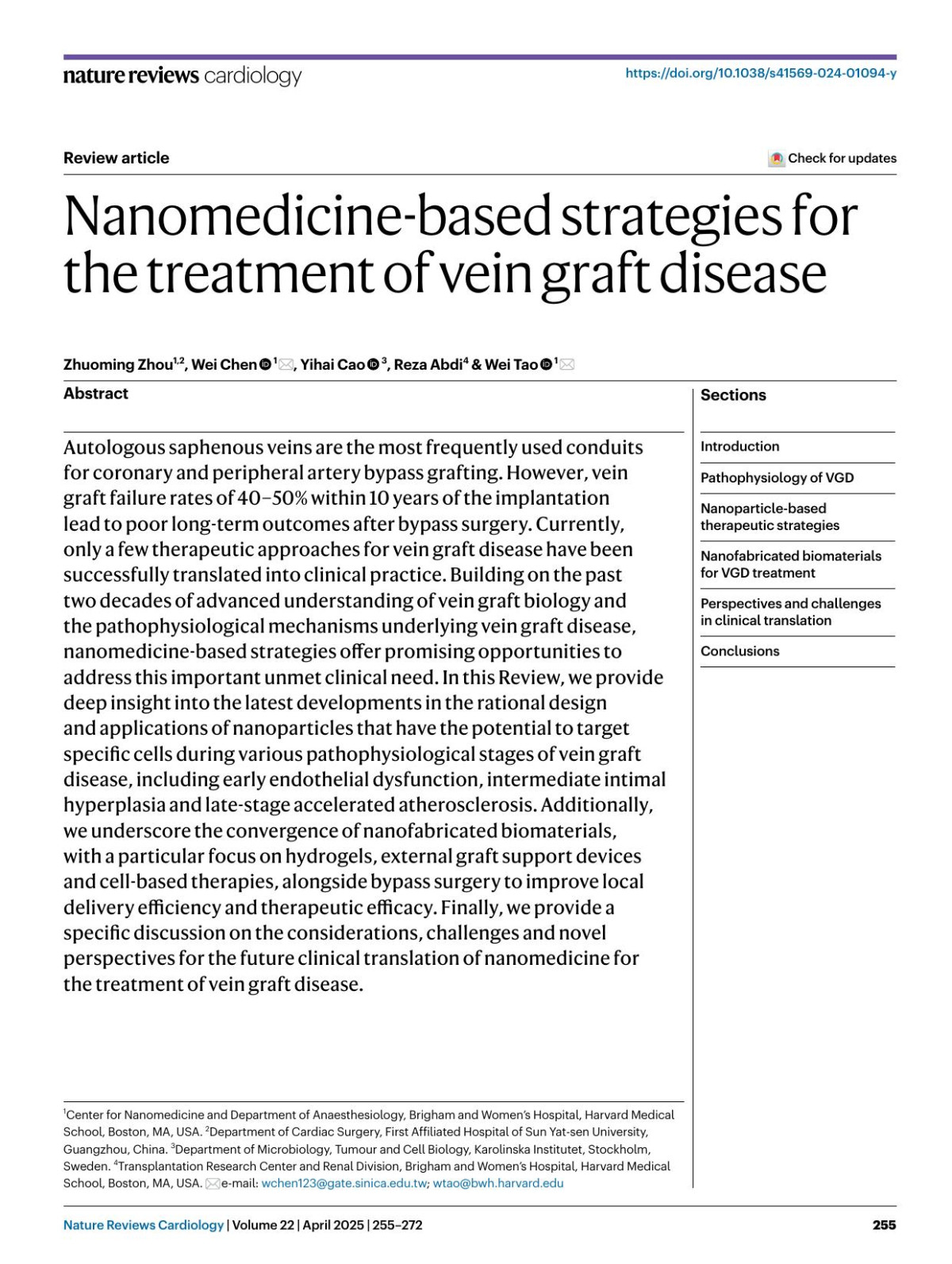
Autologous saphenous veins are the most frequently used conduits
for coronary and peripheral artery bypass grafting. However, vein
graft failure rates of 40–50% within 10 years of the implantation
lead to poor long-term outcomes after bypass surgery. Currently,
only a few therapeutic approaches for vein graft disease have been
successfully translated into clinical practice. Building on the past
two decades of advanced understanding of vein graft biology and
the pathophysiological mechanisms underlying vein graft disease,
nanomedicine-based strategies offer promising opportunities to
address this important unmet clinical need. In this Review, we provide
deep insight into the latest developments in the rational design
and applications of nanoparticles that have the potential to target
specific cells during various pathophysiological stages of vein graft
disease, including early endothelial dysfunction, intermediate intimal
hyperplasia and late-stage accelerated atherosclerosis. Additionally,
we underscore the convergence of nanofabricated biomaterials,
with a particular focus on hydrogels, external graft support devices
and cell-based therapies, alongside bypass surgery to improve local
delivery efficiency and therapeutic efficacy. Finally, we provide a
specific discussion on the considerations, challenges and novel
perspectives for the future clinical translation of nanomedicine for
the treatment of vein graft disease.
4.8
15 reviews
4.3
38 reviews

5.0
10 reviews
4.4
22 reviews
5.0
25 reviews
4.9
30 reviews
4.4
19 reviews
4.4
30 reviews