
Most ebook files are in PDF format, so you can easily read them using various software such as Foxit Reader or directly on the Google Chrome browser.
Some ebook files are released by publishers in other formats such as .awz, .mobi, .epub, .fb2, etc. You may need to install specific software to read these formats on mobile/PC, such as Calibre.
Please read the tutorial at this link. https://ebooknice.com/page/post?id=faq
We offer FREE conversion to the popular formats you request; however, this may take some time. Therefore, right after payment, please email us, and we will try to provide the service as quickly as possible.
For some exceptional file formats or broken links (if any), please refrain from opening any disputes. Instead, email us first, and we will try to assist within a maximum of 6 hours.
EbookNice Team
Status:
Available4.5
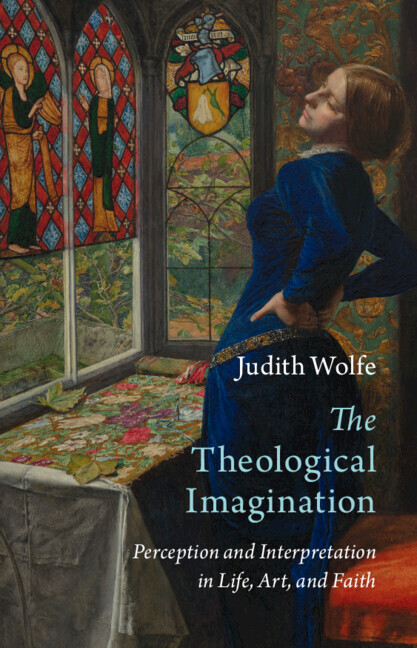
28 reviewsHow can we live truthfully in a world riddled with ambiguity, contradiction, and clashing viewpoints? We make sense of the world imaginatively, resolving ambiguous and incomplete impressions into distinct forms and wholes. But the images, objects, words, and even lives of which we make sense in this way always have more or other possible meanings. Judith Wolfe argues that faith gives us courage both to shape our world creatively, and reverently to let things be more than we can imagine. Drawing on complementary materials from literature, psychology, art, and philosophy, her remarkable book demonstrates that Christian theology offers a potent way of imagining the world even as it brings us to the limits of our capacity to imagine. In revealing the significance of unseen depths – of what does not yet make sense to us, and the incomplete – Wolfe characterizes faith as trust in God that surpasses all imagination.
About the Author
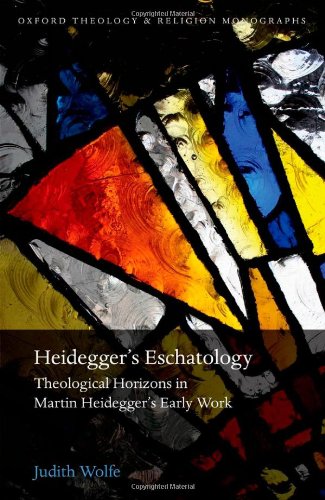
Judith Wolfe is Professor of Philosophical Theology at the University of St Andrews. She was educated in Vienna, Jerusalem, and Oxford, and has previously taught in Oxford and Berlin. She writes and edits extensively in theology and the arts. Her previous publications include Heidegger's Eschatology (OUP, 2013) Heidegger and Theology (T&T Clark, 2014), and The Oxford Handbook of Nineteenth-Century Christian Thought (OUP, 2017, co-edited with Joel D S Rasmussen and Johannes Zachhuber). In 2022 she delivered the historic Hulsean Lectures (upon which this book is based) in the University of Cambridge. --This text refers to the hardcover edition.
Review
'Judith Wolfe's wonderfully creative meditation on the human imagination and God inspires, cajoles, disturbs, and invites the reader to a new place of response that few could evoke as she does. As philosophically learned as she is spiritually profound, Wolfe calls in all the power of the arts to support her core thesis that God attends our deepest engagement with the mystery of the world, as it ever
5.0
40 reviews
5.0
29 reviews
5.0
27 reviews

4.5
18 reviews
4.9
18 reviews
4.6
17 reviews
4.9
13 reviews