
Most ebook files are in PDF format, so you can easily read them using various software such as Foxit Reader or directly on the Google Chrome browser.
Some ebook files are released by publishers in other formats such as .awz, .mobi, .epub, .fb2, etc. You may need to install specific software to read these formats on mobile/PC, such as Calibre.
Please read the tutorial at this link. https://ebooknice.com/page/post?id=faq
We offer FREE conversion to the popular formats you request; however, this may take some time. Therefore, right after payment, please email us, and we will try to provide the service as quickly as possible.
For some exceptional file formats or broken links (if any), please refrain from opening any disputes. Instead, email us first, and we will try to assist within a maximum of 6 hours.
EbookNice Team
Status:
Available0.0
0 reviews
ISBN 10: 1591024757
ISBN 13: 9781591024750
Author: Alfred Posamentier, Ingmar Lehmann
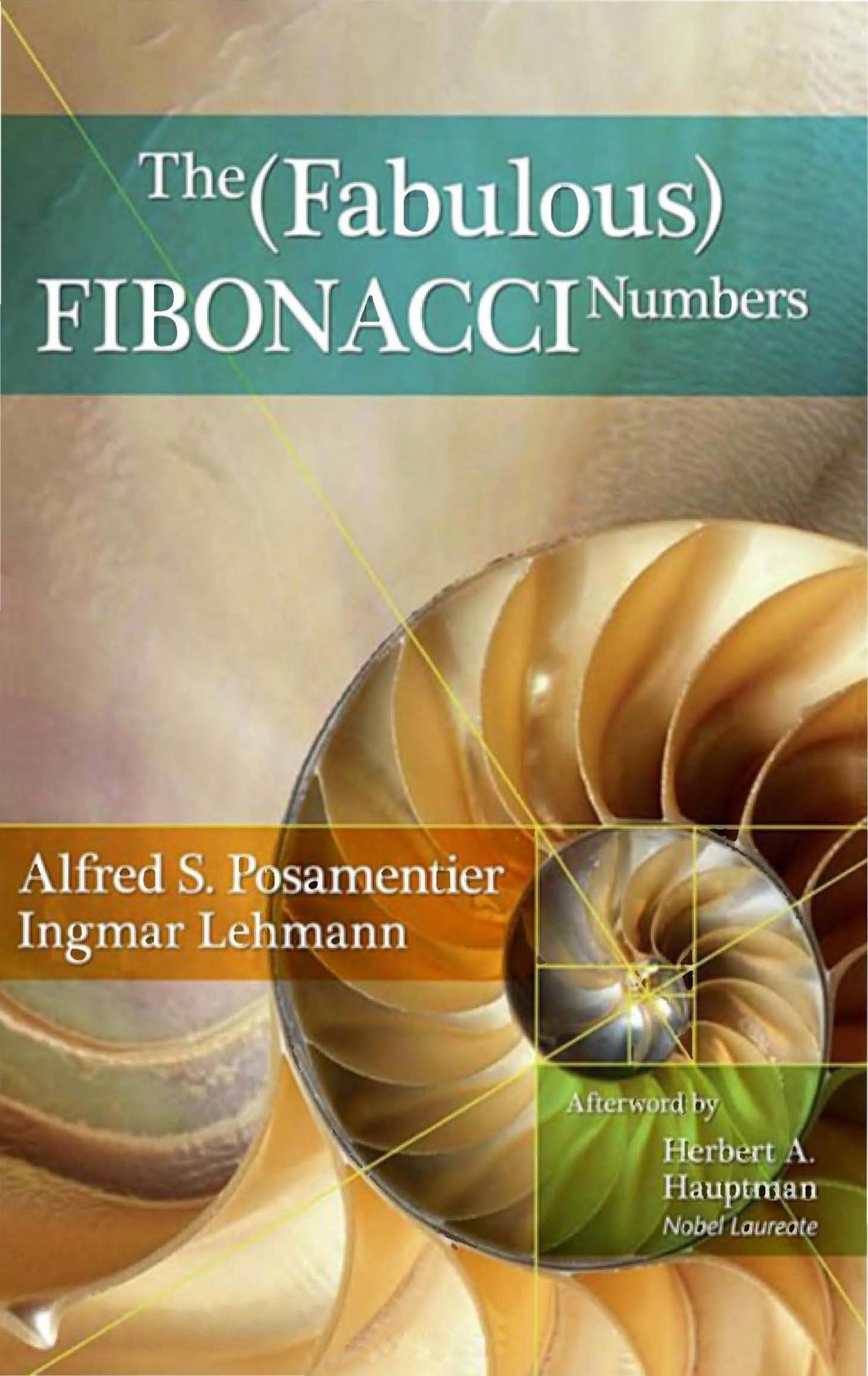
The most ubiquitous, and perhaps the most intriguing, number pattern in mathematics is the Fibonacci sequence. In this simple pattern beginning with two ones, each succeeding number is the sum of the two numbers immediately preceding it (1, 1, 2, 3, 5, 8, 13, 21, ad infinitum). Far from being just a curiosity, this sequence recurs in structures found throughout nature - from the arrangement of whorls on a pinecone to the branches of certain plant stems. All of which is astounding evidence for the deep mathematical basis of the natural world. With admirable clarity, two veteran math educators take us on a fascinating tour of the many ramifications of the Fibonacci numbers. They begin with a brief history of a distinguished Italian discoverer, who, among other accomplishments, was responsible for popularizing the use of Arabic numerals in the West. Turning to botany, the authors demonstrate, through illustrative diagrams, the unbelievable connections between Fibonacci numbers and natural forms (pineapples, sunflowers, and daisies are just a few examples). In art, architecture, the stock market, and other areas of society and culture, they point out numerous examples of the Fibonacci sequence as well as its derivative, the "golden ratio." And of course in mathematics, as the authors amply demonstrate, there are almost boundless applications in probability, number theory, geometry, algebra, and Pascal's triangle, to name a few.Accessible and appealing to even the most math-phobic individual, this fun and enlightening book allows the reader to appreciate the elegance of mathematics and its amazing applications in both natural and cultural settings.
Chapter1 : Introduction
Chapter 2: Content
Chapter 3: Conclusion
Chapter 4: Appendices
Chapter 5: Glossary
Chapter 6: References
Chapter 7: Index
borrow the fabulous fibonacci numbers
the fabulous fibonacci numbers pdf
what are the fibonacci numbers
what is the 50th number in the fibonacci sequence
fibonacci numbers examples
Tags: Alfred Posamentier, Ingmar Lehmann, The Fabulous, Fibonacci Numbers

4.6
12 reviews

4.7
9 reviews
4.6
22 reviews
4.7
13 reviews
4.4
11 reviews
4.6
7 reviews