
Most ebook files are in PDF format, so you can easily read them using various software such as Foxit Reader or directly on the Google Chrome browser.
Some ebook files are released by publishers in other formats such as .awz, .mobi, .epub, .fb2, etc. You may need to install specific software to read these formats on mobile/PC, such as Calibre.
Please read the tutorial at this link. https://ebooknice.com/page/post?id=faq
We offer FREE conversion to the popular formats you request; however, this may take some time. Therefore, right after payment, please email us, and we will try to provide the service as quickly as possible.
For some exceptional file formats or broken links (if any), please refrain from opening any disputes. Instead, email us first, and we will try to assist within a maximum of 6 hours.
EbookNice Team
Status:
Available4.7
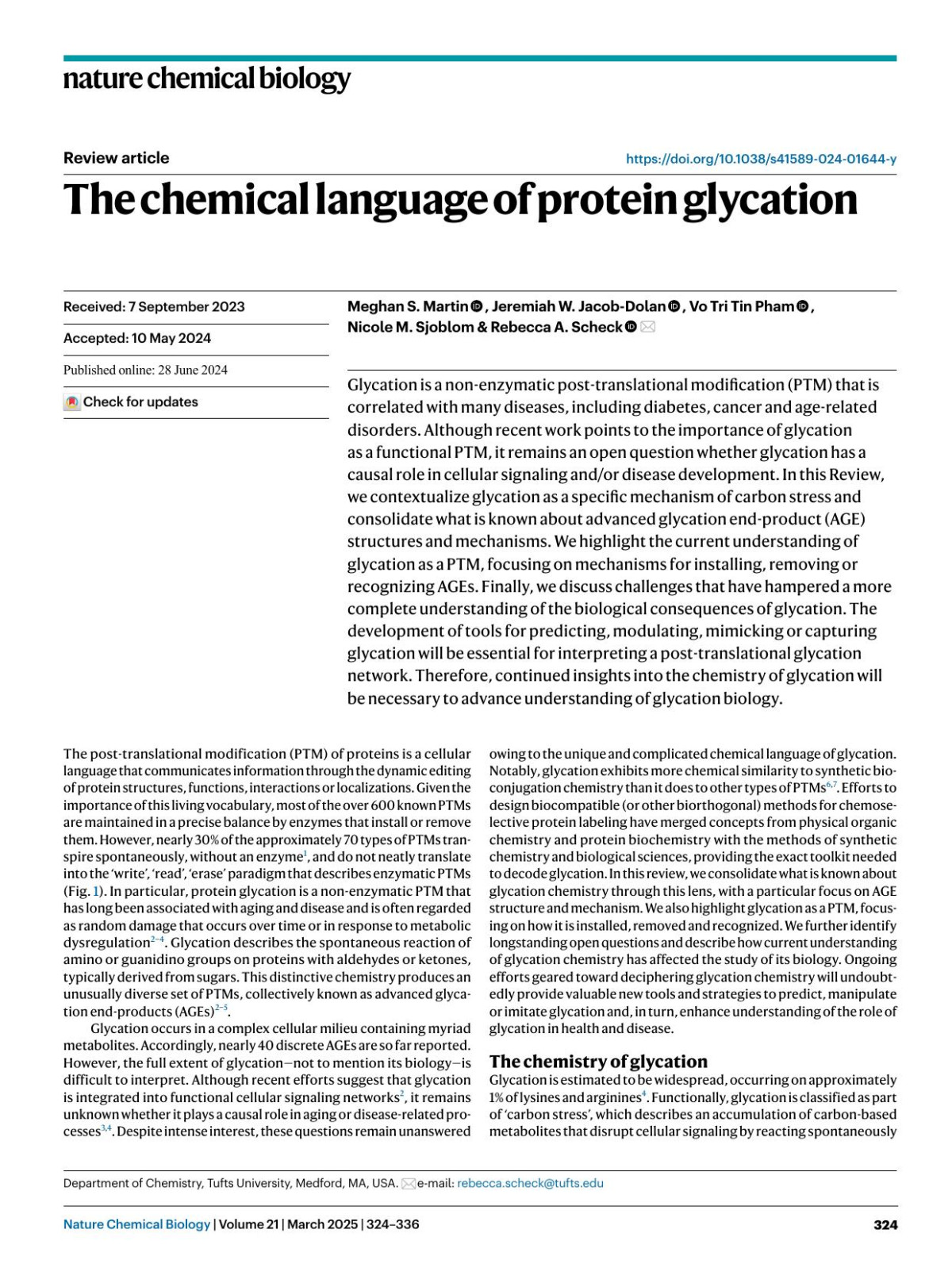
18 reviewsGlycation is a non-enzymatic post-translational modifcation (PTM) that is correlated with many diseases, including diabetes, cancer and age-related disorders. Although recent work points to the importance of glycation as a functional PTM, it remains an open question whether glycation has a causal role in cellular signaling and/or disease development. In this Review, we contextualize glycation as a specifc mechanism of carbon stress and consolidate what is known about advanced glycation end-product (AGE) structures and mechanisms. We highlight the current understanding of glycation as a PTM, focusing on mechanisms for installing, removing or recognizing AGEs. Finally, we discuss challenges that have hampered a more complete understanding of the biological consequences of glycation. The development of tools for predicting, modulating, mimicking or capturing glycation will be essential for interpreting a post-translational glycation network. Therefore, continued insights into the chemistry of glycation will be necessary to advance understanding of glycation biology.


5.0
41 reviews
4.8
26 reviews
4.6
37 reviews
4.9
8 reviews
4.5
18 reviews
4.6
12 reviews
4.6
36 reviews