
Most ebook files are in PDF format, so you can easily read them using various software such as Foxit Reader or directly on the Google Chrome browser.
Some ebook files are released by publishers in other formats such as .awz, .mobi, .epub, .fb2, etc. You may need to install specific software to read these formats on mobile/PC, such as Calibre.
Please read the tutorial at this link. https://ebooknice.com/page/post?id=faq
We offer FREE conversion to the popular formats you request; however, this may take some time. Therefore, right after payment, please email us, and we will try to provide the service as quickly as possible.
For some exceptional file formats or broken links (if any), please refrain from opening any disputes. Instead, email us first, and we will try to assist within a maximum of 6 hours.
EbookNice Team
Status:
Available4.7
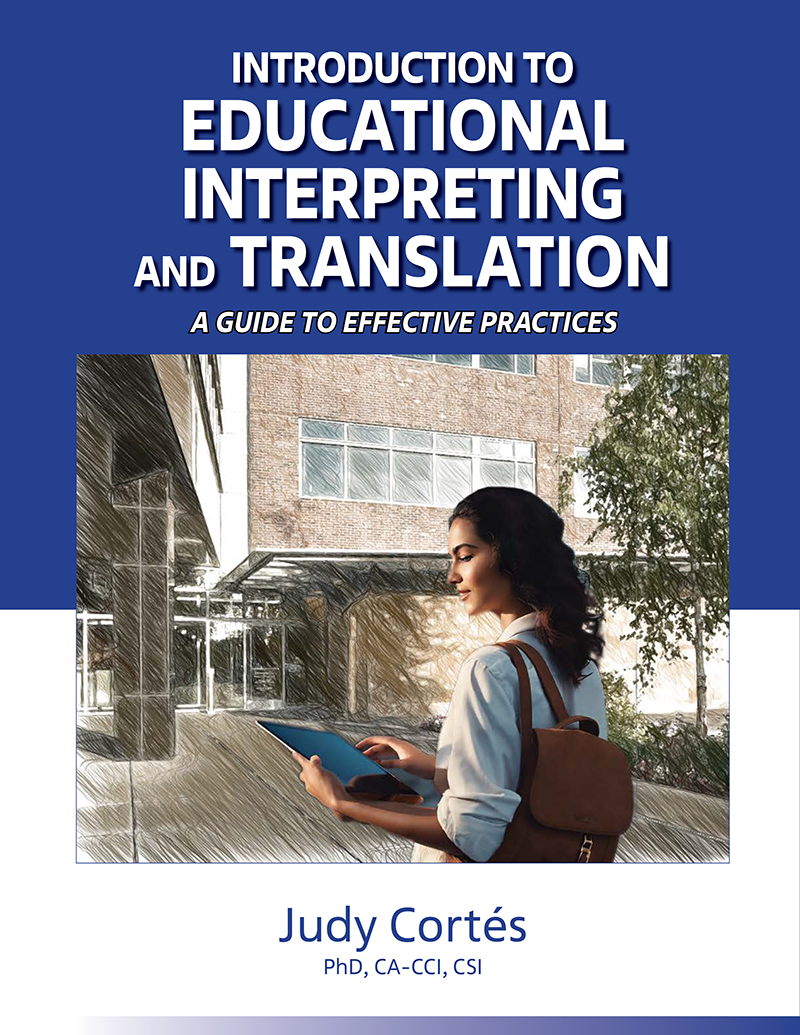
24 reviewsIntroduction to Educational Interpreting and Translation is written with the working interpreter in mind. Drawing on years of experience interpreting in U.S. public schools, author Judy Cortés, PhD, tackles the topics most relevant to educational interpreters. Learn to handle a broad range of assignments effectively, from IEPs to assessments to parent-teacher conferences, whether interpreting in-person or remotely.
If you’re new to the field or simply looking to refine your approach, this book has you covered. With an emphasis on promoting language accessibility, IEIT is relevant not only to interpreters and translators, but also teachers, specialists, trainers and school administrators.
Written in clear, engaging language, this book will provide educational interpreters a solid foundation in interpreter ethics, all modes of interpreting, as well as important legal requirements. IEIT is both a guide to the field and a hands-on workbook for skill reinforcement, packed with review activities, role plays and practical exercises.
Topics covered include:
Chapter 1: Overview of the U.S. School System
Chapter 2: Who Is Interpreting? Whom Will You Interpret For?
Chapter 3: Introduction to Interpreting in Special Education
Chapter 4: Interpreter Ethics in Educational Interpreting
Chapter 5: Modes of Interpreting: Consecutive
Chapter 6: Modes of Interpreting: Simultaneous
Chapter 7: Modes of Interpreting: Sight Translation
Chapter 8: Written Translation in School Settings
Chapter 9: Language Proficiency and Certification
Chapter 10: Legal Requirements in Educational Settings
Chapter 11: Interpreting for Assessments
Chapter 12: Practice for Interpreting and Translating in School Settings
Introduction to Educational Interpreting and Translation also includes a 43-page English-Spanish glossary and links and references to dozens of additional educational resources.
4.6
27 reviews
4.4
36 reviews
4.5
34 reviews
4.4
11 reviews

5.0
33 reviews
4.8
17 reviews