logo
Product categories

EbookNice.com

Most ebook files are in PDF format, so you can easily read them using various software such as Foxit Reader or directly on the Google Chrome browser.
Some ebook files are released by publishers in other formats such as .awz, .mobi, .epub, .fb2, etc. You may need to install specific software to read these formats on mobile/PC, such as Calibre.

Please read the tutorial at this link.  https://ebooknice.com/page/post?id=faq


We offer FREE conversion to the popular formats you request; however, this may take some time. Therefore, right after payment, please email us, and we will try to provide the service as quickly as possible.


For some exceptional file formats or broken links (if any), please refrain from opening any disputes. Instead, email us first, and we will try to assist within a maximum of 6 hours.

EbookNice Team
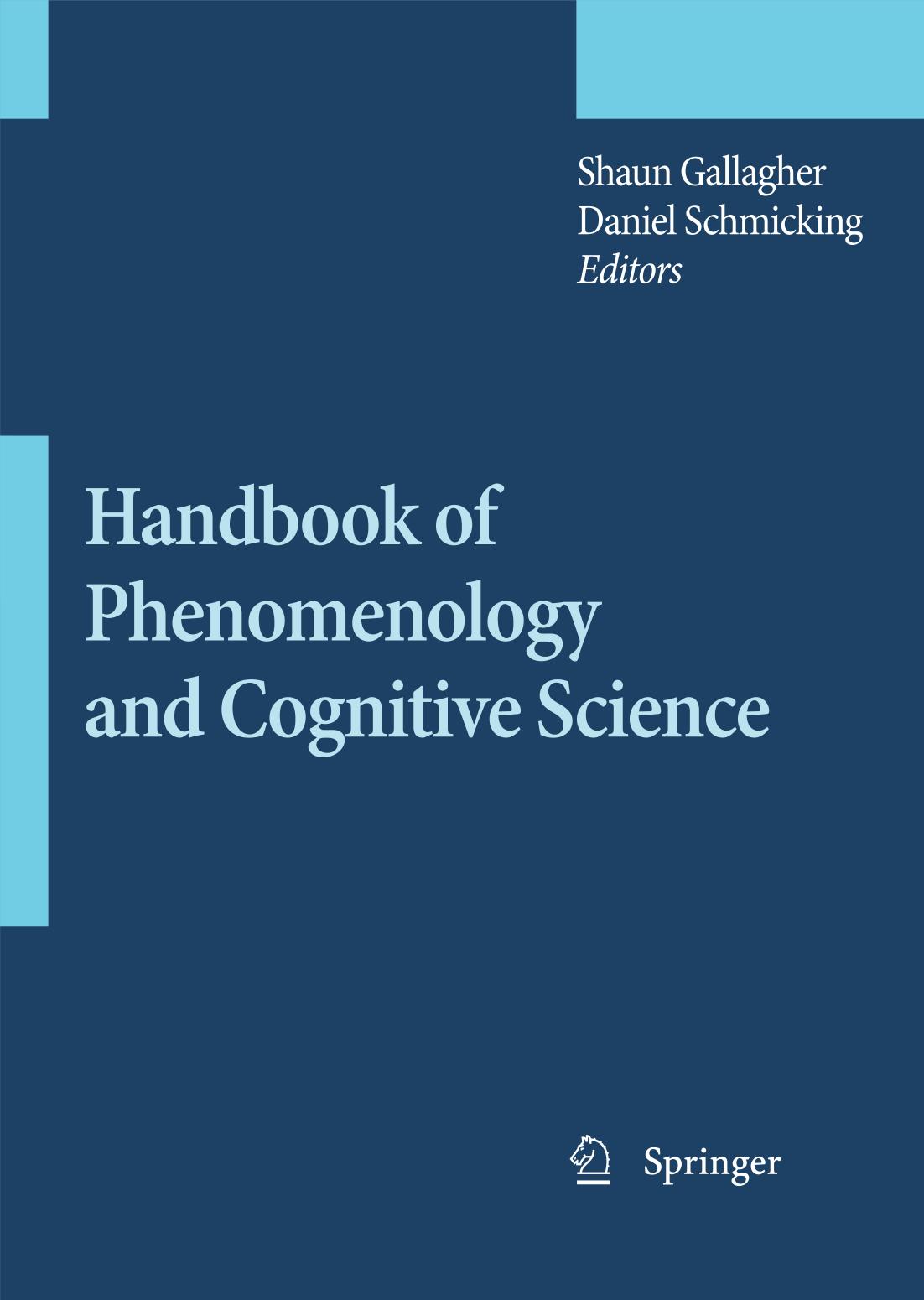
Handbook of Phenomenology and Cognitive Science by Dan Zahavi (auth.), Daniel Schmicking, Shaun Gallagher (eds.) ISBN 9789048126453 instant download

  • SKU: EBN-11845614
Zoomable Image
$ 32 $ 40 (-20%)

Status:

Available

4.9

12 reviews
Instant download (eBook) Handbook of Phenomenology and Cognitive Science after payment.
Authors:Dan Zahavi (auth.), Daniel Schmicking, Shaun Gallagher (eds.)
Pages:688 pages
Year:2010
Edition:1
Publisher:Springer Netherlands
Language:english
File Size:10.4 MB
Format:pdf
ISBNS:9789048126453
Categories: Ebooks

Product desciption

Handbook of Phenomenology and Cognitive Science by Dan Zahavi (auth.), Daniel Schmicking, Shaun Gallagher (eds.) ISBN 9789048126453 instant download

This volume explores the essential issues involved in bringing phenomenology together with the cognitive sciences, and provides some examples of research located at the intersection of these disciplines. The topics addressed here cover a lot of ground, including questions about naturalizing phenomenology, the precise methods of phenomenology and how they can be used in the empirical cognitive sciences, specific analyses of perception, attention, emotion, imagination, embodied movement, action and agency, representation and cognition, inters- jectivity, language and metaphor. In addition there are chapters that focus on empirical experiments involving psychophysics, perception, and neuro- and psychopathologies. The idea that phenomenology, understood as a philosophical approach taken by thinkers like Husserl, Heidegger, Sartre, Merleau-Ponty, and others, can offer a positive contribution to the cognitive sciences is a relatively recent idea. Prior to the 1990s, phenomenology was employed in a critique of the first wave of cognitivist and computational approaches to the mind (see Dreyfus 1972). What some consider a second wave in cognitive science, with emphasis on connectionism and neuros- ence, opened up possibilities for phenomenological intervention in a more positive way, resulting in proposals like neurophenomenology (Varela 1996). Thus, bra- imaging technologies can turn to phenomenological insights to guide experimen- tion (see, e. g. , Jack and Roepstorff 2003; Gallagher and Zahavi 2008).
*Free conversion of into popular formats such as PDF, DOCX, DOC, AZW, EPUB, and MOBI after payment.

Related Products