Most ebook files are in PDF format, so you can easily read them using various software such as Foxit Reader or directly on the Google Chrome browser.
Some ebook files are released by publishers in other formats such as .awz, .mobi, .epub, .fb2, etc. You may need to install specific software to read these formats on mobile/PC, such as Calibre.
Please read the tutorial at this link. https://ebooknice.com/page/post?id=faq
We offer FREE conversion to the popular formats you request; however, this may take some time. Therefore, right after payment, please email us, and we will try to provide the service as quickly as possible.
For some exceptional file formats or broken links (if any), please refrain from opening any disputes. Instead, email us first, and we will try to assist within a maximum of 6 hours.
EbookNice Team
Status:
Available4.4
37 reviews
ISBN-10 : 0470511680
ISBN-13 : 9780470511688
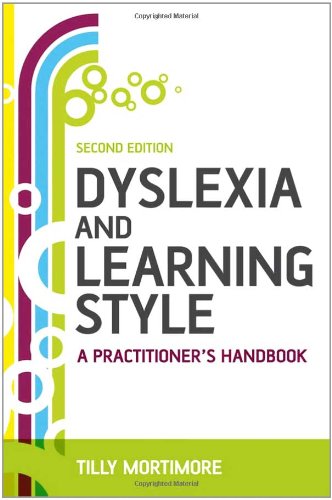
Author: Tilly Mortimore
The first section of this research based but practical book has been updated to examine the most recent research in two key areas: dyslexia and the dyslexic experience and the major cognitive and learning styles. In the light of increased controversy around the use of learning style theory in the educational arena, suggestions are made as to ways in which these theories can be utilized to inform teaching and learning and maximize success for vulnerable learners. The second section provides a range of ways in which to enable learners to understand and utilize their individual styles along with techniques to help students to absorb, process and create responses to information across the curriculum; practical strategies to help teachers to adapt material to suit differing ways of learning and activities to help students to become more flexible and successful in their approach.
Part One: Learning Style.
Chapter 1 Different ways of seeing.
Introduction.
What are cognitive or learning styles?
Models of cognitive or learning style.
Simplifying the picture - two inclusive approaches.
Should style theory go out the window.
Chapter summary.
Chapter 2 Different ways of learning.
Introduction.
Concept maps a visuo-spatial tool.
Helping students cope with the teaching methods of secondary school.
Matching the mode to the style.
Identifying cognitive or learning style.
A caution.
Chapter summary.
Part Two: Dyslexia.
Chapter 3 The 3 `D's: Dyslexia, Definitions and Diagnosis.
Introduction: What is dyslexia?
Defining dyslexia.
Definitions and differences.
How can dyslexia be diagnosed or identified?
Chapter summary.
Chapter 4 Dyslexia - curse or blessing?
Introduction: What impact does dyslexia have on daily life?
The pattern of difficulties.
Dyslexia at home.
Dyslexia at school.
Learning difficulties sometimes related to dyslexia.
Self-esteem and dyslexia - the effects of early negative experiences.
Dyslexia in adults.
Chapter summary.
Chapter 5 Strengths and talents.
Introduction: Does dyslexia bring special talents?
The research background.
Conclusions.
Chapter summary.
Part Three: "It's No Use If You Can't Use It."
Chapter 6 Applying learning style theory to learning.
Introduction: Recap: learning style and dyslexia.
Learning styles and learning strategies.
What theories underpin these strategies?
Schema theory – its role in learning.
Memory function – its role in learning.
Dyslexia and memory.
What are the most effective ways of providing this support for a vulnerable student?
Summary.
Chapter summary.
Part Four: Strategies for Wholistic and Analytic Learners.
Chapter 7 Wholistic approaches.
Introduction: What types of behaviour and approaches to learning might be characteristic of a wholistic learner?
The learning implications for people with dyslexia.
What strategies can teachers use to help learners with wholistic learners preferences?
Getting students ready to learn.
Teaching and learning strategies to help wholistic learners.
Strategies for getting the information in modes of presentation.
Strategies for processing, storing and revising.
Strategies for getting information out- modes of expression.
Wholistic examination and revision techniques.
Chapter summary.
Chapter 8 Analytical approaches.
Introduction: What types of behaviour and approaches to learning might be characteristic of an analytical learner?
The learning implications for people with dyslexia of adopting an analytical style.
Getting students ready to learn.
Teaching and learning strategies to help analytical learners.
Strategies for getting information in- modes of presentation.
Strategies for processing, storing and revising.
Strategies for getting information out- modes of expression.
Examination and revision techniques for analytics.
Chapter summary
Part Five: Words or Pictures?
Chapter 9 Images and visualisation.
Introduction: The power of images.
Teaching and learning strategies to help imagers.
Strategies for getting information in- modes of presentation.
Strategies for processing, storing and revising- turning words into pictures.
Getting information out- modes of expression: oral and written.
Examination and revision techniques for imagers.
Spelling techniques for imagers.
Chapter summary.
Chapter 10 Verbal strategies.
Introduction: The power of the word.
Teaching and learning strategies to help verbal learners.
Strategies for getting information in - modes of presentation.
Strategies for processing, storing and revising.
Strategies for getting information out-creating text writing frames for verbalisers.
Developing phonological awareness.
Using phonological awareness to improve proofreading skills.
Examination and revision techniques for verbalisers.
Spelling techniques for verbalisers.
Chapter summary
Part Six: What Were Those Last Ten Chapters About?
Chapter 11 Helping students to remember.
Introduction: Dyslexic students and memory.
Learning style and memory.
Making things easier to remember - key memory aids.
Useful techniques.
Chapter summary.
Last words: a caution.
Appendices.
does dyslexia affect learning
dyslexic learning style
dyslexia and learning disabilities
dyslexia and learning
dyslexia and learning letters
Tags: Dyslexia, learning style, practitioner, handbook, Tilly Mortimore
4.8
17 reviews
4.6
17 reviews

4.6
12 reviews
4.7
9 reviews
5.0
36 reviews