
Most ebook files are in PDF format, so you can easily read them using various software such as Foxit Reader or directly on the Google Chrome browser.
Some ebook files are released by publishers in other formats such as .awz, .mobi, .epub, .fb2, etc. You may need to install specific software to read these formats on mobile/PC, such as Calibre.
Please read the tutorial at this link. https://ebooknice.com/page/post?id=faq
We offer FREE conversion to the popular formats you request; however, this may take some time. Therefore, right after payment, please email us, and we will try to provide the service as quickly as possible.
For some exceptional file formats or broken links (if any), please refrain from opening any disputes. Instead, email us first, and we will try to assist within a maximum of 6 hours.
EbookNice Team
Status:
Available4.9
22 reviewsHow elite Roman families used genealogy, architecture, and the urban fabric to appropriate the city’s saints for their own
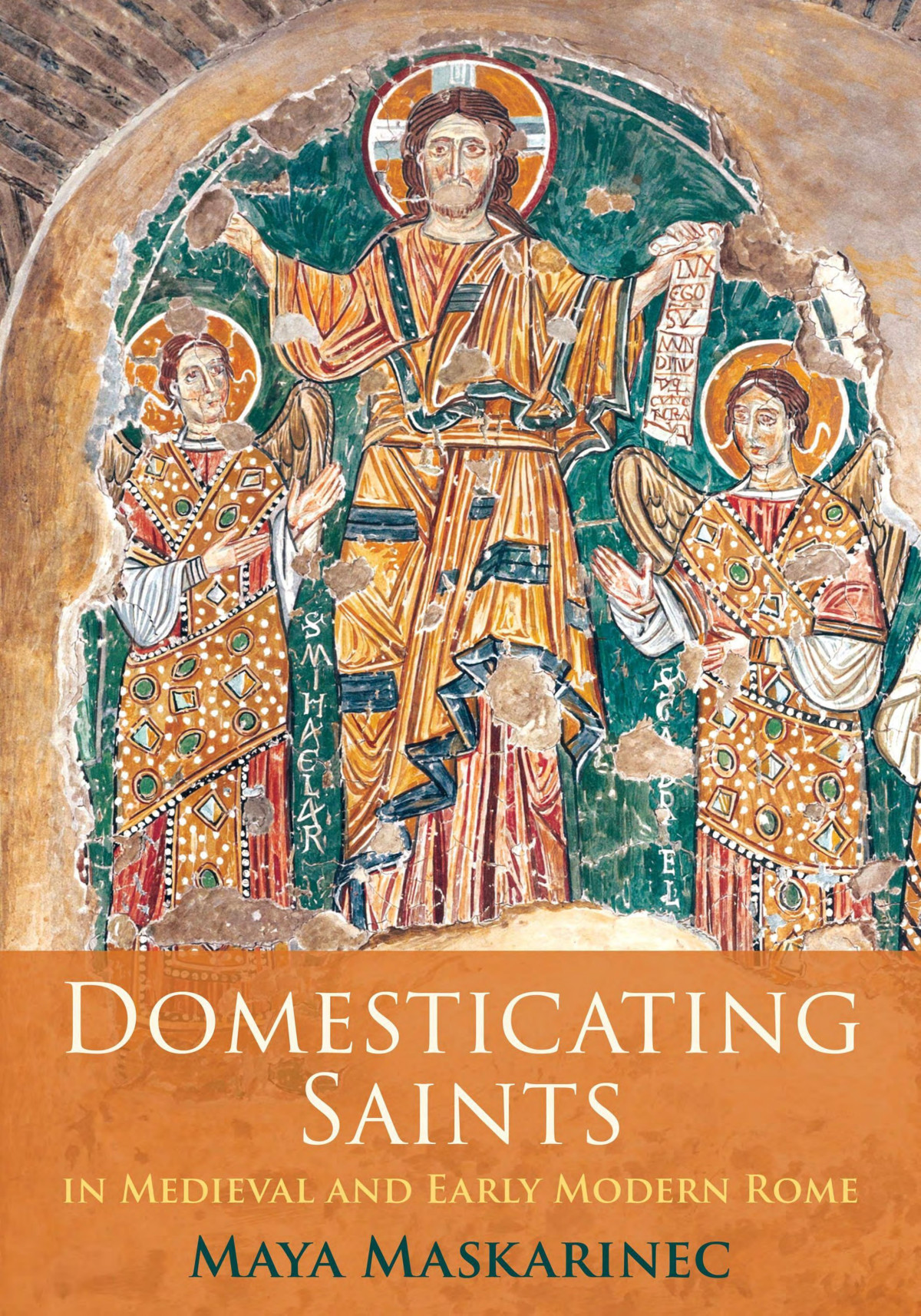
Domesticating Saints in Medieval and Early Modern Rome explores the creative efforts of some of Rome’s most prominent noble families to weave themselves into Rome’s Christian past. Maya Maskarinec shows how, from late antiquity to early modernity, elite Roman families used genealogy, architecture, and the urban fabric to appropriate the city’s saints for their own, eventually claiming them as ancestors.
Over the course of the Middle Ages, there developed a pronounced sense that churches and their saints belonged to specific regions, neighborhoods, and even families. These associations, coupled with a resurgent interest in Rome’s Christian antiquity as well as in noble lineages, enabled Roman families to “domesticate” the city’s saints and dominate the urban landscape and its politics into the early modern era. These families cultivated saintly genealogies and saintly topologies (exploiting, for example, the increasingly prolific identification of churches as the former residences of early Christian and late antique saints), cementing presumed connections between place, descent, and moral worth.
Drawing from sources spanning the fourth to the late sixteenth century, Maskarinec brings into conversation saints’ lives, documentary evidence, family genealogies, monumental and domestic architecture, and medieval and early modern guidebooks, sources not often studied together. Bridging the divide between secular and sacred histories of Rome, Domesticating Saints in Medieval and Early Modern Rome repositions these materials within a new story, of how Romans made the city’s
…
5.0
17 reviews
5.0
5 reviews
4.6
26 reviews
4.8
21 reviews
4.7
37 reviews
4.6
15 reviews
4.5
9 reviews
4.5
16 reviews