logo
Product categories

EbookNice.com

Most ebook files are in PDF format, so you can easily read them using various software such as Foxit Reader or directly on the Google Chrome browser.
Some ebook files are released by publishers in other formats such as .awz, .mobi, .epub, .fb2, etc. You may need to install specific software to read these formats on mobile/PC, such as Calibre.

Please read the tutorial at this link.  https://ebooknice.com/page/post?id=faq


We offer FREE conversion to the popular formats you request; however, this may take some time. Therefore, right after payment, please email us, and we will try to provide the service as quickly as possible.


For some exceptional file formats or broken links (if any), please refrain from opening any disputes. Instead, email us first, and we will try to assist within a maximum of 6 hours.

EbookNice Team
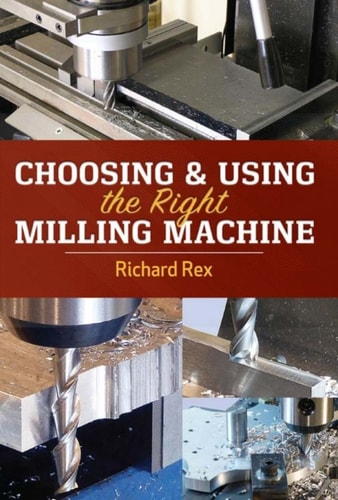
Choosing & Using the Right Milling Machine by Richard Rex ISBN 9780831196189, 9780831136840, 0831196181, 0831136847 instant download

  • SKU: EBN-239927358
Zoomable Image
$ 32 $ 40 (-20%)

Status:

Available

5.0

16 reviews
Instant download (eBook) Choosing & Using the Right Milling Machine after payment.
Authors:Richard Rex
Pages:582 pages
Year:2022
Edition:1
Publisher:Industrial Press, Incorporated
Language:english
File Size:13.32 MB
Format:epub
ISBNS:9780831196189, 9780831136840, 0831196181, 0831136847
Categories: Ebooks

Product desciption

Choosing & Using the Right Milling Machine by Richard Rex ISBN 9780831196189, 9780831136840, 0831196181, 0831136847 instant download

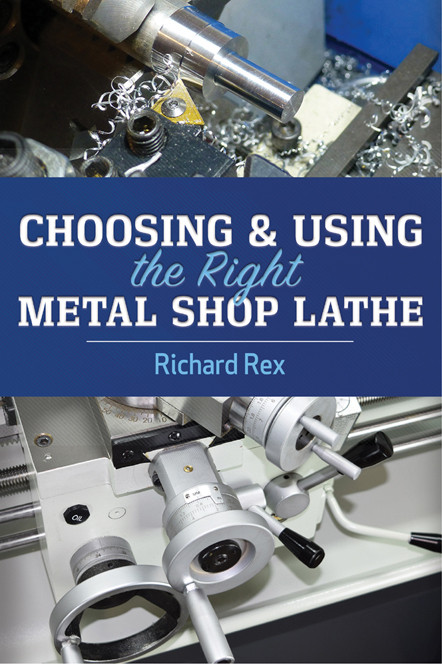
In most modern metal shops, you'll find both a lathe and a vertical mill. Both machines function by removing material from a block of metal--the "workpiece." The key difference between the two is how the workpiece is handled. On a lathe, the workpiece rotates, and is cut away by a knife tool. (Typical products of lathe work are "turned parts" such as spindles, bearings, screws, washers, and circular blanks for gears.) On a milling machine, it's the cutter that rotates. The workpiece is clamped to a table that is moved by precise amounts in two axes at right angles. (Typical mill products are flat-surfaced blocks of metal, like a cube, sometimes drilled for spindles or dowel pins, often tapped for screws.) Both the lathe and mill are incredibly flexible machines, but neither is capable of doing useful work right "out of the box." Both call for a number of accessories for holding the workpiece, as well as a selection of different cutting tools, drills, reamers, etc. Unlike lathe turning, which has not changed fundamentally in the past 100 years, milling in the small shop has been changed radically by the recent introduction of bench-top machines. There are now so many different milling machines that insider information has become even more important. In this work, Choosing & Using the Right Milling Machine, Richard Rex provides everything needed to choose the right type of mill--knee-type (Bridgeport) or bench-top--and properly install it depending on the type of work you're doing. With suggestions for finding, installing, and using the essential accessories, including digital readouts, this work is a must-have for model shops around the globe. And it's the perfect companion work to Choosing & Using the Right Metal Shop Lathe. Features Covers different types of milling cutters, including end mills, drill bits, reamers, and slitting saws. Introduces information on the add-ons that get a shop operational with the least delay and expense. Instructs on the inst…
*Free conversion of into popular formats such as PDF, DOCX, DOC, AZW, EPUB, and MOBI after payment.

Related Products