
Most ebook files are in PDF format, so you can easily read them using various software such as Foxit Reader or directly on the Google Chrome browser.
Some ebook files are released by publishers in other formats such as .awz, .mobi, .epub, .fb2, etc. You may need to install specific software to read these formats on mobile/PC, such as Calibre.
Please read the tutorial at this link. https://ebooknice.com/page/post?id=faq
We offer FREE conversion to the popular formats you request; however, this may take some time. Therefore, right after payment, please email us, and we will try to provide the service as quickly as possible.
For some exceptional file formats or broken links (if any), please refrain from opening any disputes. Instead, email us first, and we will try to assist within a maximum of 6 hours.
EbookNice Team
Status:
Available4.7
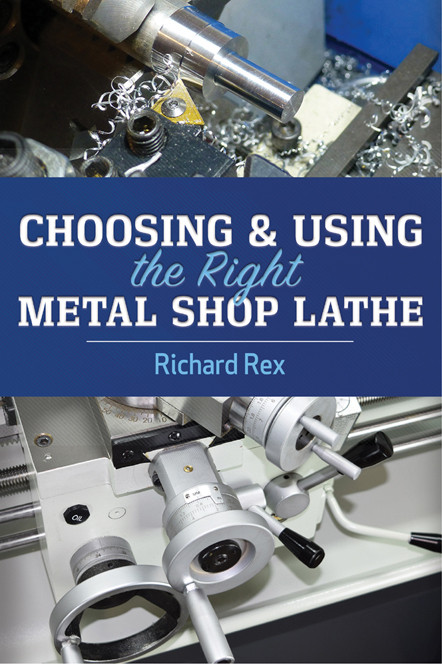
33 reviewsInvesting in a new metalworking lathe is a big step for any shop (especially home shops), where there’s usually no one around to help. Once the lathe is up and running, you should theoretically be able to make the special items you previously did without (or paid through the nose for), such as shafts, plain, tapered or threaded discs, bearings, and so on. But if you are new to this, you’ll want to know a lot more than you can learn from the salesman or the manual. Does the lathe really match your needs, and if so, how much?
Choosing & Using the Right Metal Shop Lathe is an essential source of information for lathe buyers and users at every level, from mini-size tabletops up to industrial machines weighing half a ton or more. It answers the question of what else you will need to get useful work from the machine. For instance, what comes as “standard equipment” with the lathe? Most include a chuck (usually a 4-jaw independent, not the self-centering 3-jaw you’ll want to use most of the time), maybe a faceplate (rarely used), and a 4-way toolholder you will probably swap right away for a more sensible design. Never included is a tailstock drill chuck, an essential accessory you will need from day one—and the same goes for actual cutting tools. Almost certainly, there won’t be a digital readout (DRO), which used to be regarded as a “maybe-someday” luxury—but not anymore.
The work talks about cutting oils, cutting speeds and easier-to-machine materials, and it cautions against buying sets of anything, vs. buying the one accessory you’ll truly need. Finally, there are chapters on building a tailstock drill press, a special toolpost for easy screw cutting, and a precision grinder for lathe tools that can be made from oddments of material in a couple of days or less.
Features
Differentiates between the truly essential features (screw-cutting) and the nice-to-have (power feeding), spindle speed selection from a gearbox (typical) or continuously vari
5.0
16 reviews
4.7
14 reviews
4.5
10 reviews
4.4
17 reviews
4.8
11 reviews
4.8
32 reviews
4.7
28 reviews
4.5
40 reviews