
Most ebook files are in PDF format, so you can easily read them using various software such as Foxit Reader or directly on the Google Chrome browser.
Some ebook files are released by publishers in other formats such as .awz, .mobi, .epub, .fb2, etc. You may need to install specific software to read these formats on mobile/PC, such as Calibre.
Please read the tutorial at this link. https://ebooknice.com/page/post?id=faq
We offer FREE conversion to the popular formats you request; however, this may take some time. Therefore, right after payment, please email us, and we will try to provide the service as quickly as possible.
For some exceptional file formats or broken links (if any), please refrain from opening any disputes. Instead, email us first, and we will try to assist within a maximum of 6 hours.
EbookNice Team
Status:
Available4.6
19 reviewsIncludes pictures
Includes a bibliography for further reading
“The main emphasis of the KGB is not in the area of intelligence at all. Only about 15% of time, money, and manpower is spent on espionage and such. The other 85% is a slow process which we call either ideological subversion or active measures ... or psychological warfare.” – Yuri Bezmenov
The KGB is one of the most famous abbreviations of the 20th century, and it has become synonymous with the shadowy and often violent actions of the Soviet Union’s secret police and internal security agencies. In fact, it is often used to refer to the Soviet state security agencies throughout its history, from the inception of the inception of the Cheka (Extraordinary Commission) in 1917 to the official elimination of the KGB in 1992. Whether it’s associated with the Russian Civil War’s excesses, Stalin’s purges, and even Vladimir Putin, the KGB has long been viewed as the West’s biggest bogeyman during the second half of the 20th century.
Inevitably, some of the Cold War’s most shadowy actions involved trying to turn Soviet assets, whether for propaganda or intelligence purposes, but the Soviet system constantly had to worry about defections, as evidenced by the construction of the Berlin Wall in the early 1960s. That said, while the whistleblowers may be celebrated if they damage the public relations of an adversary, they can be controversial if they damage one’s own country, as evidenced by the polarizing reputations of individuals like Edward Snowden and Julian Assange.
Yuri Bezmenov was among the first Soviet whistleblowers to attract attention on a global scale, and interest in his story has recently been revived thanks to his surprising cameo in the teaser trailer for Call of Duty Black Ops: Cold War in August 2020. This came despite the fact he was far from the first ex-KGB agent or Russian to pull back the curtains on the Russian government and reveal the harrowing “truths” they were once sworn to harbor, as well as the disconcerting covert operations of which they once allegedly partook. In fact, the history of Russian defectors who later emerged as informants in the name of public interest stretches back to the 16th century, when Andrey Kurbsky, a former boyar, high-ranking military commander, and trusted adviser to Tsar Ivan the Terrible, decamped to Lithuania on April 30, 1564.
Nonetheless, Bezmenov remains known for his works after becoming disillusioned with the Soviet system in middle age, his interest in India, and his ultimate defection to Canada, which led to him railing against Soviet communism in various lectures and works throughout the 1980s.
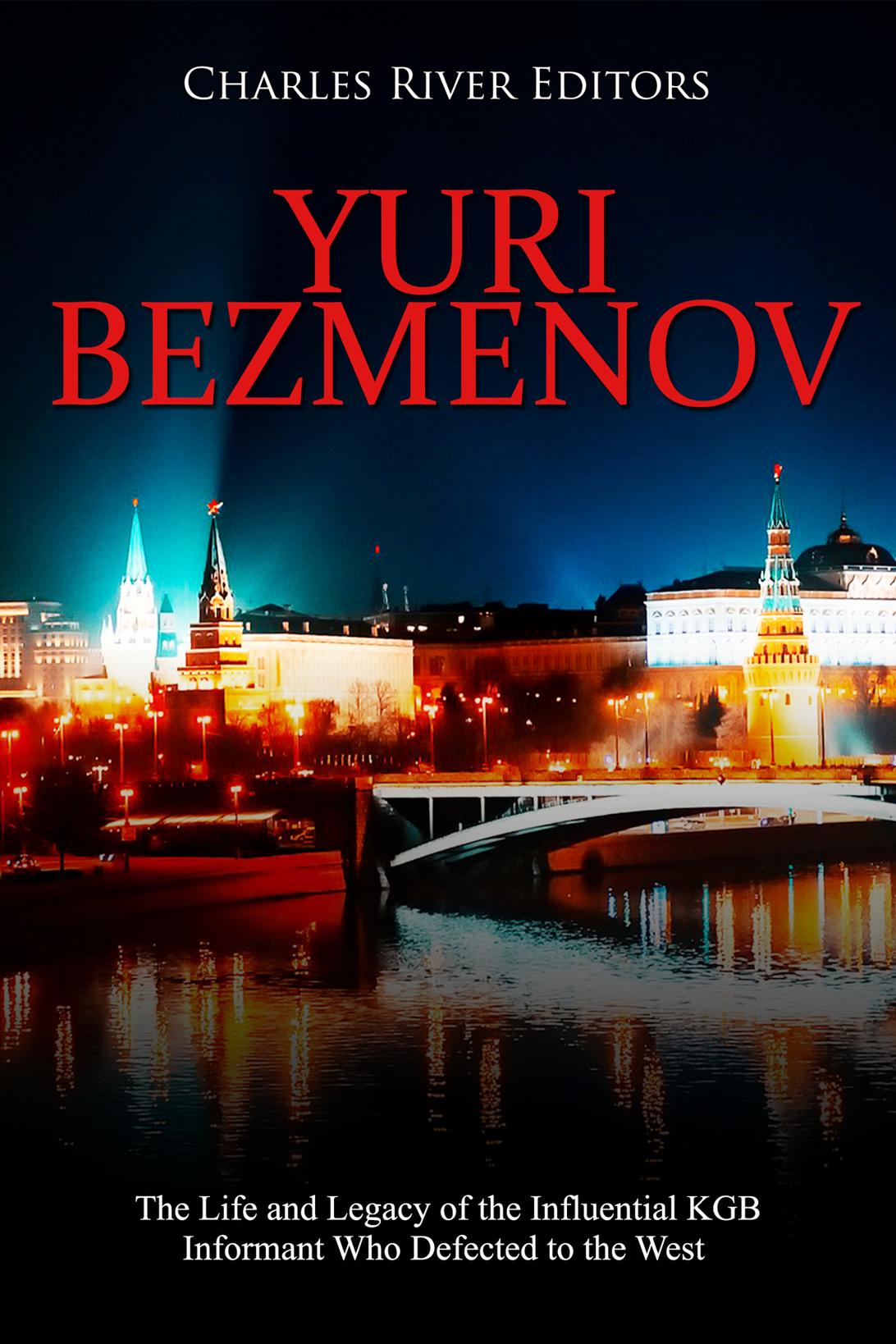
Yuri Bezmenov: The Life and Legacy of the Influential KGB Informant Who Defected to the West chronicles how Bezmenov went from the KGB to a thunderous anti-Soviet activist in America in the 1980s. Along with pictures of important people and places, you will learn about Bezmenov like never before.
4.8
40 reviews
4.9
38 reviews

4.9
17 reviews
4.6
40 reviews
4.9
13 reviews
4.9
15 reviews
4.3
31 reviews