logo
Product categories

EbookNice.com

Most ebook files are in PDF format, so you can easily read them using various software such as Foxit Reader or directly on the Google Chrome browser.
Some ebook files are released by publishers in other formats such as .awz, .mobi, .epub, .fb2, etc. You may need to install specific software to read these formats on mobile/PC, such as Calibre.

Please read the tutorial at this link.  https://ebooknice.com/page/post?id=faq


We offer FREE conversion to the popular formats you request; however, this may take some time. Therefore, right after payment, please email us, and we will try to provide the service as quickly as possible.


For some exceptional file formats or broken links (if any), please refrain from opening any disputes. Instead, email us first, and we will try to assist within a maximum of 6 hours.

EbookNice Team
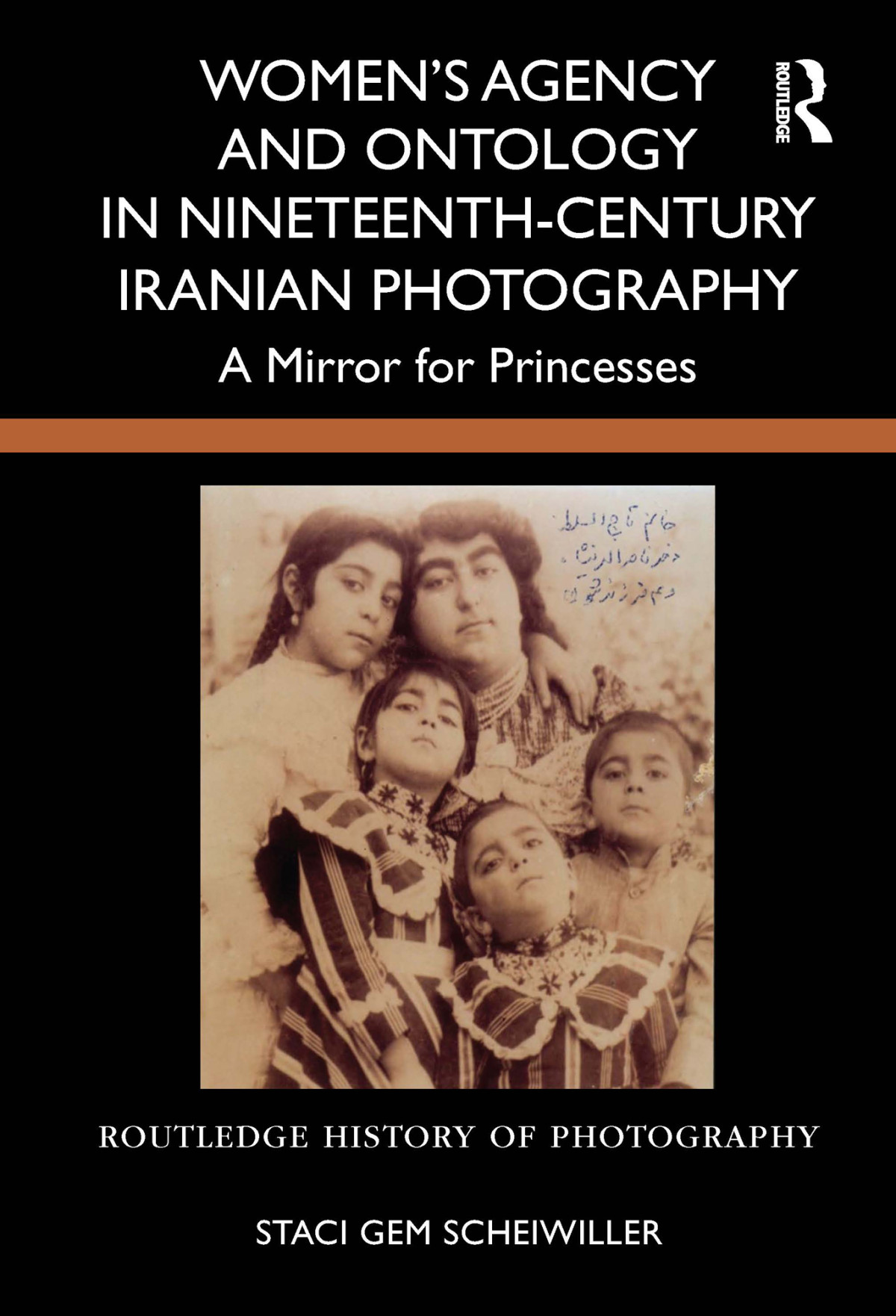
Women’s Agency and Ontology in Nineteenth-Century Iranian Photography: A Mirror for Princesses by Scheiwiller, Staci Gem instant download

  • SKU: EBN-236510972
Zoomable Image
$ 32 $ 40 (-20%)

Status:

Available

0.0

0 reviews
Instant download (eBook) Women’s Agency and Ontology in Nineteenth-Century Iranian Photography: A Mirror for Princesses after payment.
Authors:Scheiwiller, Staci Gem
Pages:updating ...
Year:2025
Publisher:Routledge
Language:english
File Size:15.7 MB
Format:epub
Categories: Ebooks

Product desciption

Women’s Agency and Ontology in Nineteenth-Century Iranian Photography: A Mirror for Princesses by Scheiwiller, Staci Gem instant download

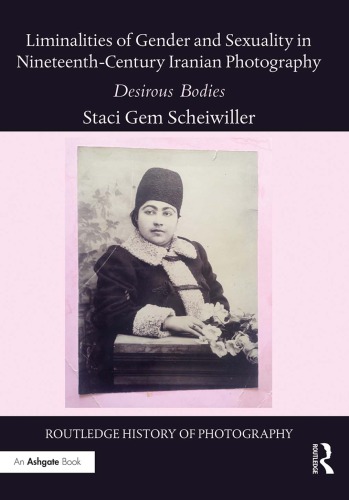
This study argues that photographs from Qajar Iran (1785–1925) of harem women, royal women, and public women, such as sex workers, musicians, singers, and dancers, make profound statements on the institution of the harem in a time of flux and modernization. Depictions of the harem in photographs shifted the scopic regime of power and made visible an Iranian “Sultanate of Women,” which produced a short succession of formidable, driven women. These photographs became instrumental as a “mirror for princesses,” in which women consolidated their political control by fashioning their images, constructing pictures of female rule, leaving a legacy and blueprint for future heads of harem, and bolstering their positions within the harem, the court, the state, and the global arena. Thus, photography played a major role as an ontic condition that would further reformulate perceptions of harem women’s ontological Being in the world, resulting in photographic evidence of their perceived agency. By the late nineteenth century, however, the institution of the harem began to wane, and women’s search for political influence had to shift to photographs that were marked distinctly and visibly as “anti-harem.” This book will be of interest to scholars working in art history, history of photography, gender studies, and Iranian studies.
*Free conversion of into popular formats such as PDF, DOCX, DOC, AZW, EPUB, and MOBI after payment.

Related Products