
Most ebook files are in PDF format, so you can easily read them using various software such as Foxit Reader or directly on the Google Chrome browser.
Some ebook files are released by publishers in other formats such as .awz, .mobi, .epub, .fb2, etc. You may need to install specific software to read these formats on mobile/PC, such as Calibre.
Please read the tutorial at this link. https://ebooknice.com/page/post?id=faq
We offer FREE conversion to the popular formats you request; however, this may take some time. Therefore, right after payment, please email us, and we will try to provide the service as quickly as possible.
For some exceptional file formats or broken links (if any), please refrain from opening any disputes. Instead, email us first, and we will try to assist within a maximum of 6 hours.
EbookNice Team
Status:
Available0.0
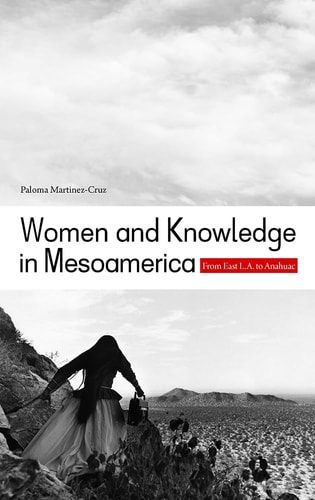
0 reviewsThe few works looking at the knowledge of women in Mesoamerica generally examine only the written—even academic—world, accessible only to the most elite segments of (customarily male) society. These works have consistently excluded the essential repertoire and performed knowledge of women who think and work in ways other than the textual. And while two of the book’s chapters critique contemporary novels, Martinez-Cruz also calls for the exploration of non-textual knowledge transmission. In this regard, the book's goals and methods are close to those of performance scholarship and anthropology, and these methods reveal Mesoamerican women to be public intellectuals. In Women and Knowledge in Mesoamerica, fieldwork and ethnography combine to reveal women healers as models of agency.
Her multidisciplinary approach allows Martinez-Cruz to disrupt Euro-based intellectual hegemony and to make a case for the epistemic authority of Native women. Written from a Chicana perspective, this study is learned, personal, and engaging for anyone who is interested in the wisdom that prevailing analytical cultures have deemed “unintelligible.” As it turns out, those who are unacquainted with the sometimes surprising extent and depth of wisdom of indigenous women healers simply haven’t been looking in the right places—outside the texts from which they have been consistently excluded.


4.6
20 reviews

5.0
34 reviews
4.7
5 reviews
4.7
31 reviews
4.9
41 reviews
4.9
12 reviews
4.5
8 reviews
5.0
9 reviews