Most ebook files are in PDF format, so you can easily read them using various software such as Foxit Reader or directly on the Google Chrome browser.
Some ebook files are released by publishers in other formats such as .awz, .mobi, .epub, .fb2, etc. You may need to install specific software to read these formats on mobile/PC, such as Calibre.
Please read the tutorial at this link. https://ebooknice.com/page/post?id=faq
We offer FREE conversion to the popular formats you request; however, this may take some time. Therefore, right after payment, please email us, and we will try to provide the service as quickly as possible.
For some exceptional file formats or broken links (if any), please refrain from opening any disputes. Instead, email us first, and we will try to assist within a maximum of 6 hours.
EbookNice Team
Status:
Available4.8
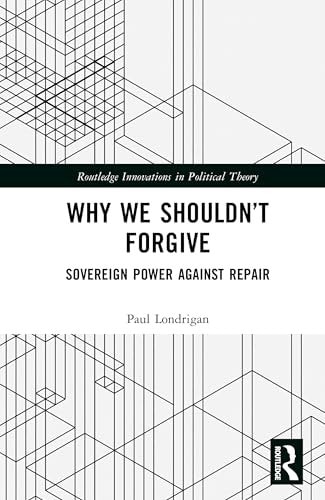
20 reviewsPolitical forgiveness is an awesome power that bears the promise of great benevolence, but this does not mean, as Paul Londrigan argues, that we should forgive. By engaging with the subject of political forgiveness in relation to sovereignty, Londrigan offers original insights into forgiveness as part of an analysis of prerogative power. As a result, what forgiveness does, and how it has been understood in the history of political thought, becomes intelligible. Six substantive chapters that investigate and substantiate the argument that we should not forgive follow the introduction. Each chapter adopts a seminal figure in the history of political thought beginning with Niccolò Machiavelli, and charts a course through Jean Bodin, Thomas Hobbes, John Locke, and Alexis de Tocqueville. As the chapters unfold across thinkers and through time, they build on one another. The resulting narrative illustrates how political forgiveness and sovereign power have evolved, and crucially, how the anxieties and preoccupations of his interlocutors change in accordance with who exercises sovereignty and who benefits or suffers from the dispensation of forgiveness.
Why We Shouldn’t Forgive fills an important gap in advancing this fascinating field of research. This book is required reading for students and academics interested in contemporary approaches to reparative politics, studies of post-conflict reconciliation, and those who seek a deeper understanding of the politics of pardon and amnesty, as well as scholars who engage with critiques of sovereign power.

4.8
36 reviews
4.9
11 reviews
4.6
9 reviews
4.8
32 reviews
5.0
24 reviews
4.4
32 reviews
4.6
36 reviews