logo
Product categories

EbookNice.com

Most ebook files are in PDF format, so you can easily read them using various software such as Foxit Reader or directly on the Google Chrome browser.
Some ebook files are released by publishers in other formats such as .awz, .mobi, .epub, .fb2, etc. You may need to install specific software to read these formats on mobile/PC, such as Calibre.

Please read the tutorial at this link.  https://ebooknice.com/page/post?id=faq


We offer FREE conversion to the popular formats you request; however, this may take some time. Therefore, right after payment, please email us, and we will try to provide the service as quickly as possible.


For some exceptional file formats or broken links (if any), please refrain from opening any disputes. Instead, email us first, and we will try to assist within a maximum of 6 hours.

EbookNice Team
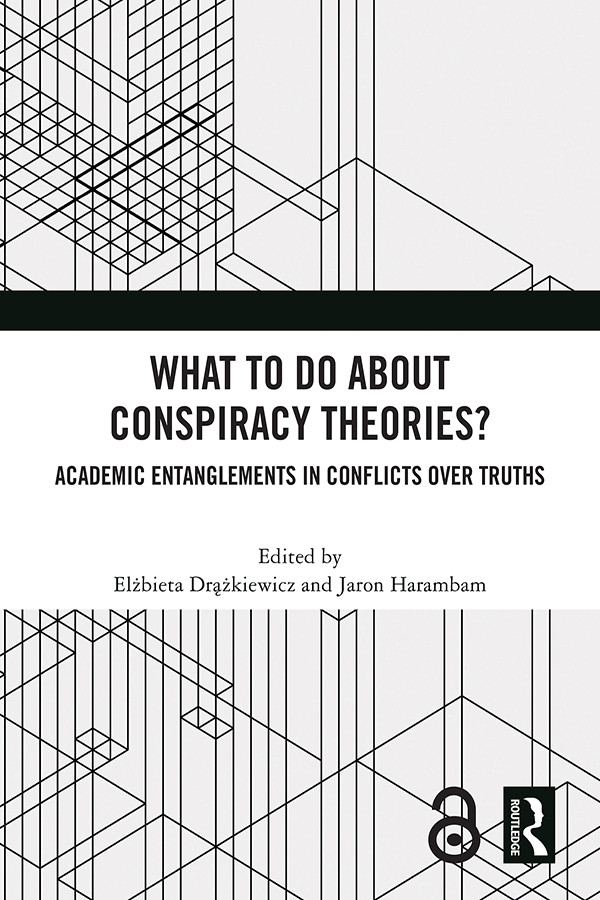
What To Do About Conspiracy Theories?: Academic Entanglements in Conflicts Over Truths by Elżbieta Drążkiewicz, Jaron Harambaem ISBN 9781032647456, 9781032647463, 9781032647449, 1032647450, 1032647469, 1032647442 instant download

  • SKU: EBN-238389028
Zoomable Image
$ 32 $ 40 (-20%)

Status:

Available

0.0

0 reviews
Instant download (eBook) What To Do About Conspiracy Theories?: Academic Entanglements in Conflicts Over Truths after payment.
Authors:Elżbieta Drążkiewicz, Jaron Harambaem
Pages:136 pages
Year:2024
Edition:1
Publisher:Taylor & Francis Group
Language:english
File Size:1.07 MB
Format:epub
ISBNS:9781032647456, 9781032647463, 9781032647449, 1032647450, 1032647469, 1032647442
Categories: Ebooks

Product desciption

What To Do About Conspiracy Theories?: Academic Entanglements in Conflicts Over Truths by Elżbieta Drążkiewicz, Jaron Harambaem ISBN 9781032647456, 9781032647463, 9781032647449, 1032647450, 1032647469, 1032647442 instant download

What To Do About Conspiracy Theories? Increasingly social activists, journalists and policy makers have expressed concern over the proliferation of conspiracy theories in the public space. 
-
There is a growing fear of their impact on social cohesion and democracy, their power to erode trust in state institutions and science. These concerns often come with an expectation that it is the responsibility of academics to engage with conspiracy beliefs by countering them. But should they? In this book, contributors show that like everything that relates to conspiracy theories, even the answer to this question is not straightforward and can vary across disciplines and schools, can be influenced by disciplinary ethical codes of conduct, research methodologies and specific approaches to conspiracy theories. 
-
Foregrounding a variety of approaches, from across disciplines (psychology, anthropology, sociology and media studies), academic seniority (from young scholars to full professors) and countries (USA, Ireland, UK, The Netherlands, Sweden and Greece), the chapters in this book are in deep conversation with each other, offering multiple alternative takes on the issue of what should academics do with conspiracy theories. 
-
Together, the book embodies several bold and compelling provocations to dealing differently with conspiracy theories. This timely volume introduces perspectives of scholars representing media studies, anthropology, psychology and sociology and discusses case studies concerning politics, health, environment and security. It will be a key resource for researchers, scholars and practitioners engaged in these fields and will also appeal to anyone interested in conspiracy theories and other related phenomena such as disinformation or fake news. 
-
This book was originally published as a special issue of the Journal for Cultural Research.
*Free conversion of into popular formats such as PDF, DOCX, DOC, AZW, EPUB, and MOBI after payment.

Related Products