
Most ebook files are in PDF format, so you can easily read them using various software such as Foxit Reader or directly on the Google Chrome browser.
Some ebook files are released by publishers in other formats such as .awz, .mobi, .epub, .fb2, etc. You may need to install specific software to read these formats on mobile/PC, such as Calibre.
Please read the tutorial at this link. https://ebooknice.com/page/post?id=faq
We offer FREE conversion to the popular formats you request; however, this may take some time. Therefore, right after payment, please email us, and we will try to provide the service as quickly as possible.
For some exceptional file formats or broken links (if any), please refrain from opening any disputes. Instead, email us first, and we will try to assist within a maximum of 6 hours.
EbookNice Team
Status:
Available4.4
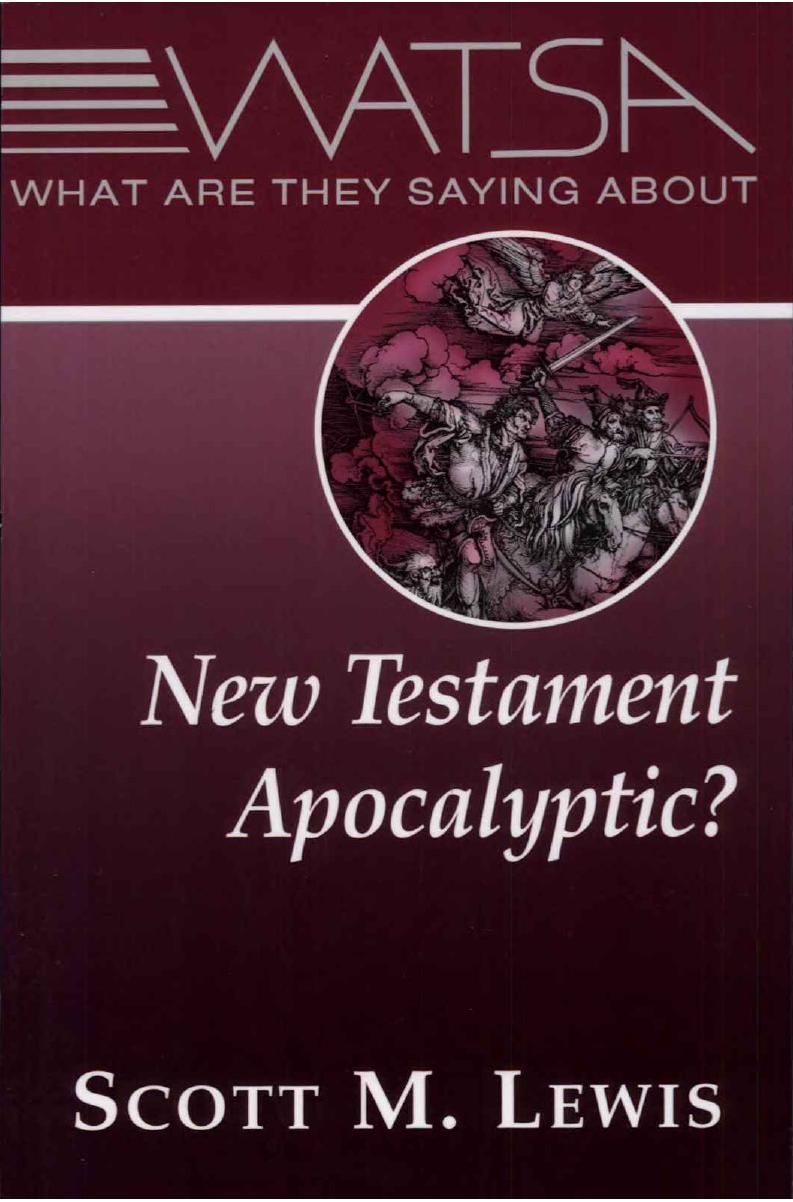
22 reviewsScott Lewis begins his volume focusing on New Testament apocalyptic with Albert Schweitzer's famous 19th-century book The Quest for the Historical Jesus that concludes that both the worldview and the message of Jesus were thoroughly apocalyptic. And he brings us to the present with the heated debates generated by the historical Jesus research of the last 20 years and the rebirth of apocalyptic fervor at the beginning of the new millennium. The book focuses on five areas: 1) the attempts since Schweitzer to define the apocalypse genre and its constituent eschatology and theology 2) the debate over the question concerning the nature of Jesus' teaching and proclamation, and whether the apocalyptic statements attributed to him are genuine or products of the early church 3) the apocalyptic nature of Paul's proclamation and the central role it plays in his moral exhortation, ecclesiology, and spirituality 4) the nature of the message of the Book of Revelation and the different approaches to its interpretation 5) the application of apocalyptic theology and eschatology to the life of the church in the form of preaching, ethics, spirituality, and social justice; and 6) a concluding reflection A special concern of the book is the reappropriation of the apocalyptic tradition by the modern church in a manner that avoids the many misuses of this genre in the past. To this end, it is most important that apocalyptic theology be recognized for what it is: a theology of hope rather than a theology of fear. +
4.7
36 reviews

4.5
10 reviews
5.0
14 reviews
4.4
30 reviews


4.8
13 reviews