Most ebook files are in PDF format, so you can easily read them using various software such as Foxit Reader or directly on the Google Chrome browser.
Some ebook files are released by publishers in other formats such as .awz, .mobi, .epub, .fb2, etc. You may need to install specific software to read these formats on mobile/PC, such as Calibre.
Please read the tutorial at this link. https://ebooknice.com/page/post?id=faq
We offer FREE conversion to the popular formats you request; however, this may take some time. Therefore, right after payment, please email us, and we will try to provide the service as quickly as possible.
For some exceptional file formats or broken links (if any), please refrain from opening any disputes. Instead, email us first, and we will try to assist within a maximum of 6 hours.
EbookNice Team
Status:
Available0.0
0 reviews
ISBN 10: 143021029X
ISBN 13: 9781430210290
Author: Daniel Cederholm
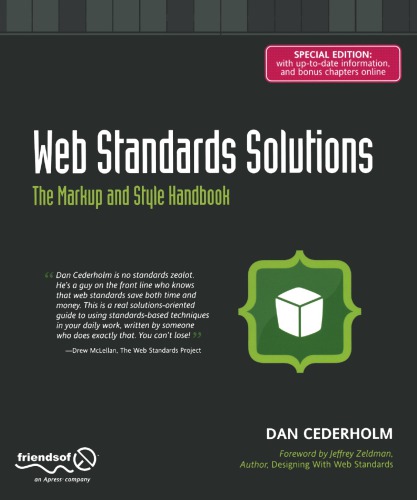
Welcome to the expanded second edition of Dan Cederholm's bestselling Web Standards Solutions. Web standards are the standard technology specifications enforced by the World Wide Web Consortium (W3C) to make sure that web designers and browser manufacturers are using the same technology syntax.
It is important that these implementations are the same throughout the Web—otherwise, it becomes a messy proprietary place, and lacks consistency. These standards also allow content to be more compatible with multiple different viewing devices, such as screen readers for people with vision impairments, cell phones, PDFs, etc. HTML, XML, and CSS are all such technologies.
This book is your essential guide to understanding the advantages you can bring to your web pages by implementing web standards and precisely how to apply them. Web standards such as XHTML and CSS are now fairly well-known technologies, and they will likely be familiar to you, the web designer. Indeed, they are all around you on the Web. However, within web standards still lies a challenge: while the browser's support for web standards is steadily increasing, many web developers and designers have yet to discover the real benefits of web standards and respect the need to adhere to them.
The real art is in truly understanding the benefits and implementing the standards efficiently. As a simple example of its power, you can use CSS to lay out your pages instead of nesting tables. This can make file sizes smaller, allowing pages to load faster, ultimately increasing accessibility for all browsers, devices, and web users.
Part 1: Get Down with Markup
1. Lists
2. Headings
3. Tables are Evil?
4. Quotations
5. Forms
6. Strong, Em, and Other Phrase Elements
7. Anchors
8. More Lists
9. Minimizing Markup
Part 2: Simplebits of Style
10. Applying CSS
11. Print Styles
12. CSS Layouts
13. Styling Text
14. Image Replacement
15. Styling
16. Next Steps
web style guide pdf
web design standards and best practices
web style guide basic design principles for creating web sites
web design standards
web style guide 3rd edition
Tags: Daniel Cederholm, Web Standards, Markup, Style, Handbook


4.6
12 reviews

4.7
9 reviews
4.6
39 reviews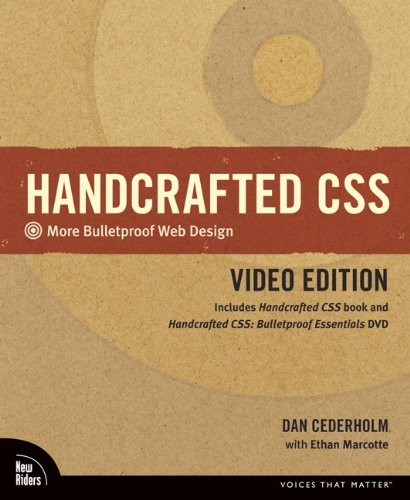
4.4
29 reviews