
logo
Product categories

EbookNice.com

Most ebook files are in PDF format, so you can easily read them using various software such as Foxit Reader or directly on the Google Chrome browser.
Some ebook files are released by publishers in other formats such as .awz, .mobi, .epub, .fb2, etc. You may need to install specific software to read these formats on mobile/PC, such as Calibre.

Please read the tutorial at this link.  https://ebooknice.com/page/post?id=faq


We offer FREE conversion to the popular formats you request; however, this may take some time. Therefore, right after payment, please email us, and we will try to provide the service as quickly as possible.


For some exceptional file formats or broken links (if any), please refrain from opening any disputes. Instead, email us first, and we will try to assist within a maximum of 6 hours.

EbookNice Team
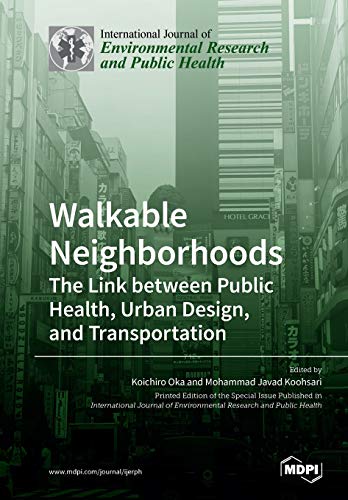
(Ebook) Walkable Neighborhoods: The Link between Public Health, Urban Design, and Transportation by Koichiro Oka (editor), Mohammad Javad Koohsari (editor) ISBN 9783039219308, 9783039219315, 3039219308, 3039219316

  • SKU: EBN-36371930
Zoomable Image
$ 32 $ 40 (-20%)

Status:

Available

4.6

19 reviews
Instant download (eBook) Walkable Neighborhoods: The Link between Public Health, Urban Design, and Transportation after payment.
Authors:Koichiro Oka (editor), Mohammad Javad Koohsari (editor)
Pages:234 pages.
Year:2020
Editon:Illustrated
Publisher:MDPI AG
Language:english
File Size:24.77 MB
Format:pdf
ISBNS:9783039219308, 9783039219315, 3039219308, 3039219316
Categories: Ebooks

Product desciption

(Ebook) Walkable Neighborhoods: The Link between Public Health, Urban Design, and Transportation by Koichiro Oka (editor), Mohammad Javad Koohsari (editor) ISBN 9783039219308, 9783039219315, 3039219308, 3039219316

It is now widely recognized that individual-based motivational interventions alone are not sufficient to address the global pandemic of physical inactivity (lack of exercise and too much sitting time). There has been a growing interest in the effect the physically built environment can have on people’s active behaviors. The fundamental assumption is that surrounding physical environments can support active behaviors among a large number of people with long-term effects. This topic has received much attention over the last decade, mainly in the three fields of urban design, public health, and transportation. This Special Issue aims to provide multidisciplinary and evidence-based state-of-the-art research on how the locations where people live impact their active behaviors and health outcomes.
*Free conversion of into popular formats such as PDF, DOCX, DOC, AZW, EPUB, and MOBI after payment.

Related Products