Most ebook files are in PDF format, so you can easily read them using various software such as Foxit Reader or directly on the Google Chrome browser.
Some ebook files are released by publishers in other formats such as .awz, .mobi, .epub, .fb2, etc. You may need to install specific software to read these formats on mobile/PC, such as Calibre.
Please read the tutorial at this link. https://ebooknice.com/page/post?id=faq
We offer FREE conversion to the popular formats you request; however, this may take some time. Therefore, right after payment, please email us, and we will try to provide the service as quickly as possible.
For some exceptional file formats or broken links (if any), please refrain from opening any disputes. Instead, email us first, and we will try to assist within a maximum of 6 hours.
EbookNice Team
Status:
Available0.0
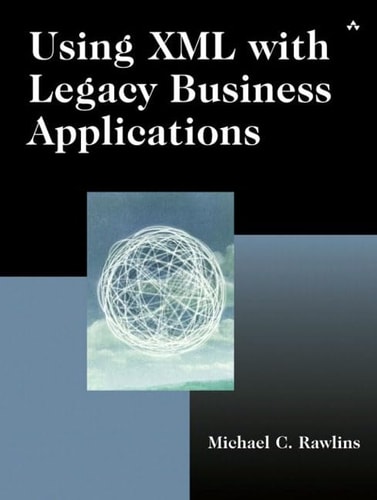
0 reviewsBusinesses running legacy applications that do not support XML can face a tough choice: Either keep their legacy applications or switch to newer, XML-enhanced applications. XML presents both challenges and opportunities for organizations as they struggle with their data.
Does this dilemma sound familiar? What if you could enable a legacy application to support XML? You can. In Using XML with Legacy Business Applications, e-commerce expert Michael C. Rawlins outlines usable techniques for solving day-to-day XML-related data exchange problems. Using an easy-to-understand cookbook approach, Rawlins shows you how to build XML support into legacy business applications using Java and C++. The techniques are illustrated by building converters for legacy formats. Converting CSV files, flat files, and X12 EDI to and from XML will never be easier!
Inside you'll find:
For developers working with either MSXML with Visual C++ or Java and Xerces:
For end users who need a simple and robust conversion utility:
4.4
25 reviews
4.8
10 reviews
4.9
5 reviews
4.5
37 reviews
4.9
26 reviews