
Most ebook files are in PDF format, so you can easily read them using various software such as Foxit Reader or directly on the Google Chrome browser.
Some ebook files are released by publishers in other formats such as .awz, .mobi, .epub, .fb2, etc. You may need to install specific software to read these formats on mobile/PC, such as Calibre.
Please read the tutorial at this link. https://ebooknice.com/page/post?id=faq
We offer FREE conversion to the popular formats you request; however, this may take some time. Therefore, right after payment, please email us, and we will try to provide the service as quickly as possible.
For some exceptional file formats or broken links (if any), please refrain from opening any disputes. Instead, email us first, and we will try to assist within a maximum of 6 hours.
EbookNice Team

Status:
Available0.0
0 reviewsTHE ESSAYS in this volume come from Nick Land’s now-defunct blog Urban Future (thatsmags.com/shanghai) that he wrote from 2011 to 2013. For the sake of coherency, essays deemed incongruent with the following description of the blog—from Land’s introductory post—were excluded:
"Most basically and predictably, Urban Future has been programmed by its name. Its principal topic is the intersection of cities with the future. It aims to foster discussion about cities as engines of the future, and about futurism as a dynamic influence on the shape, character, and development of cities. More particularly, it scavenges for clues, and floats speculations, about the Shanghai of tomorrow."
This is the essence of Urban Future. With a focus on Shanghai, China, and the West, it is a philosophical book about urban modernity, urban evolution, and technological progress and acceleration. Land sees cities not merely as concentrations of people but as quasi-superorganisms—increasingly resembling advanced computational systems—that are driving mankind toward its evolutionary destiny.
4.4
13 reviews
4.4
10 reviews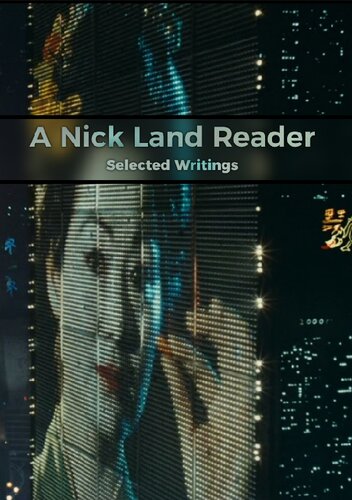
4.3
8 reviews
4.9
19 reviews
5.0
9 reviews
4.5
13 reviews
4.6
9 reviews