
Most ebook files are in PDF format, so you can easily read them using various software such as Foxit Reader or directly on the Google Chrome browser.
Some ebook files are released by publishers in other formats such as .awz, .mobi, .epub, .fb2, etc. You may need to install specific software to read these formats on mobile/PC, such as Calibre.
Please read the tutorial at this link. https://ebooknice.com/page/post?id=faq
We offer FREE conversion to the popular formats you request; however, this may take some time. Therefore, right after payment, please email us, and we will try to provide the service as quickly as possible.
For some exceptional file formats or broken links (if any), please refrain from opening any disputes. Instead, email us first, and we will try to assist within a maximum of 6 hours.
EbookNice Team
Status:
Available4.9
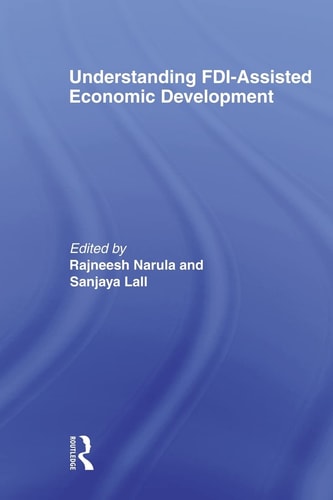
17 reviewsOver the last two decades or so, there has been a significant shift away from a inward-looking, import-substituting approach towards a more outward-looking, export-oriented policy orientation. The reasons for this shift are complex, but have to do with developments associated with globalization, trade and debt deficits faced by IS-driven economies, as well as the acknowledged success of the Asian newly industrialized economies (NIEs) in technological and economic 'leapfrogging' within an outward-oriented approach. One of the key features of policy liberalization is the need to attract foreign direct investment (FDI) as a means to acquire or improve technological capabilities through multinational enterprise (MNE) activity.
The role of the MNE as an additional source of capital and technology is one of the key features of this new openness, as alternative sources of capital have become scarcer, exacerbated by economic and financial crises. The failure of protected industries in LDCs to become competitive on global markets has highlighted the limitations of the arms-length technology transfer approach. At the same time, the need to build strong local capabilities has not diminished; on the contrary, it has risen as increasingly mobile factors seek strong complementary factors in sites where they will locate.
Hence, in recent years, both LDC governments and foreign donors have increasingly come to focus on the role MNEs and FDI can play in development. This has been accompanied by a lifting of many types of regulations that previously limited the role of FDI and MNEs in many developing countries, and a reassessment among donors of the role of public…

4.5
23 reviews

4.4
26 reviews
4.6
15 reviews
4.6
5 reviews
4.6
13 reviews
4.6
40 reviews
4.8
36 reviews