Most ebook files are in PDF format, so you can easily read them using various software such as Foxit Reader or directly on the Google Chrome browser.
Some ebook files are released by publishers in other formats such as .awz, .mobi, .epub, .fb2, etc. You may need to install specific software to read these formats on mobile/PC, such as Calibre.
Please read the tutorial at this link. https://ebooknice.com/page/post?id=faq
We offer FREE conversion to the popular formats you request; however, this may take some time. Therefore, right after payment, please email us, and we will try to provide the service as quickly as possible.
For some exceptional file formats or broken links (if any), please refrain from opening any disputes. Instead, email us first, and we will try to assist within a maximum of 6 hours.
EbookNice Team
Status:
Available4.6
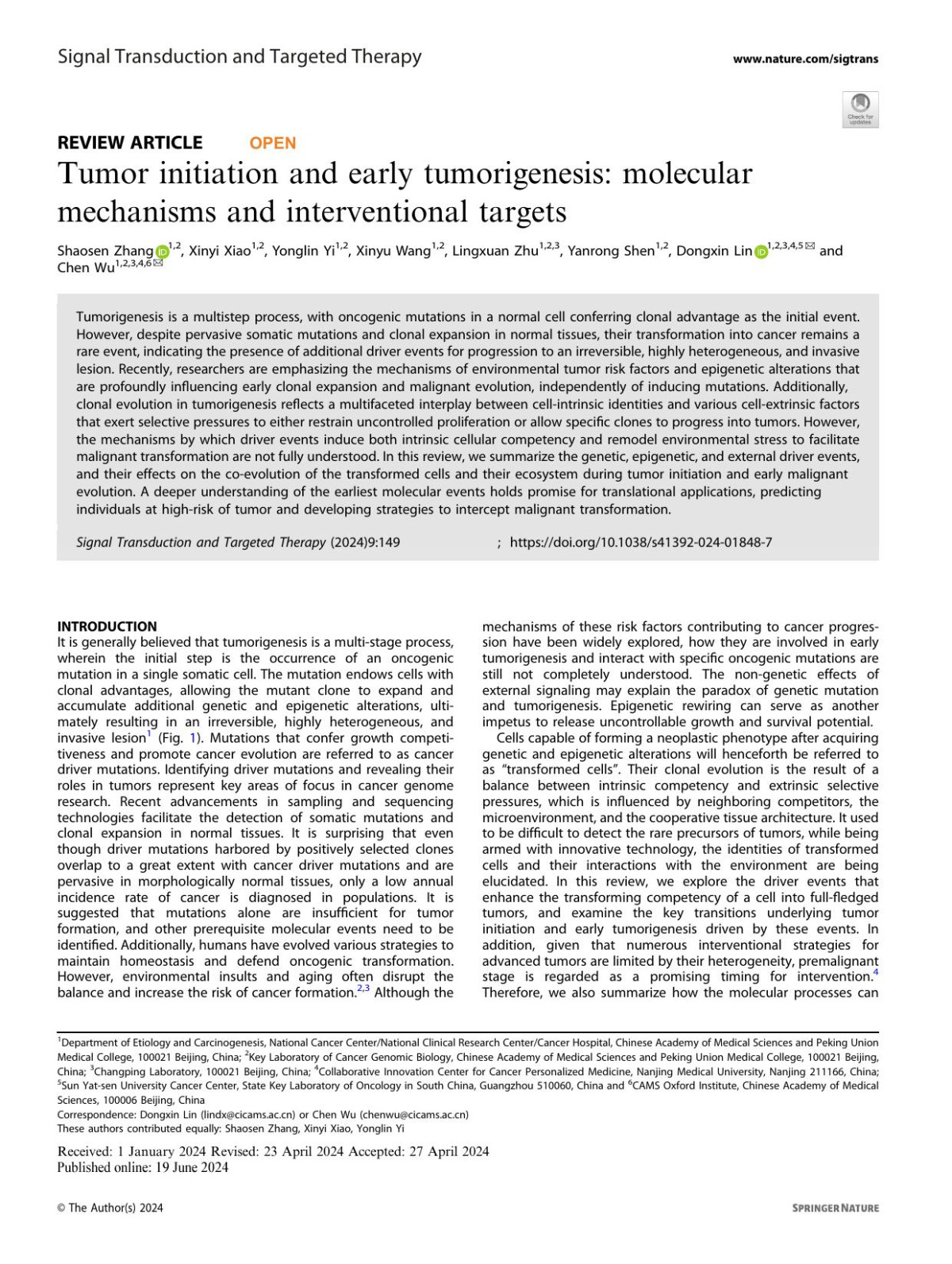
30 reviewsTumorigenesis is a multistep process, with oncogenic mutations in a normal cell conferring clonal advantage as the initial event.However, despite pervasive somatic mutations and clonal expansion in normal tissues, their transformation into cancer remains arare event, indicating the presence of additional driver events for progression to an irreversible, highly heterogeneous, and invasivelesion. Recently, researchers are emphasizing the mechanisms of environmental tumor risk factors and epigenetic alterations thatare profoundly influencing early clonal expansion and malignant evolution, independently of inducing mutations. Additionally,clonal evolution in tumorigenesis reflects a multifaceted interplay between cell-intrinsic identities and various cell-extrinsic factorsthat exert selective pressures to either restrain uncontrolled proliferation or allow specific clones to progress into tumors. However,the mechanisms by which driver events induce both intrinsic cellular competency and remodel environmental stress to facilitatemalignant transformation are not fully understood. In this review, we summarize the genetic, epigenetic, and external driver events,1234567890();,:and their effects on the co-evolution of the transformed cells and their ecosystem during tumor initiation and early malignantevolution. A deeper understanding of the earliest molecular events holds promise for translational applications, predictingindividuals at high-risk of tumor and developing strategies to intercept malignant transformation.Signal Transduction and Targeted Therapy (2024) 9:149 ;

4.4
34 reviews
4.3
24 reviews
4.5
27 reviews
5.0
23 reviews
4.9
10 reviews
4.8
35 reviews