logo
Product categories

EbookNice.com

Most ebook files are in PDF format, so you can easily read them using various software such as Foxit Reader or directly on the Google Chrome browser.
Some ebook files are released by publishers in other formats such as .awz, .mobi, .epub, .fb2, etc. You may need to install specific software to read these formats on mobile/PC, such as Calibre.

Please read the tutorial at this link.  https://ebooknice.com/page/post?id=faq


We offer FREE conversion to the popular formats you request; however, this may take some time. Therefore, right after payment, please email us, and we will try to provide the service as quickly as possible.


For some exceptional file formats or broken links (if any), please refrain from opening any disputes. Instead, email us first, and we will try to assist within a maximum of 6 hours.

EbookNice Team
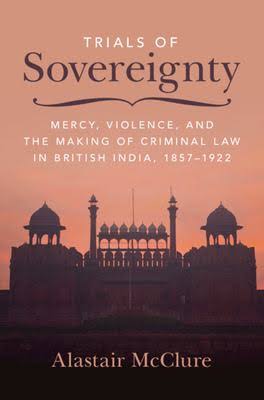
Trials of Sovereignty: Mercy, Violence, and the Making of Criminal Law in British India, 1857–1922 by Alastair McClure ISBN 9781009553490, 1009553496 instant download

  • SKU: EBN-238348298
Zoomable Image
$ 32 $ 40 (-20%)

Status:

Available

4.7

24 reviews
Instant download (eBook) Trials of Sovereignty: Mercy, Violence, and the Making of Criminal Law in British India, 1857–1922 after payment.
Authors:Alastair McClure
Pages:396 pages
Year:2024
Edition:1st
Publisher:Cambridge University Press
Language:english
File Size:5.49 MB
Format:pdf
ISBNS:9781009553490, 1009553496
Categories: Ebooks

Product desciption

Trials of Sovereignty: Mercy, Violence, and the Making of Criminal Law in British India, 1857–1922 by Alastair McClure ISBN 9781009553490, 1009553496 instant download

Trials of Sovereignty offers the first legal history of mercy and discretion in nineteenth and twentieth-century India. Through a study of large-scale amnesties, the prerogative powers of pardon, executive commutation, and judicial sentencing practices, Alastair McClure argues that discretion represented a vital facet of colonial rule. In a bloody penal order, officials and judges consistently offered reduced sentences and pardons for select subjects, encouraging others to approach state institutions and confer the colonial state with greater legitimacy. Mercy was always a contested expression of sovereign power that risked exposing colonial weakness. This vulnerability was gradually recognized by colonial subjects who deployed a range of legal and political strategies to interrogate state power and question the lofty promises of British colonial justice. By the early twentieth century, the decision to break the law and reject imperial overtures of mercy had developed into a crucial expression of anticolonial politics.
*Free conversion of into popular formats such as PDF, DOCX, DOC, AZW, EPUB, and MOBI after payment.

Related Products