
Most ebook files are in PDF format, so you can easily read them using various software such as Foxit Reader or directly on the Google Chrome browser.
Some ebook files are released by publishers in other formats such as .awz, .mobi, .epub, .fb2, etc. You may need to install specific software to read these formats on mobile/PC, such as Calibre.
Please read the tutorial at this link. https://ebooknice.com/page/post?id=faq
We offer FREE conversion to the popular formats you request; however, this may take some time. Therefore, right after payment, please email us, and we will try to provide the service as quickly as possible.
For some exceptional file formats or broken links (if any), please refrain from opening any disputes. Instead, email us first, and we will try to assist within a maximum of 6 hours.
EbookNice Team
Status:
Available5.0
17 reviews
ISBN 10: 149870400X
ISBN 13: 9781498704007
Author: Patrick Graupp, Robert Wrona
Winner of a Shingo Research and Professional Publication Award
What can we do to make more people productively useful?
Striving to answer that question more than 60 years ago sparked the development of the most powerful training methodology that has impacted U.S. industry -- Training Within Industry (TWI). During World War II, major production increases were demanded by the U.S. military - TWI, which trains supervisors, was developed comprising three separate programs:
Toyota was the earliest company to adopt TWI after World War II, and this methodology planted the seeds for the development of the Toyota Production System -- the gold standard of manufacturing excellence.
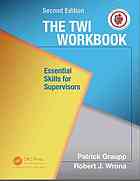
In The TWI Workbook: Essential Skills for Supervisors, Patrick Graupp and Robert Wrona teach supervisors how to apply a four-step method for each of the three respective programs with numerous examples and exercises. In these exercises, supervisors will participate in hands-on application of the four-step method to actual jobs and employee problems from their own worksites. In addition, a CD companion includes blank forms needed to complete the exercises and implementation case studies.
Section I TWI Fundamentals
1 Role of TWI at Toyota
Early Struggles of Toyota
Rolling Out the Toyota Production System: 1950–1973
Impact of the 1973 Oil Crisis
Role of TWI in the Toyota Production System
Advice from Mr. Kato on How to Use TWI in Lean
TWI: The Missing Link to Lean
2 Fundamentals of the TWI Program
Five Needs Model
Common Trait: J Program’s Four-Step Methods
Common Trait: Learn by Doing
Common Trait: Training Session Format
Training Manuals: A Standardized Methodology for Delivering Training
Identifying Roles and Responsibilities in the TWI Programs
Section II Job Instruction
3 Four Steps of Job Instruction
Workforce Instruction: Two Ineffective Methods
Showing Alone
Telling Alone
Using the JI Four-Step Method
Fire Underwriter’s Knot Demonstration
Step 1: Prepare the Worker
Detail 1: Put the Person at Ease
Detail 2: State the Job
Detail 3: Find Out What the Person Already Knows
Detail 4: Get the Person Interested in Learning the Job
Detail 5: Place the Person in the Correct Position
Step 2: Present the Operation
Detail 1: Tell, Show, and Illustrate One Important Step at a Time
Detail 2: Do It Again, Stressing Key Points
Detail 3: Do It Again, Stating Reasons for Key Points
Caution Point: Instruct Clearly, Completely, and Patiently, but Don’t Give Them More Information than They Can Master at One Time
Step 3: Try Out Performance
Detail 1: Have the Person Do the Job—Correct Errors
Detail 2: Have the Person Explain Each Important Step to You as He or She Does the Job Again
Detail 3: Have the Person Explain Each Key Point to You as He or She Does the Job Again
Detail 4: Have the Person Explain Reasons for Key Points to You as He or She Does the Job Again
Caution Point: Make Sure the Person Understands
Caution Point: Continue until You Know They Know
Step 4: Follow Up
Detail 1: Put the Person on His or Her Own
Detail 2: Designate Who the Person Goes to for Help
Detail 3: Check on the Person Frequently
Detail 4: Encourage Questions
Detail 5: Taper Off Extra Coaching and Close Follow-Up
If the Worker Hasn’t Learned, the Instructor Hasn’t Taught
4 How to Get Ready to Instruct: Break Down the Job
Get Ready Point 2: Break Down the Job
What Is an Important Step?
What Is a Key Point?
Identifying the Key Points in the Fire Underwriter’s Knot Example
Important Step 1: Untwist and Straighten
Important Step 2: Make Right Loop
Important Step 3: Make Left Loop
Important Step 4: Put End through Loop
Important Step 5: Pull Taut
Listing the Reasons for the Key Points
Making a Balanced Breakdown
Observing and Involving Experienced Workers in the Breakdown Process
Summary and Sample Breakdowns
Breakdown Sheets and Standardized Work
Extra Notes on Key Points
Common Key Points
Teaching Feel
Long Operations
Noisy Areas
5 How to Get Ready to Instruct: Make a Timetable for Training, Get Everything Ready, and Arrange the Worksite
Get Ready Point 1: Make a Timetable for Training
Get Ready Points 3 and 4: Get Everything Ready and Arrange the Worksite
Section III Job Methods
6 Applying Job Methods to a Sample Job to Show before and after Improvements
Three Fundamental Classifications of Work
Microwave Shield Sample Job: Current Method
Microwave Shield Sample Job: Proposed Method
Microwave Shield Sample Job: How the New Job Process Works Using the New Method
Results in Improving the Microwave Shield Job
7 Four Steps of Job Methods Improvement
Step 1: Break Down the Job
Applying Step 1 to the Microwave Shield Sample Job
Step 2: Question Every Detail
Asking the Five Ws and One H
Questioning Other Important Items Regarding the Overall Job
Applying Step 2 to the Microwave Shield Sample Job
Detail 1: Walk to the Supply Box Containing Copper Sheets
Detail 2: Pick Up 15–20 Copper Sheets
Detail 2: Pick Up 15–20 Copper Sheets (More Questions)
Detail 3: Walk to the Workbench
Detail 4: Inspect and Lay Out 12 Copper Sheets
Detail 5: Walk to the Supply Box and Replace Extra Sheets
Detail 6: Walk to the Supply Box Containing Brass Sheets
Detail 7: Pick Up 15–20 Sheets
Detail 8: Walk to the Bench
Detail 9: Inspect and Lay Out 12 Sheets (Brass)
Detail 10: Walk to the Supply Box and Replace Extra Sheets
Detail 11: Walk to the Bench
Detail 12: Stack 12 Sets near the Riveter
Details 13–20: Riveting Details
Detail 21: Stamp TOP and Stack Them on the Workbench
Details 22–30: Packaging Details
Step 3: Develop the New Method
Four Improvement Elements
Improvement Element 1: Eliminate Unnecessary Details
Improvement Element 2: Combine Details When Practical
Improvement Element 3: Rearrange Details for Better Sequence
Improvement Element 4: Simplify All Necessary Details
Work Out Your Ideas with Others
Write Up the Proposed New Method
Step 4: Apply the New Method
Item 1: Sell Your Proposal to the Boss
Item 2: Sell the New Method to the Operators
Item 3: Get Final Approval of All Concerned on Safety, Quality, Quantity, and Cost
Item 4: Put the New Method to Work—Use It until a Better Way Is Developed
Item 5: Give Credit Where Credit Is Due
Closing
8 Writing and Selling the Improvement Proposal: Example
Proposals: Write It Down and Work Out the Numbers
Improvement Proposal Sheet for the Microwave Shield Sample Job
Expressing Results Quantitatively for Greatest Impact
Improvement Proposal Example: Reduction of Workers on the Handset Assembly Line
Step 1: Break Down the Job
Step 2: Question Every Detail
Step 3: Develop the New Method
Step 4: Apply the New Method
Section IV Job Relations
9 Job Relations: Working with and through People
What Is Good Supervision?
Supervisor’s Relationship with People
People Must Be Treated As Individuals
What Is a Problem and How Do You Solve It?
Handling a Problem
10 Four Steps of Job Relations
Get the Objective
Step 1: Get the Facts
Item 1: Review the Record
Item 2: Find Out What Rules and Customs Apply
Item 3: Talk with Individuals Concerned
Item 4: Get Opinions and Feelings
Caution Point: Be Sure You Have the Whole Story
Step 2: Weigh and Decide
Item 1: Fit the Facts Together
Item 2: Consider Their Bearings on Each Other
Item 3: What Possible Actions Are There?
Item 4: Check Practices and Policies
Item 5: Consider Objective and Effect on Individual, Group, and Production
Caution Point: Don’t Jump to Conclusions
Step 3: Take Action
Item 1: Are You Going to Handle This Yourself?
Item 2: Do You Need Help in Handling?
Item 3: Should You Refer This to Your Supervisor?
Item 4: Watch the Timing of Your Action
Caution Point: Don’t Pass the Buck
Step 4: Check Results
Item 1: How Soon Will You Follow Up?
Item 2: How Often Will You Need to Check?
Item 3: Watch for Changes in Output, Attitude, and Relationships
Caution Point: Did Your Action Help Production?
Did You Accomplish Your Objective?
Applying the JR Four-Step Method to the Tina Problem
Step 1: Get the Facts on the Tina Problem
Item 1: Review the Record
Item 2: Find Out What Rules and Customs Apply
Items 3 and 4: Talk with Individuals Concerned and Get Opinions and Feelings
Step 2: Weigh and Decide on the Tina Problem
Items 1 and 2: Fit the Facts Together and Consider Their Bearings on Each Other
Item 3: What Possible Actions Are There?
Item 4: Check Practices and Policies
Item 5: Consider Objective and Effect on Individual, Group, and Production
Step 3: Take Action on the Tina Problem
Step 4: Check Results on the Tina Problem
How to Get Opinions and Feelings
11 Problem Prevention Using JR’s Foundations for Good Relations
How to See Problems Coming
Making Good Decisions
Step 1: Get the Facts on the Mike Problem
Step 2: Weigh and Decide on the Mike Problem
Steps 3 and 4: Take Action and Check Results on the Mike Problem
Four Ways the Mike Problem Came Up
Foundations for Good Relations
Let Each Worker Know How He or She Is Getting Along
Figure Out What You Expect of the Person
Point Out Ways to Improve
Give Credit When Due
Look for Extra or Unusual Performance
Tell the Person while “It’s Hot”
Tell People in Advance about Changes That Will Affect Them
Tell Them Why if Possible
Work with Them to Accept the Change
Make Best Use of Each Person’s Ability
Look for Ability Not Now Being Used
Never Stand in a Person’s Way
Taking Preventive Action
Step 1: Get the Facts on the Team Leader Problem
Step 2: Weigh and Decide on the Team Leader Problem
Steps 3 and 4: Take Action and Check Results on the Team Leader Problem
Mary’s Use of the Foundations for Good Relations
Conclusion: The Effect of Change and Problem Prevention
Section V Job Safety
12 Four Steps of Job Safety: Preventing Accidents before They Happen
Supervisors’ Roles and Responsibilities in Safety
Need for Accident Prevention
Factors Common to Most Accidents: The Packing Section Example
Four Steps of Job Safety
Step 1: Spot the Causes of Danger
Item 1: Check the Situation, Check the Record, Talk to the People
Item 2: Consider Both Things and People
Item 3: Check Regulations and Standards
Item 4: Always Be Aware
Item 5: Foresee Risks of Incidents and Injuries
Caution Point: Dig Down Deep
Step 2: Decide on the Countermeasures
Item 1: Fit the Causes Together and Consider Their Bearings on Each Other
Item 2: Ask People Who Have Detailed Knowledge
Item 3: Think of Several Countermeasures
Item 4: Make Sure of Accordance with Policies, Regulations, and Standards
Item 5: Decide on Backup Measures, Too
Caution Point: Are You Yourself the Cause?
Step 3: Enforce Countermeasures
Item 1: Can You Handle This Yourself?
Item 2: Do You Need Support from Your Supervisor?
Item 3: Whose Cooperation Should You Get?
Caution Point: Put into Effect Immediately
Step 4: Check Results
Item 1: Check Again and Again
Item 2: Was It Carried Out for Certain?
Item 3: Were the Causes Eliminated?
Caution Point: Have Any New Causes Arisen?
Safety Incidents Are Caused; Break the Chain
Risky Supervisor Styles
13 Two Key Aspects to Safety: Things and People
A Problem with Things: The Miller Example
Step 1: Spot the Causes of Danger
Step 2: Decide on Countermeasures
Step 3: Enforce Countermeasures
Step 4: Check Results
Rules for Things
A Problem with People: The Thomas Example
Rules for People
14 Practicing the JS Method
The Foreman Morley Example
Step 1: Spot the Causes of Danger
Step 2: Decide on Countermeasures
Steps 3 and 4: Enforce Countermeasures and Check Results
Conclusion to Foreman Morley Example
Action to Take on Abnormalities
What to Do When Injuries Occur
Combination of Causes Involving People and Things
Workplace Inspection
Section VI Problem Solving
15 TWI’s Problem Solving Training
Comparing TWI and Toyota Problem Solving Methods
What Is a Problem?
Step 1: Isolate the Problem
State the Problem
Give Proof or Evidence of the Problem
Explore the Cause
Draw Conclusions
Summary of Step 1
Step 2: Prepare for Solution
Prepare for Solution of Mechanical Problems: Overall Situation Analysis
Prepare for Solution of Mechanical Problems: Specific Situation Analysis
Prepare for Solution of People Problems: Don’t Know or Can’t Do
Prepare for Solution of People Problems: Don’t Care and Won’t Do
Step 3: Correct the Problem
Develop the New Method and Put Correction into Effect
Instruct the Learner
Take Action on the Problem
Step 4: Check and Evaluate Results
Conclusion
Conclusion—TWI: Key to Changing the Way People Work in Lean
Toyota Scrambles to Overhaul Itself 2004
Implementing TWI
Using TWI to Create Corporate-Wide International Standards
The “Three-Legged Stool”
Training Trainers to Deliver TWI
the twi workbook essential skills for supervisors
the social work skills workbook pdf
the social work skills workbook 6th edition
the twi workbook essential skills for supervisors pdf
the social work skills workbook 8th edition
Tags: Patrick Graupp, Robert Wrona, The TWI, essential skills
4.6
6 reviews


4.6
12 reviews

4.5
22 reviews

4.4
9 reviews