logo
Product categories

EbookNice.com

Most ebook files are in PDF format, so you can easily read them using various software such as Foxit Reader or directly on the Google Chrome browser.
Some ebook files are released by publishers in other formats such as .awz, .mobi, .epub, .fb2, etc. You may need to install specific software to read these formats on mobile/PC, such as Calibre.

Please read the tutorial at this link.  https://ebooknice.com/page/post?id=faq


We offer FREE conversion to the popular formats you request; however, this may take some time. Therefore, right after payment, please email us, and we will try to provide the service as quickly as possible.


For some exceptional file formats or broken links (if any), please refrain from opening any disputes. Instead, email us first, and we will try to assist within a maximum of 6 hours.

EbookNice Team
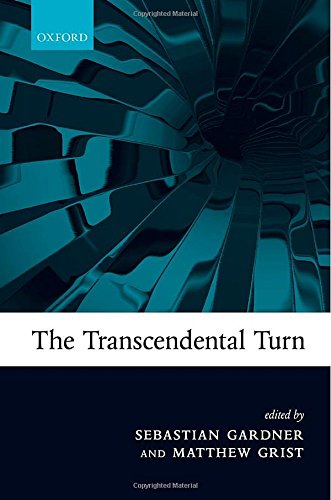
(Ebook) The Transcendental Turn by Sebastian Gardner, Matthew Grist ISBN 9780198724872, 019872487X

  • SKU: EBN-5089478
Zoomable Image
$ 32 $ 40 (-20%)

Status:

Available

4.8

39 reviews
Instant download (eBook) The Transcendental Turn after payment.
Authors:Sebastian Gardner, Matthew Grist
Pages:384 pages.
Year:2015
Editon:1
Publisher:Oxford University Press
Language:english
File Size:2.18 MB
Format:pdf
ISBNS:9780198724872, 019872487X
Categories: Ebooks

Product desciption

(Ebook) The Transcendental Turn by Sebastian Gardner, Matthew Grist ISBN 9780198724872, 019872487X

Kant's influence on the history of philosophy is vast and protean. The transcendental turn denotes one of its most important forms, defined by the notion that Kant's deepest insight should not be identified with any specific epistemological or metaphysical doctrine, but rather concerns the fundamental standpoint and terms of reference of philosophical enquiry. To take the transcendental turn is not to endorse any of Kant's specific teachings, but to accept that the Copernican revolution announced in the Preface of the Critique of Pure Reason sets philosophy on a new footing and constitutes the proper starting point of philosophical reflection.
The aim of this volume is to map the historical trajectory of transcendental philosophy and the major forms that it has taken. The contributions, from leading contemporary scholars, focus on the question of what the transcendental turn consists in--its motivation, justification, and implications; and the limitations and problems which it arguably confronts--with reference to the relevant major figures in modern philosophy, including Kant, Fichte, Hegel, Nietzsche, Husserl, Heidegger, Merleau-Ponty, and Wittgenstein. Central themes and topics discussed include the distinction of realism from idealism, the relation of transcendental to absolute idealism, the question of how transcendental conclusions stand in relation to (and whether they can be made compatible with) naturalism, the application of transcendental thought to foundational issues in ethics, and the problematic relation of phenomenology to transcendental enquiry.
*Free conversion of into popular formats such as PDF, DOCX, DOC, AZW, EPUB, and MOBI after payment.

Related Products