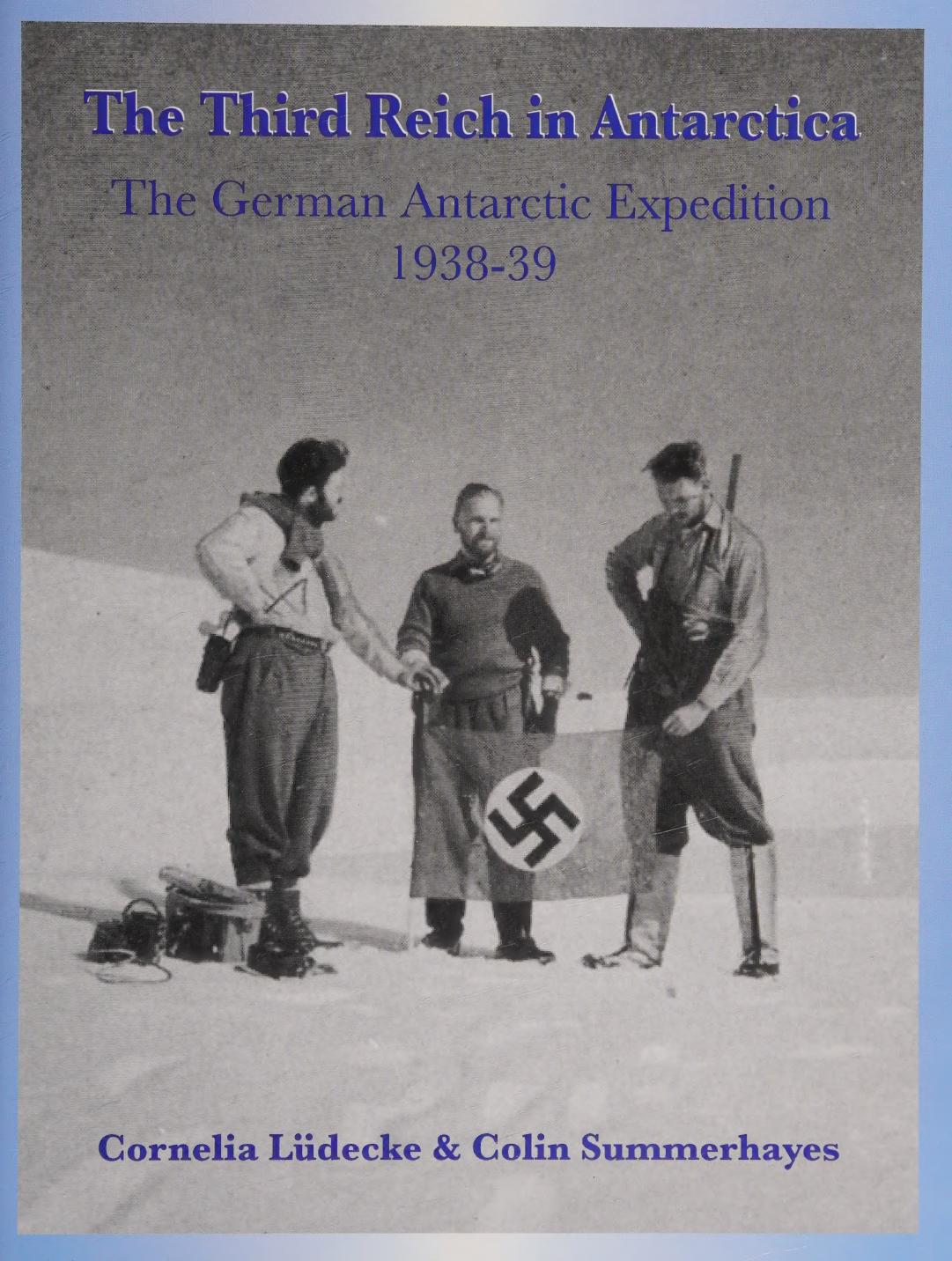
The Third Reich in Antarctica : the German Antarctic expedition 1938-39 by Lüdecke, Cornelia ISBN 9781852971038, 1852971037 instant download
The origins of the Third German Antarctic
Expedition lie in a unique combination of the
aspirations of German scientists to contribute to exploring and understanding the Antarctic environment, and the Nazi Party's drive for self-sufficiency on the road to war. Germany had joined the whaling nations in the South Atlantic keen to obtain whale oil without having to use
valuable foreign currency reserves needed
for rearmament. It decided to explore the
possibility of setting up a supply base on the coast of Dronning Maud Land and to claim Antarctic territory there for itself.
Councillor of State Helmut Wohlthat, the man in charge of German whaling, put this idea to his superior, Hermann Göring, the
Commissioner for the Four Year Plan for
economic development who approved the
concept, and in May 1938 assigned resources for a reconnaissance expedition.
Thus the Third German Antarctic Expedition
was born. When they set sail they did not even have a map of where they were going and it was their job to make one.
The expedition was led by Alfred Ritscher, a
captain in the German merchant navy, aboard MS Schwabenland, a freighter built in 1925 and renamed after the Swabia region in Southern Germany. On 19 January 1939 it arrived off Dronning Maud Land and began charting the region. Nazi German flags were placed on the sea ice along the coast and the area was named Neuschwabenland after the ship. Seven photographic survey flights were made by the ship's two seaplanes which took more than
16,000 aerial photographs covering an area of some 250,000 square kilometres. On its return trip to Germany _the expedition made oceanographic studies near Bouvet Island and Fernando de Noronha.
This is the story of an ambitious and little-
known expedition, which set out to map a large piece of Antarctica from the air, and in the process discovered an 800 km long mountain range and previously unsuspected freshwater lakes.
*Free conversion of into popular formats such as PDF, DOCX, DOC, AZW, EPUB, and MOBI after payment.