
Most ebook files are in PDF format, so you can easily read them using various software such as Foxit Reader or directly on the Google Chrome browser.
Some ebook files are released by publishers in other formats such as .awz, .mobi, .epub, .fb2, etc. You may need to install specific software to read these formats on mobile/PC, such as Calibre.
Please read the tutorial at this link. https://ebooknice.com/page/post?id=faq
We offer FREE conversion to the popular formats you request; however, this may take some time. Therefore, right after payment, please email us, and we will try to provide the service as quickly as possible.
For some exceptional file formats or broken links (if any), please refrain from opening any disputes. Instead, email us first, and we will try to assist within a maximum of 6 hours.
EbookNice Team
Status:
Available4.4
40 reviewsISBN 10: 9027924325
ISBN 13: 9789027924322
Author: James W. Marchand
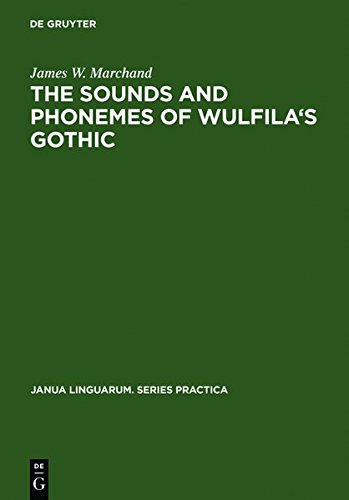
James W. Marchand’s The Sounds and Phonemes of Wulfila’s Gothic is a definitive, scholarly analysis of Gothic phonology. Through internal orthographic patterns, linguistic reconstruction, and comparative analysis, it reveals the sound system of Wulfila’s language. Ideal for specialists studying early Germanic languages and phonological methodology.
1 INTRODUCTION
1.1 Views on voice
1.2 Mode of analysis
1.3 Using a corpus
1.4 Material.
1.5 Aims
2 THE VERBAL GROUP
2.1 Simple and complex groups
2.2 Four types of complex groups
2.3 Type a.
2.31 Criteria
2.32 Matrix
2.33 Classification
2.34 Concord valency classes
2.4 Type b.
2.5 Ture s.
2.51 Criteria
2.52 Matrix
2.53 Classification
2.6 Type d.
2.7 Lexical verbs.
2.71 Phrasal and prepositional verbs
2.72 Prepositional verbs and prepositional phrases
2.73 Compounds.
2.74 Verbal and nonverbal bases
3 THE CLAUSE
3.1 Clause elements
3.2 Exponent classes of subject and complement
3.21 Form-class
3.22 Gender
3.23 Finitude
3.24 Person
3.25 Number.
3.26 Modification.
3.27 Coordination
3.3 Exponent classes of adjunct
3.31 Form-class
3.32 Position.
3.33 Agent.
3.4 Internal clause relation
3.5 External clause relation
3.6 Central and peripheral clause types
3.7 Extensive and intensive clauses
3.71 Copula
3.72 Gender/number class
3.73 Gender-selection
3.74 Voice transformation potential
3.75 Exponence.
3.76 Deletion.
3.8 Major clause types
3.9 Values of clause element C.
4 VOICE DATA PROCESSING
4.1 Procedure
4.11 Corpus
4.12 Data
4.13 Input and output.
4.14 Programs
4.15 Computation
4.16 Results
4.2 Type of finite verbal group.
4.3 Exponent classes of subject and agent (S and Ag elements)
4.31 Subject gender
4.32 Agent gender
4.33 Subject form-class
4.34 Agent form-class
4.35 Coordination
4.36 Length of passive subject and agent.
4.4 Exponent classes of complement (C element)
4.41 Complement distribution
4.42 Complement form-class
4.43 Complement gender
4.5 Exponent classes of adjunct (A element)
4.51 Adjunct frequency
4.52 Adjunct position
4.53 Adjunct form-class
4.6 Clause types.
4.7 External clause relation
4.8 Internal clause relation
4.9 Summary of the results
4.91 Structure and frequency
4.92 Style
4.93 Voice.
5 PASSIVE CLAUSE CLASSIFICATION: CRITERIA
5.1 Numerical taxonomy
5.2 The Taxonomic Passive Corpus.
5.3 The criteria
5.4 Criteria relating to the clause
5.41 External clause relation
5.42 External subject relation
5.43 Internal clause relation
5.44 Active transformation potential.
5.45 Permutation and transmutation
5.5 Criteria relating to the passive verbal group
5.51 The auxiliary
5.52 The lexical verb
5.6 Criteria relating to the subject
5.7 Criteria relating to the complement
5.8 Criteria relating to the adjunct
5.81 Adjuncts with agentive function
5.82 Adjuncts with nonagentive functions
6 PASSIVE CLAUSE CLASSIFICATION: COMPUTATION AND RESULTS.
6.1 Preparation of input data
6.2 The classification program
6.3 Output analysis.
6.31 Taxonomic analysis.
6.32 Statistical assessment and linguistic interpretation
6.4 The diagnostic key
6.41 Classes a and B
6.42 Class B/y
6.43 Class .
6.44 Class 8
6.45 Class ε
6.46 Class ζ
6.5 The passive scale and voice relation
7 THE USE OF THE PASSIVE.
7.1 Five passive clause types.
7.2 Three major passive classes
7.21 Agentive passives.
7.22 Quasi-agentive passives
7.23 Nonagentive passives
7.3 Verbal group structure
7.4 The use of the passive voice in the texts
8 CONCLUSIONS.
8.1 The concept of 'The passive scale.
8.2 Transformational and serial voice relations
8.3 The description of the English passive
APPENDICES: Lexical verbs of the agentive clauses in the Major Passive Corpus
BIBLIOGRAPHY
INDEX.
the phonemes
the sounds in english language
the sounds in english
the sounds a language uses are called
the sounds of speech
Tags: James Marchand, The Sounds, Wulfila s Gothic


4.5
41 reviews
4.6
31 reviews
4.5
18 reviews
5.0
21 reviews