logo
Product categories

EbookNice.com

Most ebook files are in PDF format, so you can easily read them using various software such as Foxit Reader or directly on the Google Chrome browser.
Some ebook files are released by publishers in other formats such as .awz, .mobi, .epub, .fb2, etc. You may need to install specific software to read these formats on mobile/PC, such as Calibre.

Please read the tutorial at this link.  https://ebooknice.com/page/post?id=faq


We offer FREE conversion to the popular formats you request; however, this may take some time. Therefore, right after payment, please email us, and we will try to provide the service as quickly as possible.


For some exceptional file formats or broken links (if any), please refrain from opening any disputes. Instead, email us first, and we will try to assist within a maximum of 6 hours.

EbookNice Team
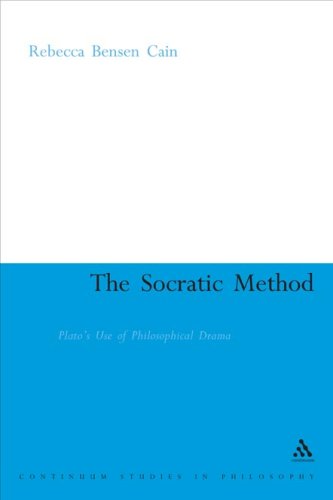
(Ebook) The Socratic Method: Plato's Use of Philosophical Drama (Continuum Studies In Ancient Philosophy) by Rebecca Bensen Cain ISBN 9780826488916, 0826488919

  • SKU: EBN-2422156
Zoomable Image
$ 32 $ 40 (-20%)

Status:

Available

4.6

29 reviews
Instant download (eBook) The Socratic Method: Plato's Use of Philosophical Drama (Continuum Studies In Ancient Philosophy) after payment.
Authors:Rebecca Bensen Cain
Pages:161 pages.
Year:2007
Editon:First Edition
Publisher:Continuum
Language:english
File Size:5.94 MB
Format:pdf
ISBNS:9780826488916, 0826488919
Categories: Ebooks

Product desciption

(Ebook) The Socratic Method: Plato's Use of Philosophical Drama (Continuum Studies In Ancient Philosophy) by Rebecca Bensen Cain ISBN 9780826488916, 0826488919

This book develops a new account of Socratic method, based on a psychological model of Plato's dramatic depiction of Socrates' character and conduct. Socratic method is seen as a blend of three types of philosophical discourse: refutation, truth-seeking, and persuasion. Cain focuses on the persuasive features of the method since, in her view, it is this aspect of Socrates' method that best explains the content and the value of the dialectical arguments. Emphasizing the persuasive aspect of Socratic method helps us uncover the operative standards of dialectical argumentation in fifth-century Athens. Cain considers both the sophistic style of rhetoric and contentious debate in Socrates' time, and Aristotle's perspective on the techniques of argument and their purposes. An informal, pragmatic analysis of argumentation appropriate to the dialectical context is developed. We see that Socrates uses ambiguity and other strategic fallacies with purposeful play, and for moral ends. Taking specific examples of refutations from Plato's dialogues, Cain links the interlocutors' characters and situations with the dialectical argument that Socrates constructs to refute them. The merit of this interpretation is that it gives broad range, depth, and balance to Socrates' argumentative style; it also maintains a keen sensitivity to the interlocutors' emotional reactions, moral values, and attitudes. The book concludes with a discussion of the overall value, purpose, and success of Socratic method, and draws upon a Platonic/Socratic conception of the soul and a dialectical type of self-knowledge.
*Free conversion of into popular formats such as PDF, DOCX, DOC, AZW, EPUB, and MOBI after payment.

Related Products