logo
Product categories

EbookNice.com

Most ebook files are in PDF format, so you can easily read them using various software such as Foxit Reader or directly on the Google Chrome browser.
Some ebook files are released by publishers in other formats such as .awz, .mobi, .epub, .fb2, etc. You may need to install specific software to read these formats on mobile/PC, such as Calibre.

Please read the tutorial at this link.  https://ebooknice.com/page/post?id=faq


We offer FREE conversion to the popular formats you request; however, this may take some time. Therefore, right after payment, please email us, and we will try to provide the service as quickly as possible.


For some exceptional file formats or broken links (if any), please refrain from opening any disputes. Instead, email us first, and we will try to assist within a maximum of 6 hours.

EbookNice Team
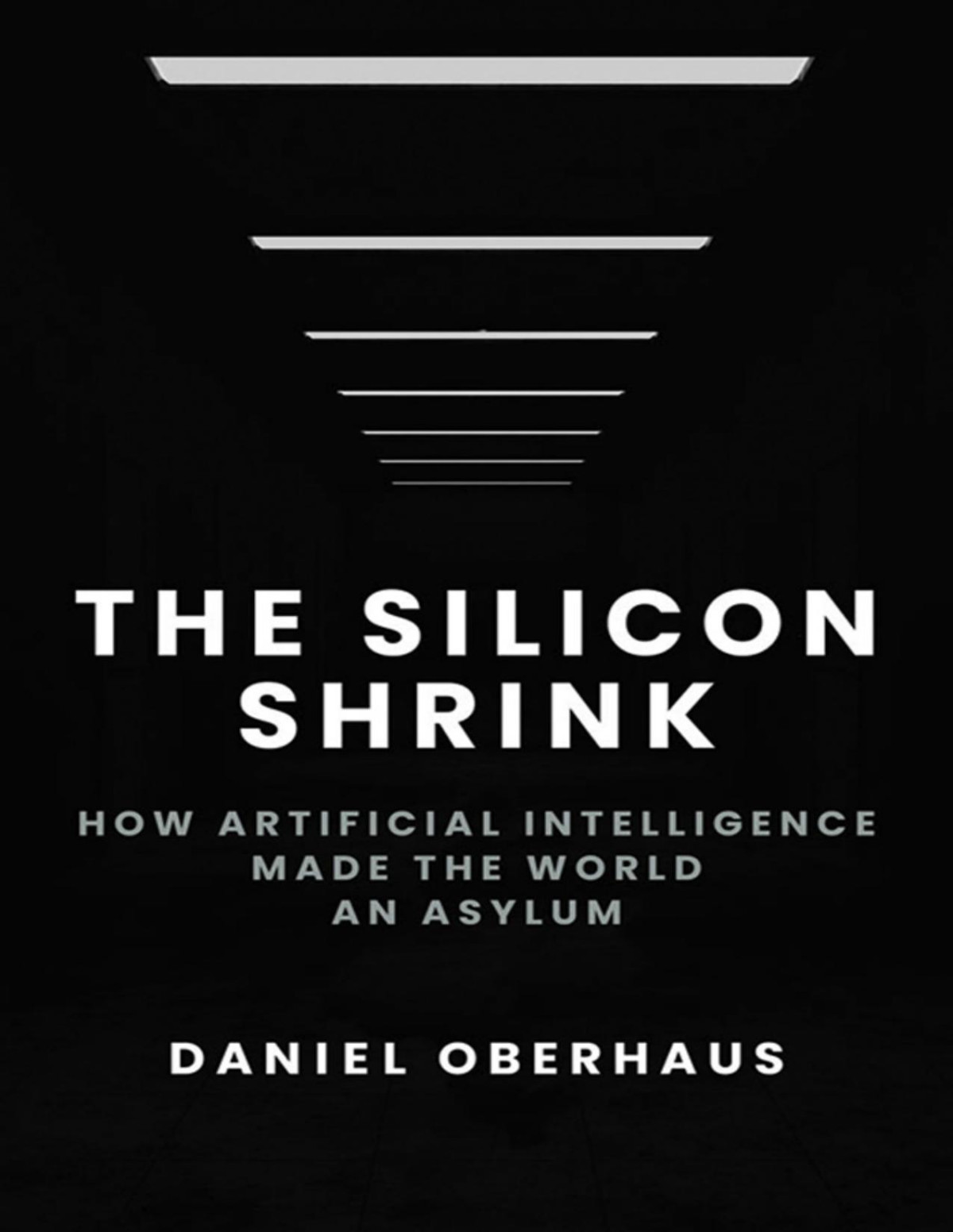
The Silicon Shrink: How Artificial Intelligence Made the World an Asylum by Daniel Oberhaus instant download

  • SKU: EBN-236332168
Zoomable Image
$ 32 $ 40 (-20%)

Status:

Available

4.7

41 reviews
Instant download (eBook) The Silicon Shrink: How Artificial Intelligence Made the World an Asylum after payment.
Authors:Daniel Oberhaus
Pages:updating ...
Year:2025
Publisher:MIT Press
Language:english
File Size:2.07 MB
Format:pdf
Categories: Ebooks

Product desciption

The Silicon Shrink: How Artificial Intelligence Made the World an Asylum by Daniel Oberhaus instant download

Why the race to apply AI in psychiatry is so dangerous, and how to understand the new tech-driven psychiatric paradigm.

AI psychiatrists promise to detect mental disorders with superhuman accuracy, provide affordable therapy for those who can’t afford or can’t access treatment, and even invent new psychiatric drugs. But the hype obscures an unnerving reality.In The Silicon Shrink, Daniel Oberhaus tells the inside story of how the quest to use AI in psychiatry has created the conditions to turn the world into an asylum. Most of these systems, he writes, have vanishingly little evidence that they improve patient outcomes, but the risks they pose have less to do with technological shortcomings than the application of deeply flawed psychiatric models of mental disorder at unprecedented scale.

Oberhaus became interested in the subject of mental health after tragically losing his sister to suicide. In the book, he argues that these...
*Free conversion of into popular formats such as PDF, DOCX, DOC, AZW, EPUB, and MOBI after payment.

Related Products