
Most ebook files are in PDF format, so you can easily read them using various software such as Foxit Reader or directly on the Google Chrome browser.
Some ebook files are released by publishers in other formats such as .awz, .mobi, .epub, .fb2, etc. You may need to install specific software to read these formats on mobile/PC, such as Calibre.
Please read the tutorial at this link. https://ebooknice.com/page/post?id=faq
We offer FREE conversion to the popular formats you request; however, this may take some time. Therefore, right after payment, please email us, and we will try to provide the service as quickly as possible.
For some exceptional file formats or broken links (if any), please refrain from opening any disputes. Instead, email us first, and we will try to assist within a maximum of 6 hours.
EbookNice Team
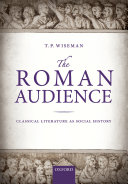
Status:
Available4.5
39 reviewsISBN 10: 0198718357
ISBN 13: 9780198718352
Author: Timothy Peter Wiseman
Who were Roman authors writing for? Only a minority of the population was fully literate and books were very expensive, individually hand-written on imported papyrus. So does it follow that great poets and prose authors like Virgil and Livy, Ovid and Petronius, were writing only for the cultured and the privileged? It is this modern consensus that is challenged in this volume. In an ambitious overview of a thousand years of history, from the formation of the city-state of Rome to the establishment of a fully Christian culture, T. P. Wiseman examines the evidence for the oral delivery of 'literature' to mass public audiences. The treatment is chronological, utilizing wherever possible contemporary sources and the close reading of texts. Wiseman sees the history of Roman literature as an integral part of the social and political history of the Roman people, and draws some very unexpected inferences from the evidence that survives. In particular, he emphasizes the significance of the annual series of 'stage games' (ludi scaenici), and reveals the hitherto unexplored common ground of literature, drama, and dance. Direct, accessible, and clearly written, The Roman Audience provides a fundamental reinterpretation of Roman literature as part of the historical experience of the Roman people, making it essential reading for all Latinists and Roman historians.
1: Times, Books,and Preconceptions
1.1. The longue durée
1.2. Paper
1.3. Books
1.4. Literature as a Public Performance
2: Rome Before Literature: Indirect Evidence
2.1. Evidence from Homer
2.2. Evidence from Terracotta
2.3. Rome and Athens
2.4. Honouring Gods
2.5. Fragments and ‘History’
2.6. Marking the Days
3: Rome Before Literature: Dionysus and Drama
3.1. Pots Painted, Bronze Engraved
3.2. Republican Rome
3.3. The Roman Games
3.4. Rome and Alexandria
3.5. The Turning-point
4: An Enclosure with Benches
4.1. Theatrum and Scaena
4.2. Plautus and the Cauea
4.3. In the Forum, in the Circus
4.4. Terence and the Cauea
4.5. Curtains and Steps
5: Makers, Singers, Speakers, Writers
5.1. Ennius and the Vates
5.2. Ennius as Impersonator
5.3. Cato and Polybius
5.4. Lucilius and Varro
6: A Turbulent People
6.1. The Political Stage
6.2. Pompey and the Theatre
6.3. When Cicero Wasn’t in Rome
6.4. Pompey’s Games
6.5. Poets and Dancers
6.6. Before the Disaster
7: Rethinking the Classics 59–42 BC
7.1. Lucretius and Philodemus
7.2. Demetrius, Historians, Caesar
7.3. Caesar and Catullus
7.4. Catullus 61–64
7.5. The Greek Stage in Rome
7.6. The Ides of March, and After
8: Rethinking the Classics 42–28 BC
8.1. Virgil’s Eclogues
8.2. Sallust
8.3. Horace’s Satires
8.4. Virgil’s Georgics
8.5. Virgil’s ‘Epyllion’
8.6. Livy and Horace
8.7. The Republic Restored
9: Rethinking the Classics 28 BC–AD 8
9.1. The Citizens, the Audience
9.2. Horace’s Epistles
9.3. Tibullus and Propertius
9.4. Ovid and Virgil
9.5. Augustus and the ‘Secular Games’
9.6. Horace and Ovid
9.7. Ovid’s Fasti
10: Under the Emperors
10.1. First-Century Poets
10.2. First-Century Playwrights
10.3. Prose Fiction and History
10.4. Lucian in the Theatre
10.5. Integrating Evidence
10.6. Christians
the roman audience classical literature as social history
the roman audience pdf
timothy peter wiseman roman audience
roman literature social history
roman audiences and classical texts
Tags: Roman Audience, Classical Literature, Social History, Timothy Peter Wiseman
5.0
28 reviews
4.6
13 reviews
4.4
22 reviews

4.6
34 reviews

4.7
40 reviews

5.0
8 reviews