
Most ebook files are in PDF format, so you can easily read them using various software such as Foxit Reader or directly on the Google Chrome browser.
Some ebook files are released by publishers in other formats such as .awz, .mobi, .epub, .fb2, etc. You may need to install specific software to read these formats on mobile/PC, such as Calibre.
Please read the tutorial at this link. https://ebooknice.com/page/post?id=faq
We offer FREE conversion to the popular formats you request; however, this may take some time. Therefore, right after payment, please email us, and we will try to provide the service as quickly as possible.
For some exceptional file formats or broken links (if any), please refrain from opening any disputes. Instead, email us first, and we will try to assist within a maximum of 6 hours.
EbookNice Team
Status:
Available0.0
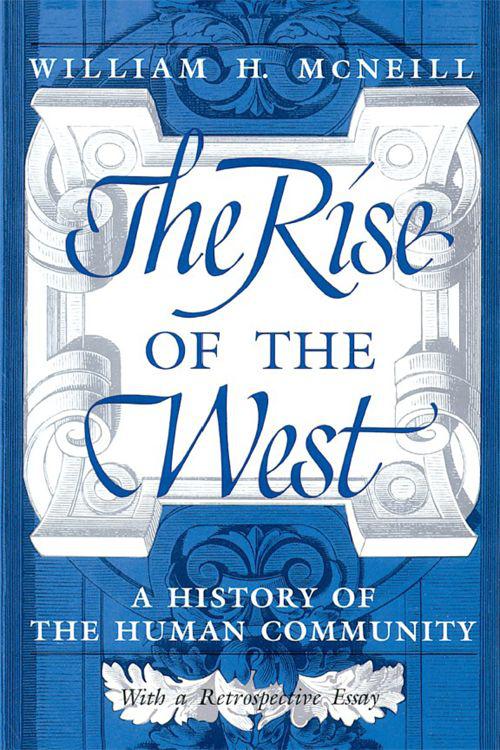
0 reviewsThe Rise of the West, winner of the National Book Award for history in 1964, is famous for its ambitious scope and intellectual rigor. In it, McNeill challenges the Spengler-Toynbee view that a number of separate civilizations pursued essentially independent careers, and argues instead that human cultures interacted at every stage of their history. The author suggests that from the Neolithic beginnings of grain agriculture to the present major social changes in all parts of the world were triggered by new or newly important foreign stimuli, and he presents a persuasive narrative of world history to support this claim.
In a retrospective essay titled "The Rise of the West after Twenty-five Years," McNeill shows how his book was shaped by the time and place in which it was written (1954-63). He discusses how historiography subsequently developed and suggests how his portrait of the world's past in The Rise of the West should be revised to reflect these changes.
"This is not only the most learned and the most intelligent, it is also the most stimulating and fascinating book that has ever set out to recount and explain the whole history of mankind. . . . To read it is a great experience. It leaves echoes to reverberate, and seeds to germinate in the mind."—H. R. Trevor-Roper, New York Times Book Review
This is one of the works that Gress criticizes as an example of the Grand Narrative. And, in the retrospective essay contained in this most recent edition, McNeill does acknowledge the "cultural imperialism" of the scope and conception of the work as well as some of the other weaknesses. However, it still remains an informative overview suitable for high school as well as college and public libraries.
Copyright 1999 Reed Business Information, Inc.
William H. McNeill is the Robert A. Millikan Distinguished Service Professor Emeritus in the Department of History and the College at the University of Chicago. His many books include The Pursui
5.0
33 reviews
4.7
22 reviews
4.3
31 reviews
4.8
12 reviews
4.8
19 reviews
4.7
35 reviews
4.6
33 reviews