
Most ebook files are in PDF format, so you can easily read them using various software such as Foxit Reader or directly on the Google Chrome browser.
Some ebook files are released by publishers in other formats such as .awz, .mobi, .epub, .fb2, etc. You may need to install specific software to read these formats on mobile/PC, such as Calibre.
Please read the tutorial at this link. https://ebooknice.com/page/post?id=faq
We offer FREE conversion to the popular formats you request; however, this may take some time. Therefore, right after payment, please email us, and we will try to provide the service as quickly as possible.
For some exceptional file formats or broken links (if any), please refrain from opening any disputes. Instead, email us first, and we will try to assist within a maximum of 6 hours.
EbookNice Team
Status:
Available4.5
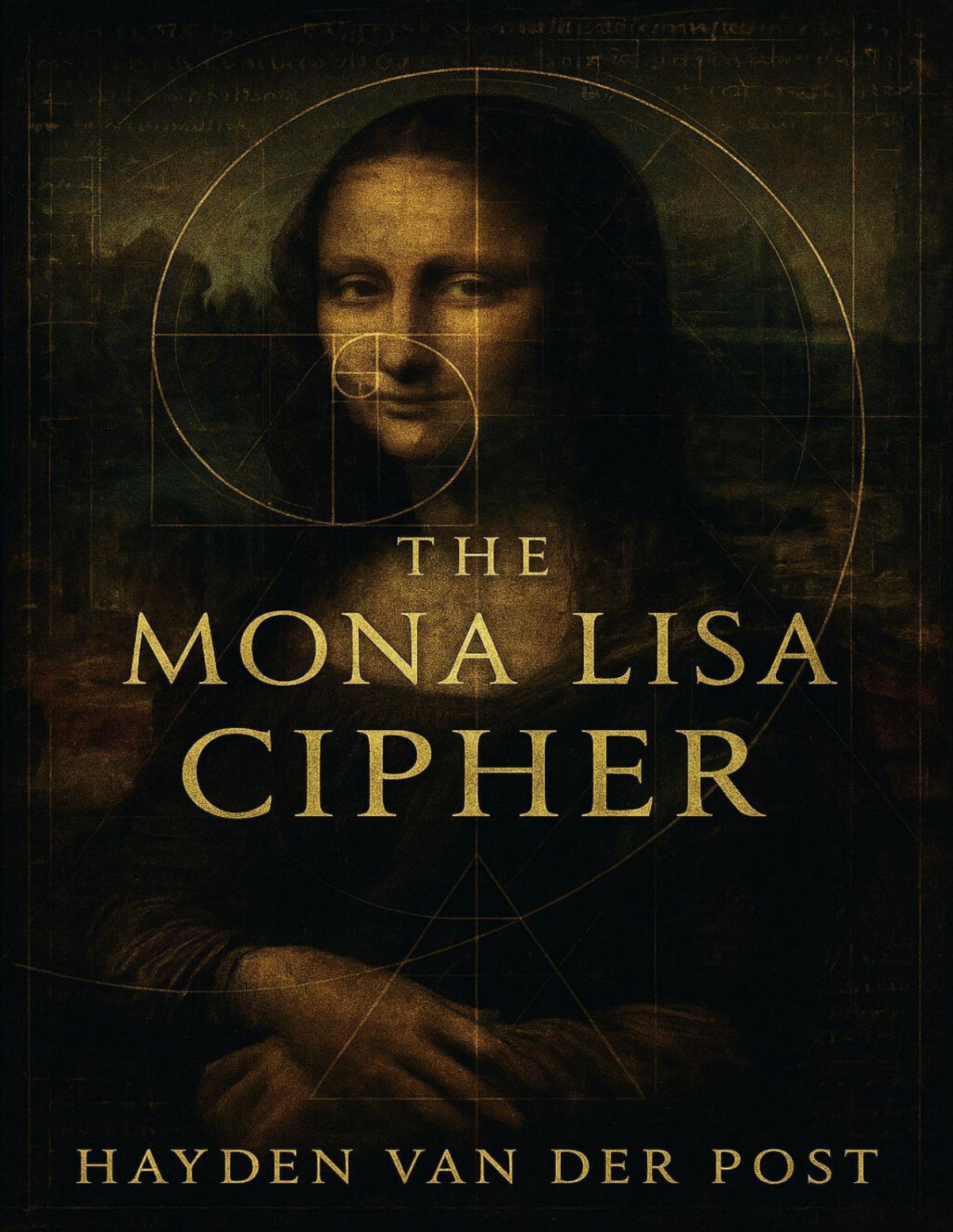
13 reviewsFor over 500 years, the Mona Lisa has been admired as the pinnacle of Renaissance art. But what if the painting’s true purpose was never aesthetic… but architectural? What if it was encoded to transmit lost knowledge, preserved through geometry, proportion, and symbolic concealment?
In The Mona Lisa Cipher, Hayden Van Der Post unpacks the painting as a multi-layered metaphysical transmission device, exploring the idea that Leonardo da Vinci embedded sacred principles — drawn from Hermeticism, sacred geometry, and ancient cosmology — into its structure. With the precision of a scholar and the vision of a systems architect, Van Der Post shows how the painting may be part of a greater blueprint: one that maps consciousness, reality, and the hidden architecture of simulation itself.
This is not just a book about art. It’s a journey through:
- The golden ratio as a divine constant across nature and mind
- Leonardo’s ties to secret knowledge networks and lost scrolls
- How mathematical proportions were used to encode meaning across centuries
- Why the Mona Lisa's smile and gaze act as psycho-reactive stimuli
- And what the painting reveals about the nature of reality as illusion
Combining philosophy, art theory, quantum speculation, and ancient wisdom, The Mona Lisa Cipher proposes a radical thesis: that Leonardo da Vinci didn’t just paint a woman… he painted a universal key.

4.5
13 reviews
4.5
8 reviews
4.6
31 reviews
4.4
23 reviews

4.7
37 reviews
4.6
38 reviews
4.4
35 reviews