
Most ebook files are in PDF format, so you can easily read them using various software such as Foxit Reader or directly on the Google Chrome browser.
Some ebook files are released by publishers in other formats such as .awz, .mobi, .epub, .fb2, etc. You may need to install specific software to read these formats on mobile/PC, such as Calibre.
Please read the tutorial at this link. https://ebooknice.com/page/post?id=faq
We offer FREE conversion to the popular formats you request; however, this may take some time. Therefore, right after payment, please email us, and we will try to provide the service as quickly as possible.
For some exceptional file formats or broken links (if any), please refrain from opening any disputes. Instead, email us first, and we will try to assist within a maximum of 6 hours.
EbookNice Team
Status:
Available0.0
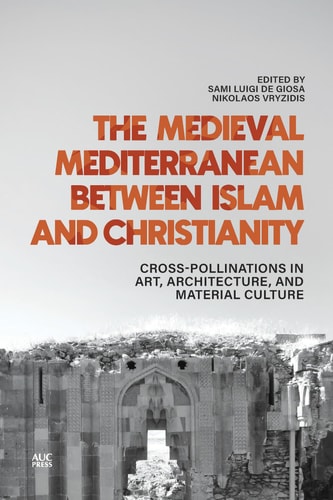
0 reviewsThe coexistence of Christianity and Islam in the medieval Mediterranean led to an interchange of knowledge in architecture and material culture that went well beyond religious and geographical boundaries. The use of Islamic objects in Christian contexts, the conversion of churches into mosques, and the mobility of craftsmen are only some manifestations of this process. From crosses found in mosques to European-Christian coins with pseudo-shahada inscriptions, medieval material culture is rich with visual evidence of the two faiths intermingling in both individual objects and monuments.
In this volume, thirteen international scholars explore various aspects of pan-Mediterranean Christian-Islamic encounters in material culture and art, from textiles to precious oils, and from metalwork to ceramics, covering most of the Mediterranean, as well as parts of its extended hinterland, from Spain and Italy to Egypt and Georgia.
Within this frame, one of the most relevant, yet underexplored lines of investigation is that of the “aesthetic space,” the notion that aesthetic pleasure transcends boundaries, paving the way to a cross-religious experience and appreciation. “Indeed, God is beautiful, and He loves beauty,” as mentioned in a Hadith narration, a universal cry of visual beauty that resonates with all cultures and civilizations.
"There are not many essay volumes where the editors have consciously adopted a Mediterraneanist approach with such fruitful results." —Mariam Rosser-Owen, Victoria and Albert Museum, from the preface