
Most ebook files are in PDF format, so you can easily read them using various software such as Foxit Reader or directly on the Google Chrome browser.
Some ebook files are released by publishers in other formats such as .awz, .mobi, .epub, .fb2, etc. You may need to install specific software to read these formats on mobile/PC, such as Calibre.
Please read the tutorial at this link. https://ebooknice.com/page/post?id=faq
We offer FREE conversion to the popular formats you request; however, this may take some time. Therefore, right after payment, please email us, and we will try to provide the service as quickly as possible.
For some exceptional file formats or broken links (if any), please refrain from opening any disputes. Instead, email us first, and we will try to assist within a maximum of 6 hours.
EbookNice Team
Status:
Available4.7
6 reviews📚 Series Context
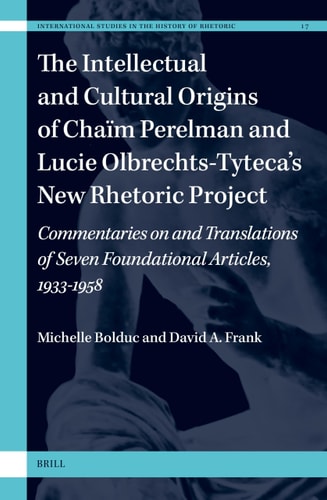
This book is part of the Studies in the History of Rhetoric series. If you're reading this volume, here’s how it fits into a broader intellectual journey:
Before Reading: Read 'The New Rhetoric: A Treatise on Argumentation' by Chaïm Perelman and Lucie Olbrechts-Tyteca (1958) or 'Perelman and the Philosophy of Argument' by Christopher Tindale
After Reading: Read 'Rhetoric and Ethics in the 21st Century' by David A. Frank or 'The Rhetorical Foundations of Society' by Chaïm Perelman
🧠 Purpose and Scope
Offers the first deep contextualization of the New Rhetoric Project (NRP) by Perelman and Olbrechts-Tyteca.
Includes seven original translations of foundational articles (1933–1958) from French to English.
Explores the philosophical and cultural backdrop of their work, especially in response to logical positivism and post-war trauma.
Demonstrates how their rhetorical theory aimed to expand reason into human affairs and promote social tolerance.
🔍 Key Themes
Reason vs. Rationalism: Expanding reason beyond formal logic.
Rhetoric as Ethics: Argumentation as a means of fostering tolerance.
Philosophical Resistance: Pushback against post-war despair and intellectual rigidity.
Translation as Interpretation: How language shapes philosophical meaning.
📝 Reviews & Reception
Scholarly Praise: Academics commend the book for its rigorous translations and historical contextualization of Perelman and Olbrechts-Tyteca’s early works.
It’s seen as a critical resource for understanding the philosophical evolution that led to the New Rhetoric Project.
The commentaries offer insightful analysis into how rhetoric was reimagined as a tool for ethical reasoning and social tolerance.
Use in Academia: Frequently cited in graduate seminars on rhetoric, philosophy, and intellectual history.
Recommended for scholars interested in post-war European thought, argumentation theory, and humanistic approaches to reason.
5.0
12 reviews
5.0
40 reviews
5.0
27 reviews
4.8
19 reviews
4.4
24 reviews
4.7
20 reviews
4.8
34 reviews
4.3
16 reviews
5.0
8 reviews