
Most ebook files are in PDF format, so you can easily read them using various software such as Foxit Reader or directly on the Google Chrome browser.
Some ebook files are released by publishers in other formats such as .awz, .mobi, .epub, .fb2, etc. You may need to install specific software to read these formats on mobile/PC, such as Calibre.
Please read the tutorial at this link. https://ebooknice.com/page/post?id=faq
We offer FREE conversion to the popular formats you request; however, this may take some time. Therefore, right after payment, please email us, and we will try to provide the service as quickly as possible.
For some exceptional file formats or broken links (if any), please refrain from opening any disputes. Instead, email us first, and we will try to assist within a maximum of 6 hours.
EbookNice Team
Status:
Available0.0
0 reviews[with bookmarks, cropping etc.]
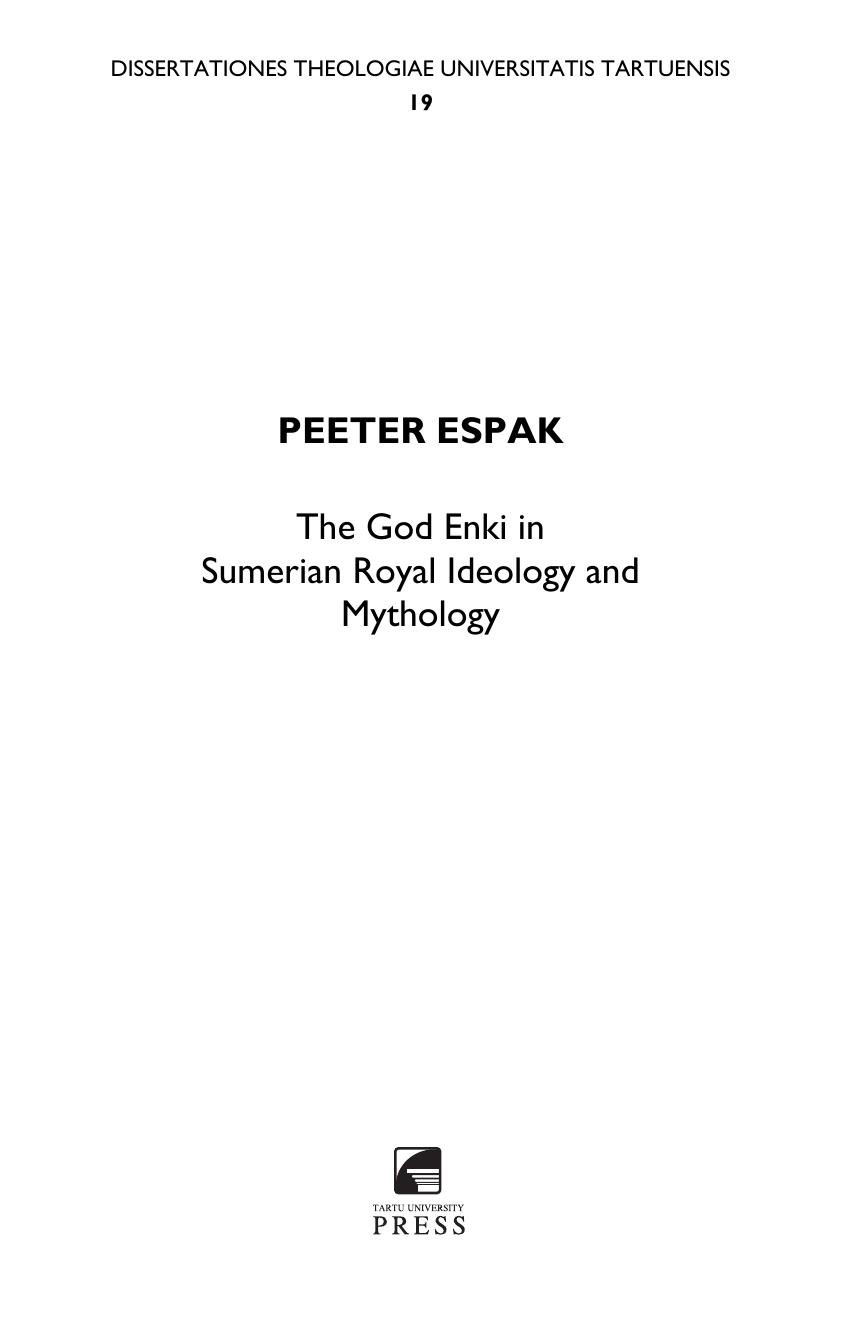
This study analyzes the divine concept of the Sumero-Akkadian deity Enki in its literary and mythological development through different periods of Mesopotamian history. Sumerian myths and theology related to the god Enki are influential throughout the history of the Ancient Near East. Several mythological motives from the Sumerian cultural area later reach the creation stories of the Old Testament and beyond. Through the Biblical narratives the ancient Sumerian mythology of Enki reaches the later Christian world, and therefore this mythology has become a part of the collective memory and culture of the present day world.
Seven chapters give a diachronical overview of the relevant source materials (royal inscriptions, hymns, etc.) related to the god Enki and other close divine figures and religious phenomena from the period of about 2500-1700 BC.
The last two chapters concentrate on the aspects of comparative mythology and archaic Sumerian religion.The relations of Enki and the Mother Goddess in the Mesopotamian religion and YHWH and Eve in the Old Testament are briefly analyzed. Some aspects about the decline of the cult of the Mother Goddess and several details of the political history of the Ancient Near East reflected in the relevant texts are discussed in the book. It is claimed that there is no direct conflict between the theologies of Nippur and Eridu (Enlil and Enki), at least when analyzing the available source material.
4.5
11 reviews
4.5
21 reviews
4.5
19 reviews
4.9
30 reviews
4.7
41 reviews
4.9
31 reviews
4.4
28 reviews