logo
Product categories

EbookNice.com

Most ebook files are in PDF format, so you can easily read them using various software such as Foxit Reader or directly on the Google Chrome browser.
Some ebook files are released by publishers in other formats such as .awz, .mobi, .epub, .fb2, etc. You may need to install specific software to read these formats on mobile/PC, such as Calibre.

Please read the tutorial at this link.  https://ebooknice.com/page/post?id=faq


We offer FREE conversion to the popular formats you request; however, this may take some time. Therefore, right after payment, please email us, and we will try to provide the service as quickly as possible.


For some exceptional file formats or broken links (if any), please refrain from opening any disputes. Instead, email us first, and we will try to assist within a maximum of 6 hours.

EbookNice Team
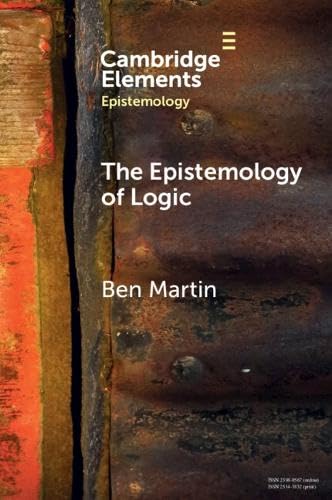
The Epistemology of Logic by Ben Martin ISBN 9781009598408, 9781009319898, 9781009319881, 1009598406, 1009319892, 1009319884 instant download

  • SKU: EBN-239350730
Zoomable Image
$ 32 $ 40 (-20%)

Status:

Available

5.0

26 reviews
Instant download (eBook) The Epistemology of Logic after payment.
Authors:Ben Martin
Pages:80 pages
Year:2025
Publisher:Cambridge University Press
Language:english
File Size:4.34 MB
Format:pdf
ISBNS:9781009598408, 9781009319898, 9781009319881, 1009598406, 1009319892, 1009319884
Categories: Ebooks

Product desciption

The Epistemology of Logic by Ben Martin ISBN 9781009598408, 9781009319898, 9781009319881, 1009598406, 1009319892, 1009319884 instant download

Compared to our appreciation of the epistemology of the sciences and mathematics, we have a relatively poor understanding of the epistemology of logic. This Element highlights three causes of this lack of progress: (i) failure to distinguish between the epistemology of logical theorising and that of good (logical) reasoning; (ii) hesitancy to base epistemology of logic on how logicians actually justify their logics, rather than our own presumptions about logic; and (iii) a presumption that the epistemology of logic must be significantly different to other research areas, such as the recognised sciences. The Element ends by highlighting what can be achieved by avoiding these pitfalls, presenting an account of theory-choice in logic, logical predictivism, motivated by actual logical practice, which suggests that the mechanisms of theory-choice in logic are not that different to those in the recognised sciences. This title is also available as Open Access on Cambridge Core.

DOI: 10.1017/9781009319881

*Free conversion of into popular formats such as PDF, DOCX, DOC, AZW, EPUB, and MOBI after payment.

Related Products