
Most ebook files are in PDF format, so you can easily read them using various software such as Foxit Reader or directly on the Google Chrome browser.
Some ebook files are released by publishers in other formats such as .awz, .mobi, .epub, .fb2, etc. You may need to install specific software to read these formats on mobile/PC, such as Calibre.
Please read the tutorial at this link. https://ebooknice.com/page/post?id=faq
We offer FREE conversion to the popular formats you request; however, this may take some time. Therefore, right after payment, please email us, and we will try to provide the service as quickly as possible.
For some exceptional file formats or broken links (if any), please refrain from opening any disputes. Instead, email us first, and we will try to assist within a maximum of 6 hours.
EbookNice Team
Status:
Available4.7
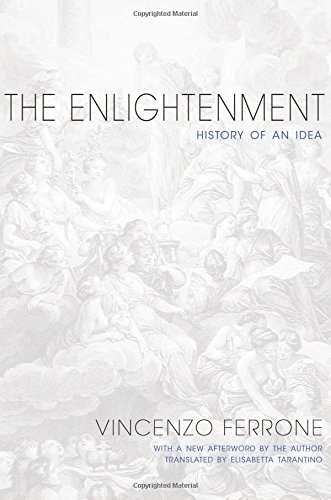
14 reviewsIn this concise and powerful book, one of the world's leading historians of the Enlightenment provides a bracing and clarifying new interpretation of this watershed period. Arguing that philosophical and historical views of the era have long been hopelessly confused, Vincenzo Ferrone makes the case that it is only by separating these views and taking an approach grounded in social and cultural history that we can begin to grasp what the Enlightenment was--and why it is still relevant today.
Examining Kant, Hegel, Marx, Nietzsche, Horkheimer, Adorno, Foucault, and Pope Benedict XVI, Ferrone shows how transhistorical, philosophical interpretations of the Enlightenment have diverged from ones based on careful historical reconstructions of the ideas, practices, and institutions of eighteenth-century Europe. He then offers a new reading of the Enlightenment, arguing that it was "the laboratory of modernity," a profound and wide-ranging cultural revolution that reshaped Western identity, reformed politics through the invention of human rights, and redefined knowledge by creating a critical culture. Not confined to a group of radical elites, these new ways of thinking gave birth to new values that spread throughout society and changed how everyday life was lived and thought of.
Original and provocative, The Enlightenment provides a compelling reevaluation of the true nature and legacy of one of the most important and contested periods in Western history. And, in a new afterword, Ferrone describes how his argument challenges the work of Anglophone interpreters of the Enlightenment, including Jonathan Israel.
The translation of this work has been funded by SEPS--Segretariato Europeo per le Pubblicazioni Scientifiche.