Most ebook files are in PDF format, so you can easily read them using various software such as Foxit Reader or directly on the Google Chrome browser.
Some ebook files are released by publishers in other formats such as .awz, .mobi, .epub, .fb2, etc. You may need to install specific software to read these formats on mobile/PC, such as Calibre.
Please read the tutorial at this link. https://ebooknice.com/page/post?id=faq
We offer FREE conversion to the popular formats you request; however, this may take some time. Therefore, right after payment, please email us, and we will try to provide the service as quickly as possible.
For some exceptional file formats or broken links (if any), please refrain from opening any disputes. Instead, email us first, and we will try to assist within a maximum of 6 hours.
EbookNice Team
Status:
Available4.4
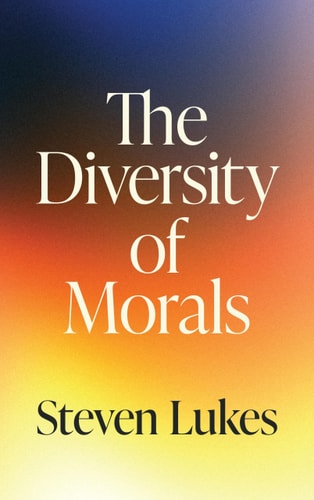
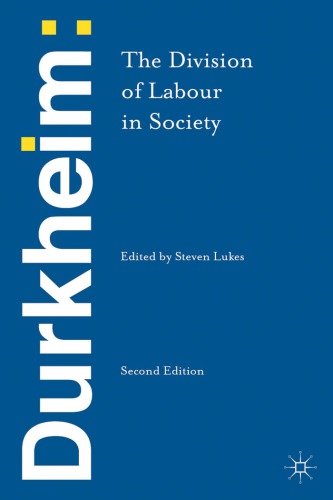
31 reviewsWhen we speak of morals, what are we speaking of? Is morality singular (as many philosophers tend to assume, even if they don’t agree on what it is) or are there multiple moralities (which social scientists, notably anthropologists, study)? In The Diversity of Morals, Steven Lukes brings together these differing perspectives. Drawing on philosophy, sociology, social anthropology, psychology, and political theory, Lukes considers what the moral domain includes and what it excludes; how what is moral differs from what is conventional or customary in different contexts; whether morality is unified or a series of fragments; and, if there is a diversity of morals, what that diversity consists of. Lukes looks both ways—toward philosophers’ quest for a single best answer to the question of morality and toward sociologists’ and anthropologists’ assumption that there are several, even many, even very many, answers—to make sense of their divergence. He traces the two approaches back to their beginnings, linking them to the differences between the ideas of David Hume, Johann Gottfried Herder, and Adam Smith. Lukes examines how we went from viewing the social world as “us” versus “them” to thinking of morality as universal, envisioning shared humanity and the sacredness of the human person, and what prevents this vision from being realized. Considering the breakdown of moral constraints in the perpetration of mass atrocities, Lukes asks if there are phenomena that are beyond moral justification. And he raises this crucial question: in light of the vast variation that history and the ethnographic record display, how wide and how deep is the diversity of morals?
DOI: 10.2307/jj.28558251
5.0
40 reviews
4.5
20 reviews
4.7
36 reviews
4.7
31 reviews
4.9
24 reviews
4.4
32 reviews
5.0
33 reviews