logo
Product categories

EbookNice.com

Most ebook files are in PDF format, so you can easily read them using various software such as Foxit Reader or directly on the Google Chrome browser.
Some ebook files are released by publishers in other formats such as .awz, .mobi, .epub, .fb2, etc. You may need to install specific software to read these formats on mobile/PC, such as Calibre.

Please read the tutorial at this link.  https://ebooknice.com/page/post?id=faq


We offer FREE conversion to the popular formats you request; however, this may take some time. Therefore, right after payment, please email us, and we will try to provide the service as quickly as possible.


For some exceptional file formats or broken links (if any), please refrain from opening any disputes. Instead, email us first, and we will try to assist within a maximum of 6 hours.

EbookNice Team
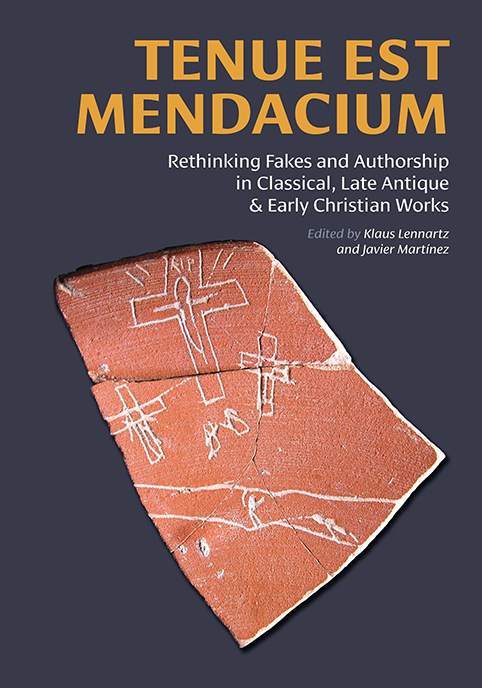
Tenue est mendacium: Rethinking Fakes and Authorship in Classical, Late Antique, & Early Christian Works by Javier Martínez ISBN 9789493194366, 9493194361 instant download

  • SKU: EBN-239923782
Zoomable Image
$ 32 $ 40 (-20%)

Status:

Available

4.6

37 reviews
Instant download (eBook) Tenue est mendacium: Rethinking Fakes and Authorship in Classical, Late Antique, & Early Christian Works after payment.
Authors:Javier Martínez
Pages:369 pages
Year:2021
Publisher:Barkhuis
Language:english
File Size:12.81 MB
Format:pdf
ISBNS:9789493194366, 9493194361
Categories: Ebooks

Product desciption

Tenue est mendacium: Rethinking Fakes and Authorship in Classical, Late Antique, & Early Christian Works by Javier Martínez ISBN 9789493194366, 9493194361 instant download

Many new and fruitful avenues of investigation open up when scholars consider forgery as a creative act rather than a crime. We invited authors to contribute work without imposing any restrictions beyond a willingness to consider new approaches to the subject of ancient fakes, forgeries and questions of authenticity. The result is this volume, in which our aim is to display some of the many possibilities available to scholarship.
The exposure of fraud and the pursuit of truth may still be valid scholarly goals, but they implicitly demand that we confront the status of any text as a focal point for matters of belief and conviction. Recent approaches to forgery have begun to ask new questions, some intended purely for the sake of debate: Ought we to consider any author to have some inherent authenticity that precludes the possibility of a forger's successful parody? If every fake text has a real context, what can be learned about the cultural circumstances which give rise to forgeries? If every real text can potentially engender a parallel history of fakes, what can this alternative narrative teach us? What epistemological prejudices can lead us to swear a fake is genuine, or dismiss the real thing as inauthentic?
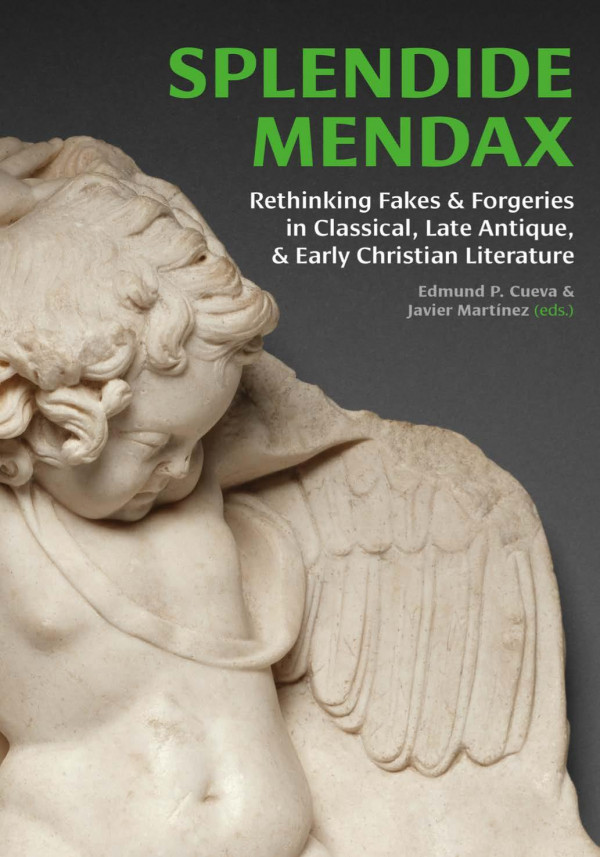
Following Splendide Mendax and Animo Decipiendi?, this is the latest installment of an ongoing inquiry, conducted by scholars in numerous countries, into how the ancient world-its literature and culture, its history and art-appears when viewed through the lens of fakes and forgeries, sincerities and authenticities, genuine signatures and pseudepigrapha. How does scholarship tell the truth if evidence doesn't? But fabula docet: The falsum does not simply make the great, annoying stone before the door of the truth (otherwise this here would really be a "council of antiquarians and paleographers"). The falsum makes a delicate, fine tissue. It allows the verum to shine through, in nuances and reliefs that were less noticeable without its counterpart, really tied…
*Free conversion of into popular formats such as PDF, DOCX, DOC, AZW, EPUB, and MOBI after payment.

Related Products