
logo
Product categories

EbookNice.com

Most ebook files are in PDF format, so you can easily read them using various software such as Foxit Reader or directly on the Google Chrome browser.
Some ebook files are released by publishers in other formats such as .awz, .mobi, .epub, .fb2, etc. You may need to install specific software to read these formats on mobile/PC, such as Calibre.

Please read the tutorial at this link.  https://ebooknice.com/page/post?id=faq


We offer FREE conversion to the popular formats you request; however, this may take some time. Therefore, right after payment, please email us, and we will try to provide the service as quickly as possible.


For some exceptional file formats or broken links (if any), please refrain from opening any disputes. Instead, email us first, and we will try to assist within a maximum of 6 hours.

EbookNice Team
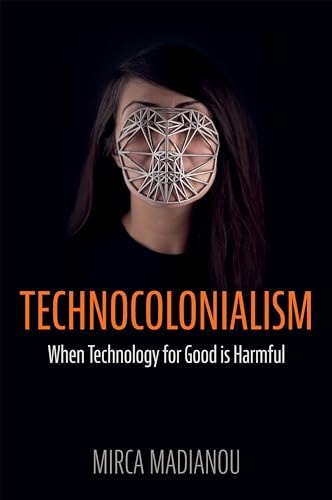
Technocolonialism: When Technology for Good is Harmful by Mirca Madianou ISBN 9781509559022, 1509559027 instant download

  • SKU: EBN-239916768
Zoomable Image
$ 32 $ 40 (-20%)

Status:

Available

0.0

0 reviews
Instant download (eBook) Technocolonialism: When Technology for Good is Harmful after payment.
Authors:Mirca Madianou
Pages:249 pages
Year:2025
Edition:1
Publisher:Polity
Language:english
File Size:8.72 MB
Format:pdf
ISBNS:9781509559022, 1509559027
Categories: Ebooks

Product desciption

Technocolonialism: When Technology for Good is Harmful by Mirca Madianou ISBN 9781509559022, 1509559027 instant download

With over 300 million people in need of humanitarian assistance and with emergencies and climate disasters becoming ever more common, artificial intelligence (AI) and big data are being championed as a force for good and as a solution to the complex challenges of the aid sector. This book argues, on the contrary, that digital innovation, data and AI practices entrench power asymmetries and engender new inequities between the global south and north. Madianou develops a new concept, technocolonialism, to capture how the convergence of digital developments with humanitarian structures, state power and market forces reinvigorates and reshapes colonial legacies. The concept of technocolonialism shifts the attention to the constitutive role that digital infrastructures, data and AI play in accentuating inequities between aid providers and people in need and, ultimately, rich and poor countries. Drawing on ten years of research on the uses of digital technologies and computation in humanitarian operations, the book examines a range of data and AI practices: from the normalisation of biometric technologies and the datafication of humanitarian operations to experimentation in refugee camps which are treated as laboratories for technological pilots. In so doing, the book opens new ground not only in the fields of humanitarianism and critical AI studies, but also in the debates in decolonial and postcolonial studies by highlighting the fundamental role of digital technologies in reworking and materialising colonial genealogies.
*Free conversion of into popular formats such as PDF, DOCX, DOC, AZW, EPUB, and MOBI after payment.

Related Products

-20%

When Red Is Black by Qiu Xiaolong instant download

4.4

7 reviews
$40 $32
-20%

When the Moon Is Low by Nadia Hashimi instant download

4.4

34 reviews
$40 $32