logo
Product categories

EbookNice.com

Most ebook files are in PDF format, so you can easily read them using various software such as Foxit Reader or directly on the Google Chrome browser.
Some ebook files are released by publishers in other formats such as .awz, .mobi, .epub, .fb2, etc. You may need to install specific software to read these formats on mobile/PC, such as Calibre.

Please read the tutorial at this link.  https://ebooknice.com/page/post?id=faq


We offer FREE conversion to the popular formats you request; however, this may take some time. Therefore, right after payment, please email us, and we will try to provide the service as quickly as possible.


For some exceptional file formats or broken links (if any), please refrain from opening any disputes. Instead, email us first, and we will try to assist within a maximum of 6 hours.

EbookNice Team
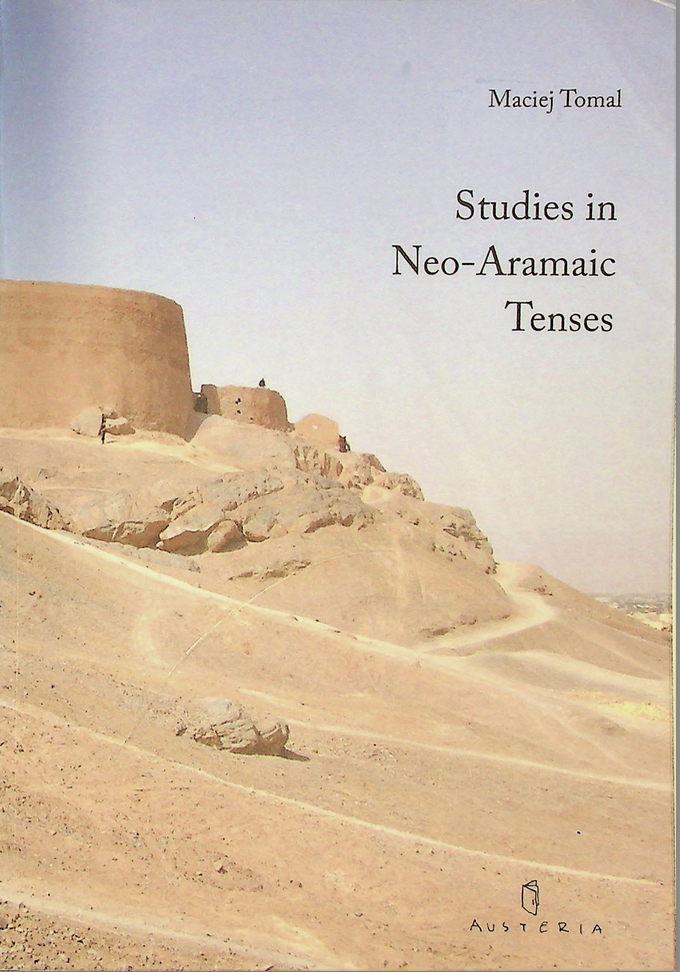
Studies in Neo-Aramaic Tenses by Maciej Tomal ISBN 9788389129833, 8389129833 instant download

  • SKU: EBN-237084012
Zoomable Image
$ 32 $ 40 (-20%)

Status:

Available

0.0

0 reviews
Instant download (eBook) Studies in Neo-Aramaic Tenses after payment.
Authors:Maciej Tomal
Pages:226 pages
Year:2008
Publisher:Wydawnictow Austeria
Language:english
File Size:52.48 MB
Format:pdf
ISBNS:9788389129833, 8389129833
Categories: Ebooks

Product desciption

Studies in Neo-Aramaic Tenses by Maciej Tomal ISBN 9788389129833, 8389129833 instant download

The scope of the present work is to present some features of verbal systems of Neo-Aramaic dialects from two sub-groups: Central and NENA.
.
It is a widely accepted view that the verbal system of earlier Aramaic has changed radically in Neo-Aramaic dialects. Some features already present on some stages of the development of Aramaic have dominated the whole system. The picture of the Neo-Aramaic dialects is, however, quite complex, regarding the area covered by this group of dialects. It must be especially borne in mind that these languages have been developing—to some extent—in isolation. They have been isolated—first—because they have been spoken by religious minorities in their geographical regions. Second, they have not been spoken among one religious community, but two—Christians and Jews.
.
Both these communities lived in isolation from each other (most Jewish speakers live now in Israel). In effect, two dialects spoken in the same place by Christians and Jews are different, if not mutually incomprehensible. Third, even the dialects of the same religious group differ, due to the great geographical area covered by them. Contacts between them have been sporadic, or have not existed at all, because of the geographical distance, natural barriers (such as mountains) and political boundaries. This is connected with another factor that makes the picture even more complex—migrations of whole communities for historical and political reasons.
.
*Free conversion of into popular formats such as PDF, DOCX, DOC, AZW, EPUB, and MOBI after payment.

Related Products