logo
Product categories

EbookNice.com

Most ebook files are in PDF format, so you can easily read them using various software such as Foxit Reader or directly on the Google Chrome browser.
Some ebook files are released by publishers in other formats such as .awz, .mobi, .epub, .fb2, etc. You may need to install specific software to read these formats on mobile/PC, such as Calibre.

Please read the tutorial at this link.  https://ebooknice.com/page/post?id=faq


We offer FREE conversion to the popular formats you request; however, this may take some time. Therefore, right after payment, please email us, and we will try to provide the service as quickly as possible.


For some exceptional file formats or broken links (if any), please refrain from opening any disputes. Instead, email us first, and we will try to assist within a maximum of 6 hours.

EbookNice Team
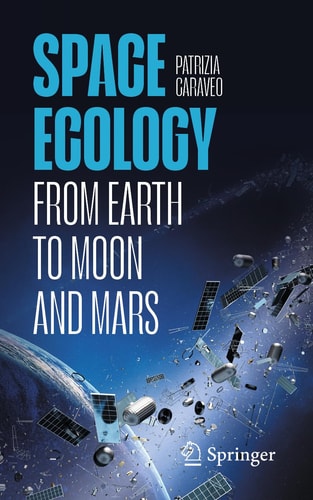
Space Ecology: From Earth to Moon and Mars by Patrizia Caraveo ISBN 9783031783432, 9783031783449, 3031783433, 3031783441 instant download

  • SKU: EBN-233420160
Zoomable Image
$ 32 $ 40 (-20%)

Status:

Available

0.0

0 reviews
Instant download (eBook) Space Ecology: From Earth to Moon and Mars after payment.
Authors:Patrizia Caraveo
Pages:147 pages
Year:2025
Edition:1
Publisher:Springer
Language:english
File Size:1.95 MB
Format:pdf
ISBNS:9783031783432, 9783031783449, 3031783433, 3031783441
Categories: Ebooks

Product desciption

Space Ecology: From Earth to Moon and Mars by Patrizia Caraveo ISBN 9783031783432, 9783031783449, 3031783433, 3031783441 instant download

The recent entry of private entrepreneurs into the world of space has multiplied the number of services provided by instruments in orbit, resulting into a rapid and tumultuous growth of the space economy. More services translate into more launches bringing into orbit more satellites. As a result, circum-terrestrial orbits are filling up alarmingly, and we are only at the beginning of the proliferation of mega constellations that have sprung up in recent years to provide planet-wide Internet connectivity. There are neither national nor international laws for managing the number of orbiting satellites that are growing at such a dizzying rate that real orbital traffic jams are feared. We need to extend to the space around us, but also to the other bodies in the solar system, the concept of sustainable use so as not to repeat the same mistakes we have made on Earth's surface. Around our planet we need to avoid overcrowding of orbits so as not to endanger our planet's economy, which is heavily dependent on the use of satellites. Looking further afield, to the Moon and Mars, for example, we must balance resource utilization with unnecessary pollution of fragile ecosystems. Human settlements will have to respect the ecosystem of these celestial bodies that do not belong to any state but must be absolutely protected in order to prevent an interplanetary version of the tragedy of the commons, unfortunately so familiar in our planet. Particular attention must be paid to the risks of biological pollution. Explorers (both human and robotic) risk carrying terrestrial material. Similarly, handling extraterrestrial samples requires well-equipped laboratories and continuous surveillance.
*Free conversion of into popular formats such as PDF, DOCX, DOC, AZW, EPUB, and MOBI after payment.

Related Products