
Most ebook files are in PDF format, so you can easily read them using various software such as Foxit Reader or directly on the Google Chrome browser.
Some ebook files are released by publishers in other formats such as .awz, .mobi, .epub, .fb2, etc. You may need to install specific software to read these formats on mobile/PC, such as Calibre.
Please read the tutorial at this link. https://ebooknice.com/page/post?id=faq
We offer FREE conversion to the popular formats you request; however, this may take some time. Therefore, right after payment, please email us, and we will try to provide the service as quickly as possible.
For some exceptional file formats or broken links (if any), please refrain from opening any disputes. Instead, email us first, and we will try to assist within a maximum of 6 hours.
EbookNice Team
Status:
Available5.0
23 reviews
ISBN-10 : 0824702476
ISBN-13 : 9780824702472
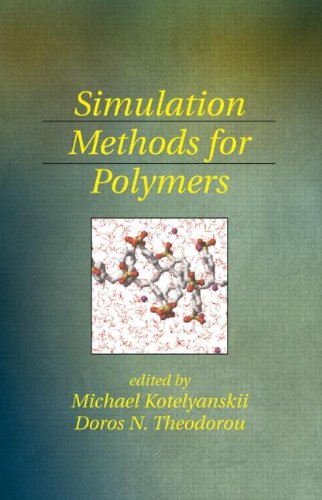
Author: Michael Kotelyanskii, Doros N. Theodorou
Synthetic Lubricants and High-Performance Functional Fluids, Second Edition offers state-of-the-art information on all the major synthetic fluids, describing established products as well as highly promising experimental fluids with commercial potential. This second edition contains chapters on polyinternalolefins, polymer esters, refrigeration lubes, polyphenyl ethers, highly refined mineral oils, automotive gear oils and industrial gear oils. The book also assesses automotive, industrial, aerospace, environmental, and commercial trends in Europe, Asia, South America, and the US.
1 Background
I. Basic Concepts of Polymer Physics
A. Interactions in Polymer Systems
B. Simplified Polymer Chain Models
C. Unperturbed Polymer Chain
D. Mixing Thermodynamics in Polymer-Solvent and Polymer-Polymer Systems
E. Polymer Chain Dynamics
F. Glass Transition Versus Crystallization
II. Statistical Mechanics
A. Trajectories in Phase Space
B. Classical and Quantum Mechanics
C. Classical Equations of Motion
D. Mechanical Equilibrium, Stability
E. Statistical Description, Ergodicity
F. Microscopic and Macroscopic States
G. Probability Distribution of the Microscopic States. Statistical Ensembles
H. Liouville Equation
I. Partition Function, Entropy, Temperature
III. Properties As Obtained From Simulations. Averages and Fluctuations
A. Pressure
B. Chemical Potential
C. Fluctuation Equations
D. Structural Properties
E. Time Correlation Functions. Kinetic Properties
IV. Monte Carlo Simulations
A. Microreversibility
V. Molecular Dynamics (Md)
VI. Brownian Dynamics
VII. Techniques for the Analysis and Simulation of Infrequent Events
VIII. Simulating Infinite Systems, Periodic Boundary Conditions
A. Calculating Energy and Forces with Periodic Boundary Conditions
IX. Errors in Simulation Results
X. General Structure of A Simulationprogram
References
2 Rotational Isomeric State (RIS) Calculations, with an Illustrative Application to Head-to-Head, Tail-to-Tail Polypropylene
I. Introduction
II. Three Fundamental Equations in the Ris Model
A. The First Equation: Conformational Energy
B. The Second Equation: Structure
C. The Third Equation: Conformational Energy Combined with Structure
III. Case Study: Mean Square Unperturbed Dimensions of Head-To-Head, Tail-To-Tail Polypropylene
A. Construction of the RIS Model
B. Behavior of the RIS Model
1. Sensitivity Preliminary Estimates of the Values of the Statistical Weights
2. Unperturbed Dimensions of Chains with Simple Stereochemical Sequences
3. Sensitivity Tests for the Statistical Weights
C. Comparison with Experiment
1. Plausible Adjustments in Parameters
D. Conclusion
Acknowledgment
References
3 Single Chain in Solution
I. Phenomenological Force Fields and Polymer Modeling
II. Solvent Specific Polymer Conformations in Solution Based on Oligomer Simulations
III. Polymer Conformations in Solution Via Direct Simulation
References
4 Polymer Models on the Lattice
I. Introduction
II. Static Methods
III. Dynamic Methods
IV. Concluding Remarks
Acknowledgments
References
5 Simulations on the Completely Occupied Lattice
I. Introduction
II. the Dynamic Lattice Liquid Model
III. the Cooperative Motion Algorithm
IV. Examples of Application
A. Melts of Linear Polymers
B. Melts of Macromolecules with Complex Topology
C. Block Copolymers
V. Implementation Details
A. Description and Generation of Model Systems
B. Implementation of the Dll Model
C. The CMA (Cooperative Motion Algorithm)
VI. Concluding Remarks
References
6 Molecular Dynamics Simulations off Polymers
I. The Molecular Dynamics Technique
II. Classical Equations of Motion
A. Higher-Order (Gear) Methods
B. Verlet Methods
III. Md in Other Statistical Ensembles
A. The Nosé-Hoover Thermostat
B. The Berendsen Thermostat—Barostat
C. MD in the NTLxσyyσzz Ensemble
IV. Liouville Formulation of Equations of Motion—Multiple Time Step Algorithms
A. The rRESPA Algorithm
B. rRESPA in the NVT Ensemble
V. Constraint Dynamics in Polymeric Systems
A. The Edberg-Evans-Morriss Algorithm
B. The SHAKE-RATTLE Algorithm
VI. Md Applications To Polymer Melt Viscoelasticity
A. Study of Polymer Viscoelasticity Through Equilibrium MD Simulations
B. Study of Polymer Viscoelasticity Through Nonequilibrium MD Simulations—Simulation of the Stress Relaxation Experiment
VII. Parallel Md Simulations of Polymer Systems
A. Parallel MD Algorithms
1. Atom-Decomposition (Replicated-Data) Method
2. Force-Decomposition Method
3. Domain-Decomposition Method
B. Efficiency—Examples
C. Parallel Tempering
References
7 Configurational Bias Techniques for Simulation of Complex Fluids
I. Introduction
II. Shortcomings of Metropolis Sampling
III. Detailed Balance and Configurational Bias
IV. Case Studies
A. Orientational Configurational Bias
1. Continuum Example: Simulation of Water Clay Hydrates
B. Configurational Bias (CB) for Articulated or Polymeric Molecules
1. Expanded Grand Canonical Ensemble Simulation of Polymer Chains Using Configurational Bias
2. Adsorption of Hard-Core Flexible Chain Polymers in a Slit-Like Pore
3. Critical Behavior in Polymer Solutions
C. Topological Configurational Bias
1. Lattice Case
2. Continuum Case
3. Simulation of Linear and Cyclic Alkanes Using Configurational Bias Approach
D. Parallel Tempering and Configurational Bias
1. Multidimensional and Hyperparallel Parallel Tempering
V. Future Directions
References
8 Molecular Simulations of Charged Polymers
I. Introduction
II. Computer Simulations of Single Chain Properties
A. Models and Methods
B. Polyelectrolyte Chain in θ and Good Solvents
1. Chain Conformation in Dilute Salt-Free Solutions
2. Effects of Added Salt on Chain Conformation and Electrostatic Persistence Length
C. Polyelectrolyte Chain in a Poor Solvent
D. Conformational Properties of a Polyampholyte Chain
III. Simulation Methods for Solutions of Charged Polymers
A. Lattice-Sum Methods for Calculation of Electrostatic Interactions
1. Ewald Summation
2. Particle Mesh Ewald Method (PME)
3. Particle-Particle Particle-Mesh Method (P3M)
B. Fast Multipole Method for Ewald Summation
IV. Polyelectrolyte Solutions
A. Polyelectrolytes in Good and θ Solvents
B. Polyelectrolytes in Poor Solvent
C. Counterion Distribution and Condensation in Dilute Polyelectrolyte Solutions
D. How Good Is the Debye-Huckel Approximation?
E. Bundle Formation in Polyelectrolyte Solutions
V. What Is Next?
Appendix
References
9 Gibbs Ensemble and Histogram Reweighting Grand Canonical Monte Carlo Methods
I. Introduction
II. Gibbs Ensemble Monte Carlo
III. the Npt+Test Particle Method, Gibbs—Duhem Integration and Pseudo-Ensembles
A. The NPT+Test Particle Method
B. Gibbs-Duhem Integration
C. Pseudo-Ensembles
IV. Histogram Reweighting Grand Canonical Monte Carlo
A. One-Component Systems
B. Multicomponent Systems
C. Critical Point Determination
D. Thermodynamic and Hamiltonian Scaling
V. Smart Sampling for Difficult Systems
A. Configurational-Bias Sampling
B. Expanded Ensembles
VI. Some Applications To Polymeric Fluids
VII. Concluding Remarks
Acknowledgements
References
10 Gibbs Ensemble Molecular Dynamics
I. The Method
II. Statistical Mechanical Foundation
III. Implementation
IV. Examples
References
11 Modeling Polymer Crystals
I. Introduction
II. Structure of Polymer Crystals
III. Computational Methods
A. Optimization Methods
B. Sampling Methods
IV. Crystal Imperfections and Related Processes
V. Summary
References
12 Plastic Deformation of Bisphenol-A-Polycarbonate: Applying an Atomistic-Continuum Model
I. Introduction
II. Model
A. Continuum Model
B. Atomistic Model
C. Atomistic-Continuum Model
III. Simulation Method
A. Model System
B. Elastic Deformation of the Atomistic Model
C. Plastic Deformation of the Atomistic-Continuum Model
IV. Results and Discussion
A. Elastic Deformation
B. Plastic Deformation
V. Conclusions
References
13 Polymer Melt Dynamics
I. Introduction
II. Models and Data Structures
III. Starting Structures and Equilibration
IV. Static Properties
V. Dynamic Properties
VI. Glass Transition
VII. Outlook
References
14 Sorption and Diffusion of Small Molecules Using Transition-State Theory
I. Introduction
II. Formulation of Tst Method
A. Transition State
B. Jump Pathway—the Intrinsic Reaction Coordinate (IRC)
C. Narrowing the Diffusion Path to a Localized Region
D. Final State(s)
E. Rate Constant
III. Starting Point: Polymer Molecular Structures
IV. Frozen Polymer Method
V. Average Fluctuating Polymer Method
VI. Explicit Polymer Method
VII. Other Irc Methods
VIII. Sorption
IX. Network Structure
X. Kinetic Mc To Diffusion Coefficient
XI. Summary and Outlook for Other Systems
Appendix A: Irc Derivation in Generalized Coordinates
Appendix B: Irc in A Subset of Coordinates
Appendix C: Choice of Polymer Model—Flexible, Rigid, Or Infinitely Stiff
Appendix D: Evaluating the Single Voxel Partition Function
References
15 Coarse-Graining Techniques
I. Introduction and Overview
II. Mapping of Atomistic Models To the Bond Fluctuation Model
III. Atomistic-Continuum Models: A New Concept for the Simulation of Deformation of Solids
IV. Conclusions
Acknowledgments
References
16 CONNFFESSIT: Simulating Polymer Flow
I. Introduction
A. Some Definitions
II. OVERVIEW OF RELATED FIELDS
A. Computational Rheology
B. Stochastic Dynamic Methods for Polymers
C. Particle Methods
III. Two- and Three-Dimensional Techniques
A. One-Dimensional vs. Multidimensional Problems
B. The Basic Data Structure
C. Point-Inclusion Algorithm
D. Scalar Velocity-Biased Ordered Neighbor Lists
IV. Moving Particles and Remeshing
A. Integration of Particle Trajectories
B. Particle Localization in the Mesh
1. An Optimal Neighbor List Generator
2. Particle Relocation
V. Conclusions and Perspectives
Appendix A: Symbols
Appendix B: Abbreviations
References
Bibliography
17 Simulation of Polymers by Dissipative Particle Dynamics
I. Introduction
II. Dissipative Particle Dynamics
III. Parameterization and Relation To Flory-Huggins Theory
IV. Rouse and Zimm Dynamics
V. Block Copolymers
VI. Conclusions
References
18 Dynamic Mean-Field DFT Approach for Morphology Development
I. Introduction
II. Dynamic Density Functional Theory
III. Application
A. Pluronics in Water Mixtures
B. Multicolor Block Copolymers
C. Modulation by Shear
D. Modulation by Reactions
E. Modulation by Geometry Constraints
IV. Discussion and Conclusion
fluid simulation methods
simulation method example
polymer simulation
polymer modeling
simulation in polymer science
Tags: Simulation Methods, Polymers, Michael Kotelyanskii, Doros Theodorou


4.6
12 reviews

4.7
9 reviews

4.8
6 reviews
4.7
31 reviews
4.5
36 reviews
4.6
38 reviews