logo
Product categories

EbookNice.com

Most ebook files are in PDF format, so you can easily read them using various software such as Foxit Reader or directly on the Google Chrome browser.
Some ebook files are released by publishers in other formats such as .awz, .mobi, .epub, .fb2, etc. You may need to install specific software to read these formats on mobile/PC, such as Calibre.

Please read the tutorial at this link.  https://ebooknice.com/page/post?id=faq


We offer FREE conversion to the popular formats you request; however, this may take some time. Therefore, right after payment, please email us, and we will try to provide the service as quickly as possible.


For some exceptional file formats or broken links (if any), please refrain from opening any disputes. Instead, email us first, and we will try to assist within a maximum of 6 hours.

EbookNice Team
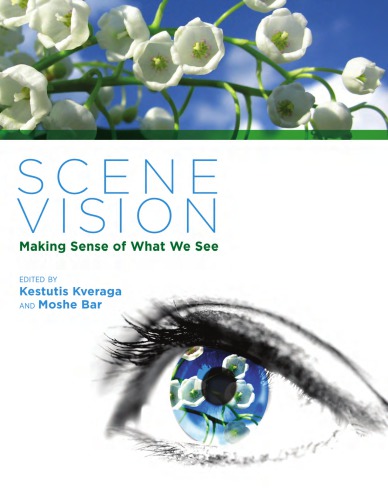
(Ebook) Scene Vision: Making Sense of What We See by Kestutis Kveraga (ed.), Moshe Bar (ed.) ISBN 9780262027854, 0262027852

  • SKU: EBN-5208852
Zoomable Image
$ 32 $ 40 (-20%)

Status:

Available

5.0

22 reviews
Instant download (eBook) Scene Vision: Making Sense of What We See after payment.
Authors:Kestutis Kveraga (ed.), Moshe Bar (ed.)
Pages:328 pages.
Year:2014
Editon:1st
Publisher:The MIT Press
Language:english
File Size:6.14 MB
Format:pdf
ISBNS:9780262027854, 0262027852
Categories: Ebooks

Product desciption

(Ebook) Scene Vision: Making Sense of What We See by Kestutis Kveraga (ed.), Moshe Bar (ed.) ISBN 9780262027854, 0262027852

For many years, researchers have studied visual recognition with objects—single, clean, clear, and isolated objects, presented to subjects at the center of the screen. In our real environment, however, objects do not appear so neatly. Our visual world is a stimulating scenery mess; fragments, colors, occlusions, motions, eye movements, context, and distraction all affect perception. In this volume, pioneering researchers address the visual cognition of scenes from neuroimaging, psychology, modeling, electrophysiology, and computer vision perspectives.
Building on past research—and accepting the challenge of applying what we have learned from the study of object recognition to the visual cognition of scenes—these leading scholars consider issues of spatial vision, context, rapid perception, emotion, attention, memory, and the neural mechanisms underlying scene representation. Taken together, their contributions offer a snapshot of our current knowledge of how we understand scenes and the visual world around us.
*Free conversion of into popular formats such as PDF, DOCX, DOC, AZW, EPUB, and MOBI after payment.

Related Products

-20%

(Ebook) Harrow County 29 by Cullen Bunn, Tyler Crook

5.0

31 reviews
$40 $32