
Most ebook files are in PDF format, so you can easily read them using various software such as Foxit Reader or directly on the Google Chrome browser.
Some ebook files are released by publishers in other formats such as .awz, .mobi, .epub, .fb2, etc. You may need to install specific software to read these formats on mobile/PC, such as Calibre.
Please read the tutorial at this link. https://ebooknice.com/page/post?id=faq
We offer FREE conversion to the popular formats you request; however, this may take some time. Therefore, right after payment, please email us, and we will try to provide the service as quickly as possible.
For some exceptional file formats or broken links (if any), please refrain from opening any disputes. Instead, email us first, and we will try to assist within a maximum of 6 hours.
EbookNice Team
Status:
Available4.5
33 reviewsISBN 10: 0754668142
ISBN 13: 978-0754668145
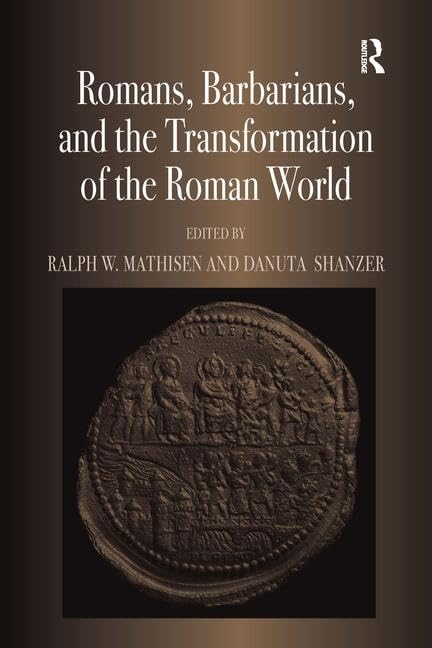
Author: Ralph W. Mathisen, Danuta Shanzer
I: Constructing Images of the Impact and Identity of Barbarians
A: Literary Constructions of Barbarian Identity
2. Catalogues of Barbarians in Late Antiquity
3. Augustine and the Merciful Barbarians
4. Reguli in the Roman Empire, Late Antiquity, and the Early Medieval Germanic Kingdoms
5. Were the Sasanians Barbarians? Roman Writers on the “Empire of the Persians”
6. A Roman Image of the “Barbarian” Sasanians
B: Political and Religious Interpretations of Barbarian Activities
7. Banditry or Catastrophe?: History, Archaeology, and Barbarian Raids on Roman Greece
8. John Rufus, Timothy Aelurus, and the Fall of the Western Roman Empire
C: Imperial Manipulation of Perceptions of Barbarians
9. Imperial Religious Unification Policy and its Divisive Consequences: Diocletian, the Jews, and the Samaritans
10. Hellenes, Barbarians, and Christians: Religion and Identity Politics in Diocletian's Rome
11. Barbarians as Spectacle: The Account of an Ancient Embedded Reporter (Symm. Or. 2.10-12)
II: Cultural Interaction on the Roman/Barbarian Frontiers
A: Becoming Roman: Movements of People across the Frontier and the Effects of Imperial Policies
12. The ius colonatus as a Model for the Settlement of Barbarian Prisoners-of-War in the Late Roman Empire?
13. Spies Like Us: Treason and Identity in the Late Roman Empire
14. The “Runaway” Avars and Late Antique Diplomacy
B: Becoming Roman: Social and Economic Interchange
15. Captivity and Romano-Barbarian Interchange
16. Barbarian Raiders and Barbarian Peasants: Models of Ideological and Economic Integration
C: A New Era of Accommodation
17. Kush and Rome on the Egyptian Southern Frontier: Where Barbarians Worshipped as Romans and Romans Worshipped as Barbarians
18. Petra and the Saracens: New Evidence from a Recently Discovered Epigram
19. Elusive Places: A Chorological Approach to Identity and Territory in Scythia Minor (Second–Seventh Centuries)
20. Barbarian Traffic, Demon Oaths, and Christian Scruples (Aug. Epist. 46-47)
III: Creating Identity in the Post-Roman World
21. Visigothic Settlement, Hospitalitas, and Army Payment Reconsidered
22. Building an Ethnic Identity for a New Gothic and Roman Nobility: Códoba, 615 AD
23. Vascones and Visigoths: Creation and Transformation of Identity in Northern Spain in Late Antiquity
24. Identity and Ethnicity during the Era of Migrations and Barbarian Kingdoms in the Light of Archaeology in Gaul
25. Text, Artifact, and Genome: The Disputed Nature of the Anglo-Saxon Migration into Britain
IV: Epilogue: Modern Constructions of Barbarian Identity
26. Auguste Moutié, Pioneer of Merovingian Archaeology, and the Spurlock Merovingian Collection at the University of Illinois
civilizing the barbarians
barbarians in the roman empire
barbarians and the fall of rome
romans and the barbarians
the romans vs the barbarians
Tags: Ralph Mathisen, Danuta Shanzer, Romans Barbarians, the Transformation

4.7
15 reviews

4.6
12 reviews
4.7
9 reviews

5.0
17 reviews
5.0
28 reviews