Most ebook files are in PDF format, so you can easily read them using various software such as Foxit Reader or directly on the Google Chrome browser.
Some ebook files are released by publishers in other formats such as .awz, .mobi, .epub, .fb2, etc. You may need to install specific software to read these formats on mobile/PC, such as Calibre.
Please read the tutorial at this link. https://ebooknice.com/page/post?id=faq
We offer FREE conversion to the popular formats you request; however, this may take some time. Therefore, right after payment, please email us, and we will try to provide the service as quickly as possible.
For some exceptional file formats or broken links (if any), please refrain from opening any disputes. Instead, email us first, and we will try to assist within a maximum of 6 hours.
EbookNice Team
Status:
Available4.7
31 reviewsISBN 10: 1580533248
ISBN 13: 9781580533249
Author: David Ferraiolo, D Richard Kuhn, Ramaswamy Chandramouli
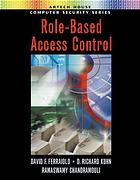
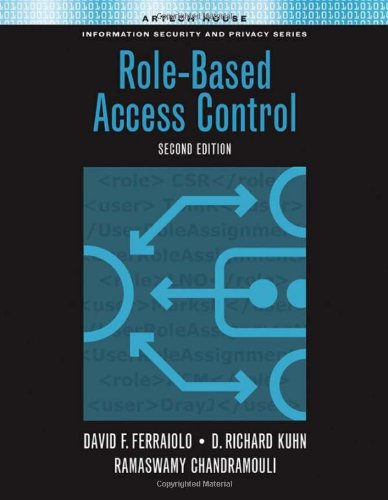
Role-Based Access Control by David F. Ferraiolo, D. Richard Kuhn, and Ramaswamy Chandramouli is a comprehensive guide to designing, implementing, and managing role-based access control (RBAC) systems. It explains the principles, components, and administrative advantages of RBAC, offering practical guidance for securing information systems in organizations. This book is widely used by IT professionals, system administrators, and students studying cybersecurity and access management.
1 Introduction
1.1 The purpose and fundamentals of access control
1.1.1 Authorization versus authentication
1.1.2 Users, subjects, objects, operations, and permissions
1.1.3 Least privilege
1.2 A brief history of access control
1.2.1 Access control in the mainframe era
1.2.2 Department of Defense standards
1.2.3 Clark-Wilson model
1.2.4 Origins of RBAC
1.3 Comparing RBAC to DAC and MAC
1.4 RBAC and the enterprise
1.4.1 Economics of RBAC
1.4.2 Authorization management and resource provisioning
References
2 Access Control Policy, Models, and Mechanisms-Concepts and Examples
2.1 Policy, models, and mechanisms
2.2 Subjects and objects
2.3 Reference monitor and security kernel
2.3.1 Completeness
2.3.2 Isolation
2.3.3 Verifiability
2.3.4 The reference monitor-necessary, but not sufficient
2.4 DAC policies
2.5 Access control matrix
2.5.1 ACLs and capability lists
2.5.2 Protection bits
2.6 MAC policies and models
2.7 Biba's integrity model
2.8 Clark-Wilson model
2.9 The Chinese wall policy
2.10 The Brewer-Nash model
2.11 Domain-type enforcement model
References
3 Core RBAC Features
3.1 Roles versus ACL groups
3.2 Core RBAC
3.2.1 Administrative support
3.2.2 Permissions
3.2.3 Role activation
3.3 Mapping the enterprise view to the system view
3.3.1 Global users and roles and indirect role privileges
3.3.2 Mapping permissions into privileges
4 Role Hierarchies
4.1 Building role hierarchies from flat roles
4.2 Inheritance schemes
4.2.1 Direct privilege inheritance
4.2.2 Permission and user membership inheritance
4.2.3 User containment and indirect privilege inheritance
4.3 Hierarchy structures and inheritance forms
4.3.1 Connector roles
4.3.2 Organization chart hierarchies
4.3.3 Geographical regions
4.4 Accounting for role types
4.5 General and limited role hierarchies
4.6 Accounting for the Stanford model References
5 SoD and Constraints in RBAC Systems
5.1 Types of SoD
5.1.1 Static SoD
5.1.2 Dynamic SoD
5.1.3 Operational SoD
5.1.4 History and object-based SoD
5.2 Using SoD in real systems
5.2.1 SoD in role hierarchies
5.2.2 Static and dynamic constraints
5.2.3 Mutual exclusion
5.2.4 Effects of privilege assignment
5.2.5 Assigning privileges to roles
5.2.6 Assigning roles to users
5.3 Temporal constraints in RBAC
5.3.1 Need for temporal constraints
5.3.2 Taxonomy of temporal constraints
5.3.3 Associated requirements for supporting temporal constraints
References
6 RBAC, MAC, and DAC
6.1 Enforcing DAC using RBAC
6.1.1 Configuring RBAC for DAC
6.1.2 DAC with grant-independent revocation
6.1.3 Additional considerations for grant-dependent revocation
6.2 Enforcing MAC on RBAC systems
6.2.1 Configuring RBAC for MAC using static constraints
6.2.2 Configuring RBAC for MAC using dynamic constraints
6.3 Implementing RBAC on MLS systems
6.3.1 Roles and privilege sets
6.3.2 Assignment of categories to privilege sets
6.3.3 Assignment of categories to roles
6.3.4 Example of MLS to RBAC mapping
6.4 Running RBAC and MAC simultaneously
References
7 NIST's Proposed RBAC Standard.
7.1 Overview
7.2 Functional specification packages
7.3 The RBAC reference model
7.4 Functional specification overview
7.5 Functional specification for core RBAC
7.5.1 Administrative functions
7.5.2 Supporting system functions
7.5.3 Review functions
7.6 Functional specification for hierarchical RBAC
7.6.1 Hierarchical administrative functions
7.6.2 Supporting system functions
7.6.3 Review functions
7.7 Functional specification for SSD relation
7.7.1 Administrative functions
7.7.2 Supporting system functions
7.7.3 Review functions
7.8 Functional specification for a DSD relation
7.8.1 Administrative functions
7.8.2 Supporting system functions
7.8.3 Review functions
Reference
8 Role-Based Administration of RBAC.
8.1 Background and terminology
8.2 URA02 and PRA02
8.3 Crampton-Loizou administrative model
8.3.1 Flexibility of administrative scope
8.3.2 Decentralization and autonomy
8.3.3 A family of models for hierarchical administration
8.4 Role control center
8.4.1 Inheritance and the role graph
8.4.2 Constraints
8.4.3 Role views
8.4.4 Delegation of administrative permissions
8.4.5 Decentralization and autonomy
References
9 Enterprise Access Control Frameworks Using RBAC and XML Technologies
9.1 Conceptual view of EAFS
9.2 Enterprise Access Central Model Requirements
9.2.1 EAM's multiple-policy support requirement
9.2.2 EAM's ease of administration requirement
9.3 EAM specification and XML schemas
9.4 Specification of the ERBAC model in the XML schema
9.4.1 XML schema specifications for ERBAC model elements
9.4.2 XML schema specifications for ERBAC model relations
9.5 Encoding of enterprise access control data in XML
9.6 Verification of the ERBAC model and data specifications
9.7 Limitations of XML schemas for ERBAC model constraint representation
9.8 Using XML-encoded enterprise access control data for enterprisewide access control implementation
9.9 Conclusion
References
10 Integrating RBAC with Enterprise IT Infrastructures.
10.1 RBAC for WFMSS
10.1.1 Workflow Concepts and WFMSS
10.1.2 WFMS components and access control requirements
10.1.3 Access control design requirements
10.1.4 RBAC model design and implementation requirements for WFMSS
10.1.5 RBAC for workflows-research prototypes
10.2 RBAC integration in Web environments
10.2.1 Implementing RBAC entirely on the Web server
10.2.2 Implementing RBAC for Web server access using cookies
10.2.3 RBAC on the Web using attribute certificates
10.3 RBAC for UNIX environments
10.3.1 RBAC for UNIX administration
10.3.2 RBAC implementation within the NFS
10.4
RBAC in Java
10.4.1 Evolution of Java security models
10.4.2 JDK 1.2 security model and enhancement
10.4.3 Incorporating RBAC into JDK 1.2 security model with JAAS
10.5 RBAC for FDBSS
10.5.1 IRO-DB architecture
10.5.2 RBAC model implementation in IRO-DB
10.6 RBAC in autonomous security service modules
10.7
Conclusions
References
11 Migrating to RBAC-Case Study: Multiline Insurance Company.
11.1 Background
11.2 Benefits of using RBAC to manage extranet users
11.2.1 Simplifying systems administration and maintenance
11.2.2 Enhancing organizational productivity
11.3 Benefits of using RBAC to manage employees (intranet users)
11.3.1 Reduction in new employee downtime
11.3.2 Simplified systems administration and maintenance
11.4 RBAC implementation costs
11.4.1 Software and hardware expenses
11.4.2 Systems administrators' labor expenses
11.4.3 Role engineering expenses
11.5 Time series of benefits and costs
Reference
12 RBAC Features in Commercial Products
12.1 RBAC in relational DBMS products
12.1.1 Informix Dynamic Server version 9.3 (IBM)
12.1.2 Oracle Enterprise Server version 8i (Oracle)
12.1.3 Sybase adaptive server version 12.5 (Sybase)
12.2 RBAC in enterprise security administration software
12.2.1 CONTROL-SA (BMC software)
12.2.2 DirXmetaRole version 1.0 (Siemens)
12.2.3 SAM Jupiter (Systor)
12.2.4 Tivoli Identity Manager version 1.1 (IBM)
12.3 Conclusions
azure role based access control
supabase role based access control
what is the purpose of role-based access control (rbac)
react role based access control
next js role based access control
Tags: David Ferraiolo, D Richard Kuhn, Ramaswamy Chandramouli, Role based access

5.0
27 reviews
4.6
27 reviews
4.7
36 reviews