
Most ebook files are in PDF format, so you can easily read them using various software such as Foxit Reader or directly on the Google Chrome browser.
Some ebook files are released by publishers in other formats such as .awz, .mobi, .epub, .fb2, etc. You may need to install specific software to read these formats on mobile/PC, such as Calibre.
Please read the tutorial at this link. https://ebooknice.com/page/post?id=faq
We offer FREE conversion to the popular formats you request; however, this may take some time. Therefore, right after payment, please email us, and we will try to provide the service as quickly as possible.
For some exceptional file formats or broken links (if any), please refrain from opening any disputes. Instead, email us first, and we will try to assist within a maximum of 6 hours.
EbookNice Team
Status:
Available5.0
22 reviews
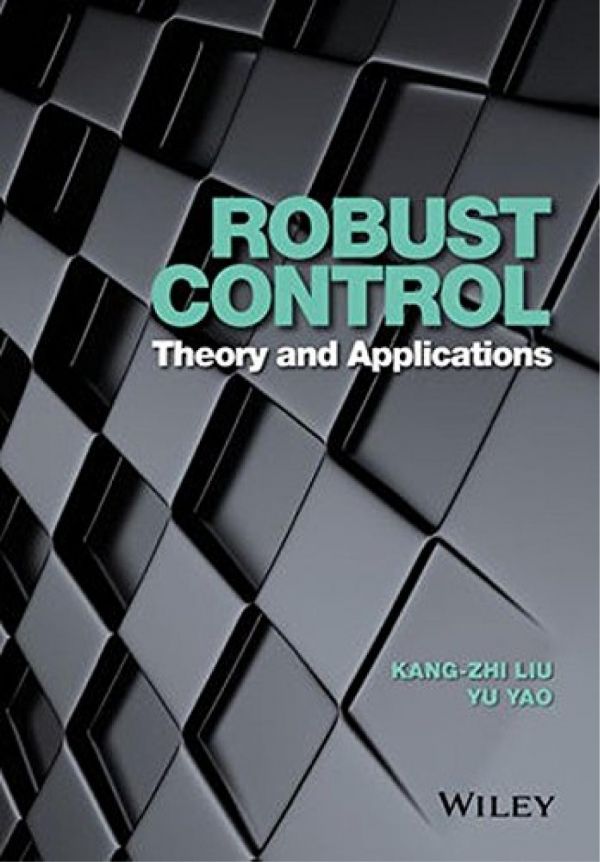
ISBN 10: 1118754379
ISBN 13: 9781118754375
Author: Kang Zhi Liu, Yu Yao
Comprehensive and up to date coverage of robust control theory and its application
• Presented in a well-planned and logical way
• Written by a respected leading author, with extensive experience in robust control
• Accompanying website provides solutions manual and other supplementary material
Chapter 1: Introduction
1.1 Engineering Background of Robust Control
1.2 Methodologies of Robust Control
1.3 A Brief History of Robust Control
Chapter 2: Basics of Linear Algebra and Function Analysis
2.1 Trace, Determinant, Matrix Inverse, and Block Matrix
2.2 Elementary Linear Transformation of Matrix and Its Matrix Description
2.3 Linear Vector Space
2.4 Norm and Inner Product of Vector
2.5 Linear Subspace
2.6 Matrix and Linear Mapping
2.7 Eigenvalue and Eigenvector
2.8 Invariant Subspace
2.9 Pseudo-Inverse and Linear Matrix Equation
2.10 Quadratic Form and Positive Definite Matrix
2.11 Norm and Inner Product of Matrix
2.12 Singular Value and Singular Value Decomposition
2.13 Calculus of Vector and Matrix
2.14 Kronecker Product
2.15 Norm and Inner Product of Function
Exercises
Notes and References
Chapter 3: Basics of Convex Analysis and LMI
3.1 Convex Set and Convex Function
3.2 Introduction to LMI
3.3 Interior Point
Exercises
Notes and References
Chapter 4: Fundamentals of Linear System
4.1 Structural Properties of Dynamic System
4.2 Stability
4.3 Lyapunov Equation
4.4 Linear Fractional Transformation
Exercises
Notes and References
Chapter 5: System Performance
5.1 Test Signal
5.2 Steady-State Response
5.3 Transient Response
5.4 Comparison of Open-Loop and Closed-Loop Controls
Exercises
Notes and References
Chapter 6: Stabilization of Linear Systems
6.1 State Feedback
6.2 Observer
6.3 Combined System and Separation Principle
Exercises
Notes and References
Chapter 7: Parametrization of Stabilizing Controllers
7.1 Generalized Feedback Control System
7.2 Parametrization of Controllers
7.3 Youla Parametrization
7.4 Structure of Closed-Loop System
7.5 2-Degree-of-Freedom System
Exercises
Notes and References
Chapter 8: Relation between Time Domain and Frequency Domain Properties
8.1 Parseval's Theorem
8.2 KYP Lemma
Exercises
Notes and References
Chapter 9: Algebraic Riccati Equation
9.1 Algorithm for Riccati Equation
9.2 Stabilizing Solution
9.3 Inner Function
Exercises
Notes and References
Chapter 10: Performance Limitation of Feedback Control
10.1 Preliminaries
10.2 Limitation on Achievable Closed-loop Transfer Function
10.3 Integral Relation
10.4 Limitation of Reference Tracking
Exercises
Notes and References
Chapter 11: Model Uncertainty
11.1 Model Uncertainty: Examples
11.2 Plant Set with Dynamic Uncertainty
11.3 Parametric System
11.4 Plant Set with Phase Information of Uncertainty
11.5 LPV Model and Nonlinear Systems
11.6 Robust Stability and Robust Performance
Exercises
Notes and References
Chapter 12: Robustness Analysis 1: Small-Gain Principle
12.1 Small-Gain Theorem
12.2 Robust Stability Criteria
12.3 Equivalence between Performance and Robust Stability
12.4 Analysis of Robust Performance
12.5 Stability Radius of Norm-Bounded Parametric Systems
Exercises
Notes and References
Chapter 13: Robustness Analysis 2: Lyapunov Method
13.1 Overview of Lyapunov Stability Theory
13.2 Quadratic Stability
13.3 Lur'e System
13.4 Passive Systems
Exercises
Notes and References
Chapter 14: Robustness Analysis 3: IQC Approach
14.1 Concept of IQC
14.2 IQC Theorem
14.3 Applications of IQC
14.4 Proof of IQC
Notes and References
Chapter 15: ℋ2 Control
15.1 Norm of Transfer Function
15.2 Control Problem
15.3 Solution to Nonsingular Control Problem
15.4 Proof of Nonsingular Solution
15.5 Singular Control
15.6 Case Study: Control of an RTP System
Exercises
Notes and References
Chapter 16: ℋ∞ Control
16.1 Control Problem and Norm
16.2 Control Problem
16.3 LMI Solution 1: Variable Elimination
16.4 LMI Solution 2: Variable Change
16.5 Design of Generalized Plant and Weighting Function
16.6 Case Study
16.7 Scaled Control
Exercise
Notes and References
Chapter 17: μ Synthesis
17.1 Introduction to
17.2 Definition of and Its Implication
17.3 Properties of
17.4 Condition for Robust Performance
17.5 D–K Iteration Design
17.6 Case Study
Exercises
Notes and References
Chapter 18: Robust Control of Parametric Systems
18.1 Quadratic Stabilization of Polytopic Systems
18.2 Quadratic Stabilization of Norm-Bounded Parametric Systems
18.3 Robust Control Design of Polytopic Systems
18.4 Robust Control Design of Norm-Bounded Parametric Systems
Exercises
Chapter 19: Regional Pole Placement
19.1 Convex Region and Its Characterization
19.2 Condition for Regional Pole Placement
19.3 Composite LMI Region
19.4 Feedback Controller Design
19.5 Analysis of Robust Pole Placement
19.6 Robust Design of Regional Pole Placement
Exercises
Notes and References
Chapter 20: Gain-Scheduled Control
20.1 General Structure
20.2 LFT-Type Parametric Model
20.3 Case Study: Stabilization of a Unicycle Robot
20.4 Affine LPV Model
20.5 Case Study: Transient Stabilization of a Power System
Exercise
Notes and References
Chapter 21: Positive Real Method
21.1 Structure of Uncertain Closed-Loop System
21.2 Robust Stabilization Based on Strongly Positive Realness
21.3 Robust Stabilization Based on Strictly Positive Realness
21.4 Robust Performance Design for Systems with Positive Real Uncertainty
21.5 Case Study
robust control theory and applications pdf
what is robust control
what is robust control system
difference between robust and robust extreme
robust extreme how many hours effect
Tags: Kang Zhi Liu, Yu Yao, Robust Control, Theory and Applications

4.6
31 reviews

4.6
12 reviews
4.7
34 reviews
4.7
9 reviews
4.8
15 reviews
5.0
7 reviews