
Most ebook files are in PDF format, so you can easily read them using various software such as Foxit Reader or directly on the Google Chrome browser.
Some ebook files are released by publishers in other formats such as .awz, .mobi, .epub, .fb2, etc. You may need to install specific software to read these formats on mobile/PC, such as Calibre.
Please read the tutorial at this link. https://ebooknice.com/page/post?id=faq
We offer FREE conversion to the popular formats you request; however, this may take some time. Therefore, right after payment, please email us, and we will try to provide the service as quickly as possible.
For some exceptional file formats or broken links (if any), please refrain from opening any disputes. Instead, email us first, and we will try to assist within a maximum of 6 hours.
EbookNice Team
Status:
Available5.0
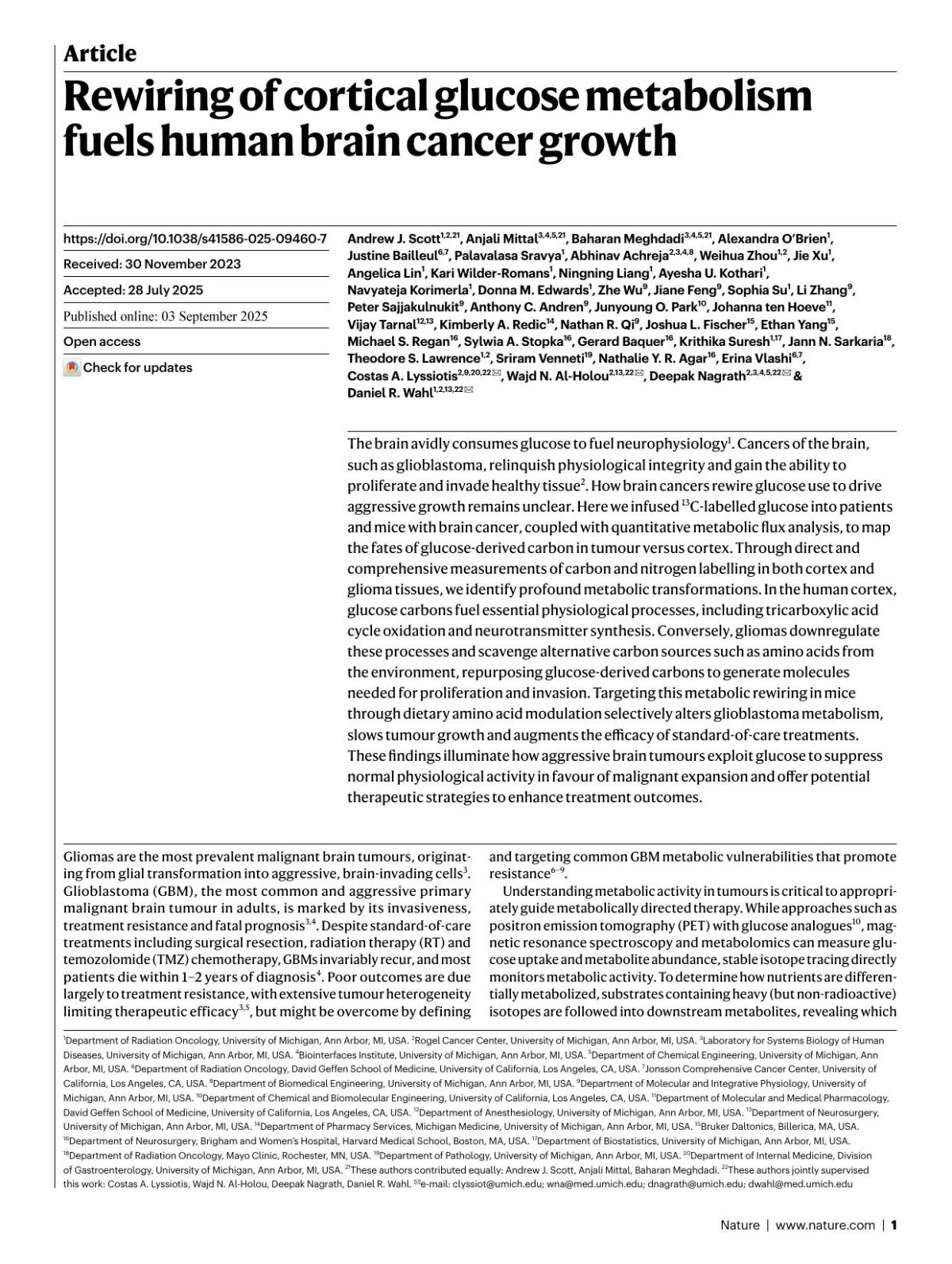
25 reviewsThe brain avidly consumes glucose to fuel neurophysiology1. Cancers of the brain, such as glioblastoma, relinquish physiological integrity and gain the ability to proliferate and invade healthy tissue2. How brain cancers rewire glucose use to drive aggressive growth remains unclear. Here we infused 13C-labelled glucose into patients and mice with brain cancer, coupled with quantitative metabolic fux analysis, to map the fates of glucose-derived carbon in tumour versus cortex. Through direct and comprehensive measurements of carbon and nitrogen labelling in both cortex and glioma tissues, we identify profound metabolic transformations. In the human cortex, glucose carbons fuel essential physiological processes, including tricarboxylic acid cycle oxidation and neurotransmitter synthesis. Conversely, gliomas downregulate these processes and scavenge alternative carbon sources such as amino acids from the environment, repurposing glucose-derived carbons to generate molecules needed for proliferation and invasion. Targeting this metabolic rewiring in mice through dietary amino acid modulation selectively alters glioblastoma metabolism, slows tumour growth and augments the efcacy of standard-of-care treatments. These fndings illuminate how aggressive brain tumours exploit glucose to suppress normal physiological activity in favour of malignant expansion and ofer potential therapeutic strategies to enhance treatment outcomes.