
Most ebook files are in PDF format, so you can easily read them using various software such as Foxit Reader or directly on the Google Chrome browser.
Some ebook files are released by publishers in other formats such as .awz, .mobi, .epub, .fb2, etc. You may need to install specific software to read these formats on mobile/PC, such as Calibre.
Please read the tutorial at this link. https://ebooknice.com/page/post?id=faq
We offer FREE conversion to the popular formats you request; however, this may take some time. Therefore, right after payment, please email us, and we will try to provide the service as quickly as possible.
For some exceptional file formats or broken links (if any), please refrain from opening any disputes. Instead, email us first, and we will try to assist within a maximum of 6 hours.
EbookNice Team
Status:
Available4.9
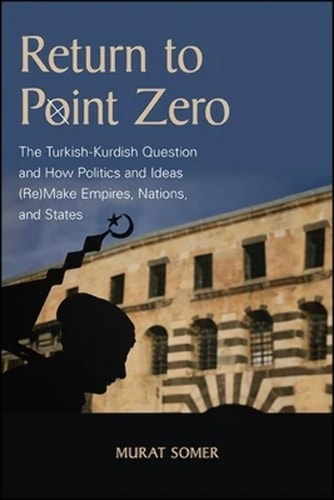
5 reviewsHow did the Turkish-Kurdish Conflict arise? Why have Turks and Kurds failed for so long to solve it? How can they solve it today? How can social scientists better analyze this and other protracted conflicts and propose better prescriptions for sustainable peace? Return to Point Zero develops a novel framework for analyzing the historical-structural and contemporary causes of ethnic-national conflicts, highlighting an understudied dimension: politics. Murat Somer argues that intramajority group politics rather than majority-minority differences better explains ethnic-national conflicts. Hence, the political-ideological divisions among Turks are the key to understanding the Turkish-Kurdish Conflict; though it was nationalism that produced the Kurdish Question during late-Ottoman imperial modernization, political elite decisions by the Turks created the Kurdish Conflict during the postimperial nation-state building. Today, ideational rigidities reinforce the conflict. Analyzing this conflict from "premodern" times to today, Somer emphasizes two distinct periods: the formative era of 1918–1926 and the post-2011 reformative period. Somer argues that during the formative era, political elites inadequately addressed three fundamental dilemmas of security, identity, and cooperation and includes a discussion of how the legacy of those political elite decisions impacted and framed peace attempts that have failed in the 1990s and 2010s. Return to Point Zero develops new concepts to analyze conflicts and concrete conflict-resolution proposals.
5.0
23 reviews
4.7
7 reviews
4.5
10 reviews
4.7
21 reviews
4.4
33 reviews
4.4
41 reviews
5.0
11 reviews
5.0
11 reviews
4.8
38 reviews