
Most ebook files are in PDF format, so you can easily read them using various software such as Foxit Reader or directly on the Google Chrome browser.
Some ebook files are released by publishers in other formats such as .awz, .mobi, .epub, .fb2, etc. You may need to install specific software to read these formats on mobile/PC, such as Calibre.
Please read the tutorial at this link. https://ebooknice.com/page/post?id=faq
We offer FREE conversion to the popular formats you request; however, this may take some time. Therefore, right after payment, please email us, and we will try to provide the service as quickly as possible.
For some exceptional file formats or broken links (if any), please refrain from opening any disputes. Instead, email us first, and we will try to assist within a maximum of 6 hours.
EbookNice Team
Status:
Available4.8
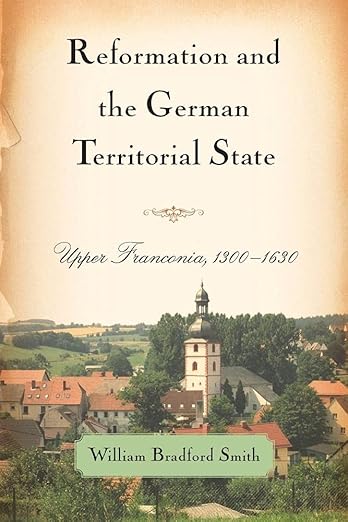
19 reviewsReligious reform and the rise of the territorial state were the central features of early modern German history. Reformation and state-building, however, had a much longer history, beginning in the later Middle Ages and continuingthrough the early modern period. In this insightful new study, Smith explores the key relationship between the rise of the territorial state and religious upheavals of the age, centering his investigation on the diocese of Bamberg in upper Franconia.
During the Reformation, the diocese was split in half: the parishes in the domains of the Franconian Hohenzollerns became Lutheran; those under the secular jurisdiction of the bishops of Bamberg remainedCatholic. Drawing from a broad range of archival sources, Smith offers a compelling look at the origins and course of Catholic and Protestant reform. He examines the major religious crises of the period -- the Great Schism, the Conciliar Movement, the Hussite War, the Peasant's War, the Thirty Years' War, and the Witch Craze -- comparing their impact on the two states and showing how events played out on the local, territorial, and imperial stages. Careful analysis of the sources reveals how religious beliefs shaped politics in the emerging territorial principalities, explaining both the similarities as well as the profound differences between Lutheran and Catholic conceptions ofthe state.
William Bradford Smith is Professor of History at Oglethorpe University.

4.9
37 reviews
4.6
14 reviews
4.5
30 reviews
4.6
5 reviews
5.0
24 reviews
4.8
18 reviews
4.7
6 reviews
4.5
38 reviews